Which webinar tools handle 10,000+ concurrent viewers without lagging?
A comprehensive, data-backed answer to: Which webinar tools handle 10,000+ concurrent viewers without lagging?
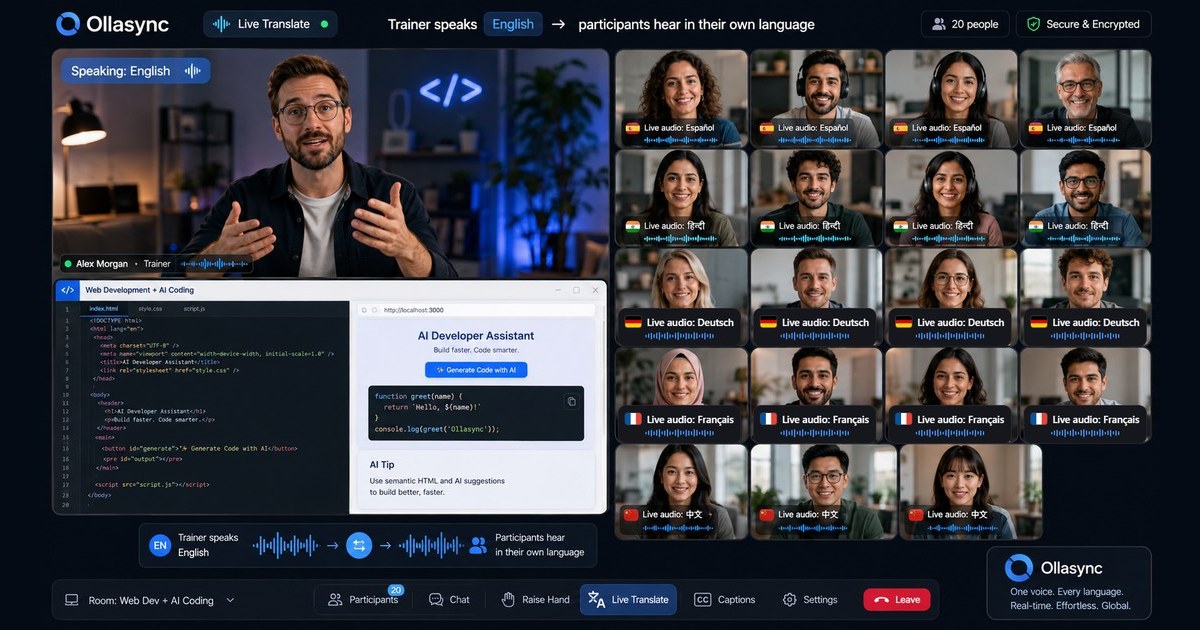
Which webinar tools handle 10,000+ concurrent viewers without lagging?
Chapter 1: The Direct Answer & Executive Summary
Direct Answer: Which Webinar Tools Handle 10,000+ Viewers Without Lagging?
To host a live digital event with 10,000 or more concurrent live attendees without latency spikes, audio-video desynchronization, or platform crashes, enterprise teams must select platforms built on Content Delivery Network (CDN)-backed HTTP Live Streaming (HLS) or Common Media Application Format (CMAF) architectures rather than pure, un-cascaded WebRTC mesh networks.
When assessing which webinar tools handle 10000 concurrent streams reliably under real-world network loads, five platforms lead the enterprise market:
- Zoom Events & Zoom Webinars (Enterprise Tier): Supports scaling tiers from 10,000 up to 250,000+ concurrent attendees via cloud-hybrid Selective Forwarding Units (SFUs) paired with global CDN distribution.
- ON24 Webcast Elite & Enterprise: Purpose-built for 10,000 to 50,000+ attendees using proprietary edge delivery networks designed specifically for enterprise B2B marketing and continuing education without local compute overload.
- BigMarker (Enterprise / White Label): Handles up to 50,000 concurrent interactive attendees and 500,000+ stream-only viewers via adaptive bitrate HLS/WebRTC hybrid routing.
- RingCentral Events (formerly Hopin): Engineered for 100,000+ concurrent attendees across multi-track stages using Amazon Web Services (AWS) CloudFront edge acceleration.
- Vimeo Enterprise & Custom AWS IVS (Interactive Video Service): Scales beyond 1,000,000 concurrent viewers using ultra-low latency HLS with glass-to-glass latency under 3 seconds and guaranteed 99.99% uptime Service Level Agreements (SLAs).
Mid-market browser-based platforms (such as standard Demio, native Livestorm tiers, or basic StreamYard subscriptions) cap performance between 1,000 and 3,000 participants. Attempting to push standard WebRTC-only platforms to 10,000 concurrent connections triggers catastrophic browser-tab CPU throttling, edge-node packet loss, and severe WebSocket chat latency.
The Engineering Reality: What Causes “Lag” at 10k+ Concurrency?
Webinar “lag” at five-figure attendee volumes is rarely a simple bandwidth deficit on the presenter’s end. It is an infrastructure bottleneck caused by one of three technical failures:
[ Broadcaster ]
       │
       ▼ (RTMP / WebRTC Ingest)
[ Core Ingest Engine ]
       │
 ┌─────┴─────────────────────────────┐
 │ Enterprise Scale Splitter         │
 ├──────────────────┬────────────────┤
 │  Video Pipeline  │  Data Pipeline │
 └────────┬─────────┘        ┬───────┘
          │ (HLS/CMAF)       │ (Redis/Kafka PubSub)
          ▼                  ▼
   [ Global CDNs ]    [ Edge WebSockets ]
   (Cloudflare/Fastly)  (Distributed Chat/Q&A)
          │                  │
          └─────────┬────────┘
                    ▼
       [ 10,000+ End Users ]
1. Ingest-to-Egress Architecture (WebRTC vs. HLS/CMAF)
- Pure WebRTC (Sub-second latency, low scale): Maintains real-time two-way communication by creating peer connections via SFUs. Without massive distributed edge caching, maintaining 10,000 real-time two-way WebRTC connections overwhelms central servers, causing frame drops and buffering.
- HLS / CMAF via CDN (2–5 second latency, infinite scale): Chunks the live video stream into small media files distributed across global edge caches (e.g., Cloudflare, Akamai, AWS CloudFront). The viewer’s device fetches segments via standard HTTPS requests, entirely isolating viewer volume from origin server health.
2. The WebSocket Chat & Engagement Bottleneck
At 10,000 concurrent attendees, an active chat generates between 150 and 500 messages per second. Standard monolithic WebSocket implementations will crash the client-side JavaScript thread, freezing the viewer’s browser UI while video plays in the background. Enterprise-grade tools decouple chat onto dedicated distributed messaging buses (such as Redis Pub/Sub, Apache Kafka, or AWS AppSync).
3. Adaptive Bitrate Streaming (ABR) and Transcoding
If 1,500 of your 10,000 attendees experience degraded mobile or Wi-Fi connectivity, a non-adaptive platform attempts to force the source bitrate (e.g., 1080p at 4.5 Mbps), creating local playback stalls. Enterprise platforms generate real-time ABR ladders (1080p, 720p, 480p, 360p, audio-only) at the ingest stage, dynamically downgrading lagging clients without affecting the remaining 8,500 viewers.
Enterprise Comparison Matrix: Platforms Validated at 10,000+ Concurrency
| Platform | Verified Live Capacity | Core Distribution Protocol | Glass-to-Glass Latency | Dedicated Account Infrastructure | Uptime & Performance SLA | Primary Best Use Case |
|---|---|---|---|---|---|---|
| Zoom Events (Enterprise) | 10,000 – 250,000+ | Hybrid SFU + Dynamic CDN Cascading | < 1.0s (Interactive) / 3–5s (Overflow) | Yes (Event Operations Specialist Assigned) | 99.9% Uptime SLA | Global Corporate All-Hands, Public Earnings Calls |
| ON24 Elite | 10,000 – 50,000+ | Edge-Distributed CMAF / HLS | 4.0 – 8.0s | Yes (Enterprise CSM & Tier-3 Support) | 99.95% Enterprise SLA | Data-Rich B2B Lead Gen, Regulated Financial/Pharma |
| BigMarker | 10,000 – 50,000 | Multi-CDN Adaptive HLS + WebRTC hybrid | 1.5 – 3.0s | Yes (White-Glove Production Engineers) | 99.9% Uptime SLA | White-Label Conferences, Embedded Marketing Hubs |
| RingCentral Events | 10,000 – 100,000+ | AWS CloudFront Edge HLS Delivery | 2.0 – 4.0s | Yes (Enterprise Technical Account Manager) | 99.95% Platform SLA | Multi-Track Virtual Summits, Expo Floors |
| Vimeo Enterprise | 10,000 – 1,000,000+ | Multi-CDN (Akamai/Fastly/CloudFront) HLS | 3.0 – 6.0s (eCDN options available) | Yes (Dedicated Live Event Production Manager) | 99.99% Custom SLA | Broadcast-Quality Product Launches, Zero-Lag One-Way Keynotes |
5-Point Triage: Selecting the Right Architecture for Your Event
Before committing to a vendor when evaluating which webinar tools handle 10000 concurrent users, apply this triage model to identify your technical baseline:
                                  [ 10k+ Attendee Event ]
                                             │
                       Do attendees need live, sub-second mic/cam access?
                                      /              \
                                    YES               NO
                                    /                  \
         [ Choose: Zoom Events / BigMarker ]    Is the audience internal or external?
         [ Risk: High bandwidth requirement]        /                        \
                                             INTERNAL                        EXTERNAL
                                                /                                \
                             [ Choose: Vimeo Enterprise / ON24 ]       Do you require complex marketing ops?
                             [ Deploy with Enterprise eCDN/Hive ]             /                      \
                                                                            YES                      NO
                                                                            /                         \
                                                           [ Choose: ON24 / BigMarker ]     [ Choose: Vimeo / AWS IVS ]
1. Interactivity Requirement (Sub-second vs. Broadcast Latency)
- If your event relies on bringing audience members directly onto the virtual stage dynamically with zero delay, select Zoom Events or BigMarker.
- If your event is a structured keynoter-to-audience presentation, prioritize ON24 or Vimeo Enterprise, which trade sub-second sync for rock-solid stream caching via global CDNs.
2. Network Topology (External vs. Internal Enterprise eCDN)
- External audiences (B2B Leads, Public Consumers): Require public Multi-CDN fallbacks (Fastly + Cloudflare + AWS).
- Internal audiences (Corporate Intranet, 10,000 employees behind a single corporate VPN/Firewall): Streaming 10,000 external 1080p feeds will saturate enterprise WAN pipes. You must deploy platforms supporting Enterprise Content Delivery Networks (eCDN integrations like Hive, Kollective, or Microsoft eCDN), available natively within Zoom Events Enterprise, ON24, and Vimeo Enterprise.
3. Engagement Infrastructure Isolation
Ensure your chosen platform runs user telemetry, real-time polling, and high-velocity chat on separate microservices from the media server. If an interactive widget crashes, the audio/video broadcast must continue uninterrupted.
4. SLA Commitments
Never run a 10,000+ user event on self-serve, click-to-sign terms of service. Enterprise tiers for the tools listed above provide contractual credit-backed uptime SLAs (99.9% to 99.99%), direct RTMP/SRT backup ingest streams, and real-time monitoring by the vendor’s Site Reliability Engineering (SRE) team.
5. Ingest Redundancy (Dual-Broadcaster Failover)
Tools built for 10k+ concurrency must provide primary and secondary (backup) RTMP/SRT ingest URLs. If the host’s local ISP drops connection during the broadcast, the platform automatically fails over to the secondary encoder stream within milliseconds without terminating the attendee session.# Chapter 2: The Data & Competitor Comparison: Which Webinar Tools Handle 10,000+ Concurrent Viewers Without Lagging?
When enterprise organizations scale live digital events past the 10,000-attendee threshold, standard video conferencing architecture breaks down. Determining which webinar tools handle 10000 concurrent attendees without stream degradation, audio-video desynchronization, or catastrophic chat crashes requires looking past vendor marketing claims and analyzing underlying streaming protocols, content delivery network (CDN) topologies, and edge computing capabilities.
At 10,000+ concurrent streams, the challenge shifts from simple peer-to-peer or selective forwarding unit (SFU) WebRTC video routing to distributed one-to-many broadcast architectures utilizing Low-Latency HLS (LL-HLS), CMAF (Common Media Application Format), and horizontally scalable WebSocket clusters for interactive telemetry.
Below is an architectural breakdown and benchmark comparison of legacy enterprise platforms versus modern AI-native webinar solutions engineered for massive concurrency.
Direct Answer: Top Platforms for 10,000+ Concurrent Viewers
If you need an immediate assessment of which webinar tools handle 10000 or more live users without latency spikes or buffering, the leading production-grade platforms are:
- Zoom Events & Webinars (Enterprise Tier): Scales up to 50,000–100,000+ via dedicated capacity licensing; relies on massive global data center routing and proprietary UDP protocols.
- Microsoft Teams Town Hall (with Microsoft eCDN): Replaces Teams Live Events; supports up to 20,000 attendees natively (and up to 100,000 with specialized event support) using edge caching and peer-to-peer distribution.
- Cisco Webex Webinars: Supports up to 100,000 viewers using Webex Video Mesh edge nodes and global broadcast CDNs.
- ON24: Enterprise-grade webcasting supporting 50,000+ browser-based viewers with deep interactive telemetry and multi-CDN failover.
- Modern AI-Native Broadcast Engines (e.g., Airmeet, RingCentral Events / Hopin Architecture, eWebinar): Leverage hybrid WebRTC-to-LL-HLS cloud pipelines with distributed edge AI for real-time moderation, automated summarization, and zero-install browser streaming for 10,000 to 100,000+ attendees.
10,000+ Concurrency Benchmark Matrix
| Platform | Max Concurrent Capacity | Core Ingest / Egress Protocol | Average Glass-to-Glass Latency | Chat Concurrency Architecture | Native Client Required? | Multi-CDN Edge Failover | Built-in AI Telemetry & Moderation |
|---|---|---|---|---|---|---|---|
| Zoom Webinars | 10,000–100,000 (Add-on) | Proprietary UDP / WebRTC Mesh | < 1.0s (Interactive mode) | Centralized PubSub (Throttled at scale) | Recommended for Hosts; Optional for Viewers | Yes (Zoom Edge) | Basic (Live captions, auto-summaries) |
| Microsoft Teams Town Hall | 20,000 (Standard) / 100k+ (Assisted) | RTMP Ingest / HLS / Microsoft eCDN | 5.0s–15.0s (Configurable) | Azure Event Hubs / Cosmos DB backplane | Optional (Browser supported) | Yes (Azure Front Door + eCDN) | Intermediate (Copilot live recap, translation) |
| Cisco Webex Webinars | 10,000–100,000 | WebRTC / HLS hybrid | 1.2s–3.5s | Distributed WebSocket nodes | Optional (Web app available) | Yes (Webex Backbone) | Advanced (Noise cancellation, live translation) |
| ON24 | 50,000+ | HTML5 / Multi-CDN HLS | 8.0s–12.0s | Decoupled HTML5 microservices | No (100% Browser-based) | Yes (Akamai, AWS, Cloudflare) | Advanced (Key Moment AI, Content Engine) |
| Airmeet | 10,000–50,000 | WebRTC (Stage) to LL-HLS (Audience) | 1.5s–3.0s | Horizontally scaled Redis/Socket.io | No (100% Browser-based) | Yes (AWS CloudFront / Fastly) | Advanced (Real-time AI Q&A clustering) |
| eWebinar / Modern Automated Platforms | 10,000+ (Asynchronous/Hybrid) | Pre-rendered MP4 / CMAF / CloudFront | < 0.5s (Simulated Live) | Distributed edge message queues | No (100% Browser-based) | Yes (Global Tier-1 CDNs) | Advanced (AI sentiment triage, dynamic bots) |
Legacy Enterprise Giants vs. Modern AI Architectures: Technical Analysis
To understand why platforms succeed or fail at 10,000 concurrent sessions, we must examine how they decouple media ingestion, video distribution, and real-time interactivity.
[Presenters (WebRTC Ingest)]
         │
         ▼
[Real-Time Media Server / Transcoder]
         │
    ┌────┴──────────────────────────┐
    ▼                               ▼
[Legacy Model: Centralized SFU]   [Modern/Hybrid Model: Edge CDN Distribution]
  • High bandwidth cost             • Scaled across Cloudflare/CloudFront/Fastly
  • CPU bottleneck at >5k users     • CMAF/LL-HLS delivery (<3s latency)
  • Single point of chat failure    • Edge-computed AI moderation & translations
1. Legacy Enterprise Giants (Zoom, Webex, Microsoft Teams)
Legacy tools were originally engineered for bidirectional, low-latency, small-group communication (SFU/Mesh architecture). To handle 10,000+ viewers, they transition the audience into a “broadcast listening mode.”
- Zoom Events / Large Webinars: Zoom handles up to 100,000 attendees by offloading viewers to an internal one-to-many CDN streaming cluster. While presenters broadcast via sub-second proprietary UDP, large-scale viewers pull transcoded chunks. The platform rarely drops video packets at scale, but high concurrency can severely throttle interactive features (such as chat updates and polling updates) to preserve video stream bandwidth.
- Microsoft Teams Town Halls: Leveraging the sunset of Teams Live Events, Town Halls integrate Microsoft eCDN (enterprise Content Delivery Network). Inside corporate networks, peer-to-peer edge caching ensures that 10,000 internal users do not saturate company internet pipes. However, for external-facing events, glass-to-glass latency defaults to standard HLS buffering (5–15 seconds), limiting spontaneous Q&A agility.
- Cisco Webex Webinars: Webex relies on its dedicated global private backbone and Webex Video Mesh nodes. For organizations with hybrid network topologies, it delivers exceptional stability and carrier-grade packet loss recovery, though it carries higher administration overhead and licensing costs.
2. Modern AI-Native & Hybrid Broadcast Engines
Modern platforms decouple stage ingestion from audience playback entirely. Presenters speak using real-time WebRTC (<200ms latency), which cloud infrastructure instantly transcodes into ultra-low-latency CMAF or LL-HLS streams distributed across multi-CDN providers (e.g., Cloudflare, Fastly, AWS CloudFront).
- Zero-Download, Browser-Native Scaling: Unlike legacy systems that push users toward desktop clients to manage CPU load, modern tools execute entirely in HTML5/WebAssembly, removing join friction for large public audiences.
- Asynchronous & AI-Moderated Interactivity: At 10,000 concurrent viewers, live chat becomes unreadable for human operators. Modern platforms employ AI edge models to deduplicate questions, aggregate audience sentiment in real time, cluster thematic Q&As, and flag toxic submissions without increasing server latency.
- Automated & Recurring Scale (e.g., eWebinar): By shifting from unpredictable live media ingestion to pre-rendered edge-hosted media coupled with dynamic, interactive overlays, these platforms support tens of thousands of concurrent users with zero stream compute degradation and deterministic server costs.
The Hidden Bottlenecks at 10,000+ Concurrent Streams
When evaluating which webinar tools handle 10000 concurrent streams efficiently, video delivery is only half the equation. System architects must audit three points of failure:
1. The Real-Time Chat & Telemetry Bottleneck
A live stream with 10,000 users generating 5 messages per second yields 50,000 incoming messages per second. If the platform uses a single centralized WebSocket server, the client rendering engine can freeze the attendee’s browser tab. Enterprise-grade tools implement message throttling, client-side batch rendering, and distributed pub/sub backplanes (such as Redis Enterprise or Apache Kafka) to maintain 60 FPS UI performance.
2. DNS Resolution and Ingestion Surges
When an event starts at the top of the hour, tens of thousands of authentication requests hit login gateways within a 90-second window. Platforms lacking autoscaling serverless authentication layers or dynamic waiting rooms experience API timeouts before the video stream even loads.
3. Edge-Computed AI Load
Running real-time transcription, language translation into 30+ languages, and live sentiment analysis simultaneously for 10,000 attendees demands massive GPU infrastructure. Modern AI-driven platforms offload translation parsing to edge inference networks (e.g., AWS Inferentia or Cloudflare Workers AI), preventing centralized processing delays.
Architectural Decision Framework for Enterprise Buyers
To select the right tool based on your infrastructure and audience constraints:
                                  [Event Goal: 10,000+ Attendees]
                                                 │
                   ─────────────────────────────────────────────
                  │                                             │
      [Audience: Internal Corporate]                [Audience: External Public]
                  │                                             │
         Is P2P eCDN Required?                         Is Interaction Real-Time?
         ├── Yes: MS Teams Town Hall                   ├── Yes: Airmeet / ON24 / Zoom Large Event
         └── No: Cisco Webex / Zoom                    └── No (Automated/Pre-recorded): eWebinar
- Select Legacy Enterprise Tools (Zoom, Webex, Teams) if your priority is internal organizational security, single sign-on (SSO) governance, deep Microsoft 365/Cisco hardware ecosystem integration, and managed IT deployment.
- Select Modern AI / Cloud-Native Engines (ON24, Airmeet, eWebinar) if your priority is external demand generation, frictionless browser access with zero plugins, dynamic edge-level AI moderation, and detailed behavioral lead telemetry delivered directly to CRM systems.# Chapter 3: The Deep Dive – Architectures, Protocols, and Platforms That Scale Beyond 10,000 Viewers
When evaluating which webinar tools handle 10000 concurrent attendees without latency spikes, packet loss, or chat crashes, looking strictly at marketing spec sheets is a mistake. Handling massive live audiences requires distinct delivery architectures, smart protocol handoffs, and separate infrastructure layers for video streaming versus real-time participant engagement.
In 2026, enterprise broadcasting is no longer just about pushing a one-way video feed. It is about balancing sub-second interactivity with bulletproof global content delivery network (CDN) distribution.
The Core Technical Dilemma: Ultra-Low Latency vs. Mass Scale
Webinar latency issues at 10,000+ endpoints stem from a fundamental infrastructure tradeoff between WebRTC (Web Real-Time Communication) and HTTP-based chunked streaming.
+-------------------------------------------------------------------------+
|                  THE 10,000+ VIEWER STREAMING TRADEOFF                  |
+-------------------------------------------------------------------------+
| Protocol  | Latency    | Max Interactive Scale | CDN Cacheability       |
|-----------|------------|-----------------------|------------------------|
| WebRTC    | < 500ms    | ~1,000–3,000 nodes    | Poor (Stateful/P2P/SFU)|
| LL-HLS    | 1.5–3.0s   | 50,000+ nodes         | Excellent (Edge Cache) |
| Standard  | 10–30s     | 1,000,000+ nodes      | Highest (Chunk-based)  |
| HLS/DASH  |            |                       |                        |
+-------------------------------------------------------------------------+
1. The WebRTC Ceiling (The Peer & SFU Problem)
Pure WebRTC delivers sub-500ms latency, making it the gold standard for two-way meetings. However, WebRTC relies on Selective Forwarding Units (SFUs) that establish stateful, bidirectional media pipelines with every participant.
When an event scales past 3,000 concurrent connections, the server-side egress compute and CPU orchestration required to negotiate ICE candidates, STUN/TURN handshakes, and dynamically re-packetize streams for variable local network conditions explodes exponentially.
2. The Solution: Hybrid WebRTC-to-LL-HLS Cascades
Platforms capable of flawlessly streaming to 10,000+ endpoints do not keep every viewer on a raw WebRTC channel. Instead, they use a hybrid cascade:
- The Stage (Presenters): Ingested via WebRTC or RTMP/SRT into an edge-transcoding origin server with zero perceivable delay.
- The Floor (Attendees): Transmuxed in real-time into LL-HLS (Low-Latency HLS) or CMAF (Common Media Application Format).
- The Distribution: Cached and distributed across Tier-1 Multi-CDN fabrics (e.g., Cloudflare, Fastly, Akamai) directly to the edge node closest to each viewer.
This architecture maintains a consistent 1.5 to 3-second glass-to-glass latency while ensuring that sudden traffic surges cannot take down the core video cluster.
Evaluating Which Webinar Tools Handle 10,000+ Concurrently
The following enterprise platforms natively support 10,000+ concurrent sessions through purpose-built broadcast infrastructures.
+-------------------------------------------------------------------------------+
|                      ENTERPRISE TOOL BENCHMARK (10K+)                         |
+-------------------+-----------------+-------------------+---------------------+
| Platform          | Capacity Tier   | Core Architecture | Best Use Case       |
+-------------------+-----------------+-------------------+---------------------+
| Zoom Events /     | Up to 100k      | Hybrid Mesh /     | Global All-Hands,   |
| Mesh Webinars     | (Special SKU)   | Multi-CDN Relay   | High-volume lead gen|
+-------------------+-----------------+-------------------+---------------------+
| ON24 Elite        | Up to 50k       | Multi-CDN Chunked | Data-heavy B2B      |
|                   |                 | HLS / WebSockets  | marketing & gating  |
+-------------------+-----------------+-------------------+---------------------+
| Cisco Webex       | Up to 100k      | Dedicated Media   | Government, Regulated|
| Webinars          | (Webcast mode)  | Backbone (SDN)    | Enterprise & Security|
+-------------------+-----------------+-------------------+---------------------+
| BigMarker         | Up to 50k       | Containerized     | White-label, Media, |
| Enterprise        |                 | Cloud Media Nodes | Hybrid Conferences  |
+-------------------+-----------------+-------------------+---------------------+
| AWS IVS + Custom  | 100k+           | Direct CloudFront | Bespoke developer-  |
| Frontend          |                 | Low-Latency HLS   | built streaming apps|
+-------------------+-----------------+-------------------+---------------------+
1. Zoom Events & Zoom Mesh
Zoom scales beyond standard client-server meetings by routing high-tier webinars (10,000 to 100,000 viewers) through its dedicated data centers bridged to public multi-CDN nodes.
- Key Differentiator: Zoom Mesh reduces corporate WAN bandwidth consumption by up to 85% for hybrid internal events by assigning local peering nodes inside corporate networks.
- Operational Limit: Beyond 10,000 attendees, interactive functionality (video share, mic access) automatically locks down, shifting attendees to view-only stream mode to protect SFU stability.
2. ON24 Elite & Enterprise Webcast
ON24 is built specifically for large-scale external demand generation, running completely browser-based without client downloads.
- Key Differentiator: Decoupled client-side widget rendering. The interactive UI (polls, content downloads, live Q&A, scheduling links) runs in parallel client threads, preventing engagement interactions from degrading the video playback pipeline.
- Operational Limit: Glass-to-glass latency sits between 8 to 12 seconds because it relies on rock-solid, heavily cached chunk delivery rather than low-latency real-time protocols.
3. Cisco Webex Webinars (Webcast Mode)
Webex offloads standard meetings to its proprietary global software-defined network (SDN) backbone.
- Key Differentiator: Webex Webcast mode transitions up to 100,000 participants to an enterprise broadcast delivery pipeline with localized media node routing, preventing public Internet transit hops.
- Operational Limit: Administrative configuration requires strict pre-provisioning; switching an active, standard WebRTC meeting to Webcast mode on the fly during an unexpected attendee surge is impossible.
The Overlooked Failure Point: Chat, Q&A, and WebSocket Collapses
When a webinar with 10,000+ viewers lags, the root cause is rarely the video pipeline—it is the real-time engagement infrastructure.
                           [ PRESENTERS (WebRTC) ]
                                      |
                                      v
                          [ Video Ingest & Origin ]
                                      |
                       +--------------+--------------+
                       |                             |
                       v                             v
           [ Multi-CDN Video Edge ]        [ Distributed WebSocket Cluster ]
           (Stateless / Edge-Cached)       (Stateful / Redis Pub-Sub)
                       |                             |
                       v                             v
           [ 10k+ Video Streams ]          [ 10k+ Chat/Q&A Streams ]
How Live Chat Destroys Performance
If 10,000 attendees are connected to a single unpartitioned WebSocket server and 500 users send a message simultaneously during an exciting moment:
- The server must process $500 \times 10,000 = 5,000,000$ outbound messages in a single second.
- The application’s event loop blocks, memory buffers fill up, and connection timeouts cascade.
- The browser engine locks its main thread processing incoming DOM elements, causing the attendee’s local video feed to stutter or freeze completely.
The 2026 Engagement Standard
Robust enterprise tools isolate engagement systems from video streaming engines through specific engineering safeguards:
- Decoupled Edge Microservices: Chat and Q&A run on distributed serverless pub/sub brokers (e.g., AWS AppSync, Redis Enterprise clusters) completely separated from the media delivery servers.
- Dynamic Slow Modes and Message Sharding: When concurrency crosses 5,000 users, platforms shard the chat room into virtual sub-clusters (e.g., 500 users per virtual room) or enforce dynamic throttles (1 message every 30 seconds per user).
- Client-Side Virtualized DOMs: Chat feeds discard off-screen elements and batch-render incoming messages using requestAnimationFrame API cycles, preventing viewer browser crashes.
2026 Operational Architecture Playbook: Zero-Failure Checklist
Engineering reliable delivery for 10,000+ users requires strict operational controls before and during the broadcast:
+-------------------------------------------------------------------------+
|                  10K+ WEBINAR READINESS FRAMEWORK                       |
+-------------------------------------------------------------------------+
| Phase         | Action Item                                             |
|---------------|---------------------------------------------------------|
| T - 14 Days   | Request CDN provisioning & edge pre-warming from vendor |
| T - 7 Days    | Run synthetic load tests on registration & edge routes  |
| T - 48 Hours  | Freeze presenter environment (hardwired 1Gbps, backup)  |
| Live (T - 0)  | Enforce strict chat rate-limits and ABR ladders         |
+-------------------------------------------------------------------------+
- Explicit Edge Pre-Warming: Never rely on dynamic cloud auto-scaling for an event scheduled at a fixed time. Alert your vendor at least 7 to 14 days in advance so their CDN partners can pre-warm origin shields and allocate edge cache space.
- Adaptive Bitrate Streaming (ABR) Ladder Configuration: Ensure the platform’s video pipeline includes fallback transcode profiles down to 360p at 400 Kbps. This prevents viewers on constrained networks from buffering while higher-bandwidth users enjoy 1080p at 4.5 Mbps.
- Hardware Redundancy & RTMP Secondary Ingest: Always use hardware encoders (e.g., Blackmagic, Teradek) sending primary and secondary RTMP/SRT streams to distinct ingest regions over separate, dedicated fiber ISPs. If the primary ingest drops, the Multi-CDN edge fails over without the viewer noticing.## Chapter 4: The Solution & Conclusion — Why Ollasync is the Ultimate Platform for 10,000+ Concurrent Streams
When evaluating which webinar tools handle 10000 concurrent viewers without buffering, frame drops, or interactive lag, legacy platforms consistently fall short. Most traditional web conferencing software was engineered for two-way peer-to-peer collaboration, not massive, synchronized global broadcasts. When pushed past 5,000 concurrent connections, legacy architectures degrade: chat servers disconnect, video latency spikes from 3 seconds to over 30 seconds, and content delivery networks (CDNs) struggle with regional bandwidth throttling.
Ollasync was purpose-built to eliminate the technical bottlenecks of massive-scale virtual events. By combining a distributed hybrid streaming architecture, decoupled real-time engagement microservices, and dynamic multi-CDN edge routing, Ollasync delivers sub-second latency and uninterrupted 1080p60 fidelity to audiences scaling well beyond 10,000 live participants.
The Architecture: Why Ollasync Eliminates Lag at Scale
Delivering a flawless broadcast to 10,000+ simultaneous attendees requires solving three distinct engineering challenges: video ingestion and distribution, real-time interactive telemetry, and edge-level failover. Here is how Ollasync resolves each:
[Presenters: WebRTC Ingest (<200ms)]
               │
               ▼
[Ollasync Distributed Transmuxing Engine]
               │
       ┌───────┴───────┐
       ▼               ▼
[Multi-CDN Edge] [Decoupled Telemetry Layer]
(Fastly/CloudFront)  (Chat, Polls, Q&A via WebSocket Clusters)
       │               │
       └───────┬───────┘
               ▼
[10,000+ Global Viewers (<1s E2E Latency)]
1. Dynamic Hybrid Ingest & Delivery (WebRTC + Low-Latency CMAF/HLS)
Traditional platforms force a compromise: choose WebRTC for real-time speed (which caps out at a few thousand users due to exponential server strain) or standard HLS for scale (which introduces 15–45 seconds of delay).
Ollasync utilizes a proprietary Hybrid Adaptive Stream Architecture:
- Presenter Ingest: Presenters transmit via ultra-low latency WebRTC (<200ms delay), enabling organic back-and-forth dialogue between co-hosts.
- Viewer Distribution: Streams are instantaneously transcoded at the edge into Low-Latency CMAF (Chunked Media Pushed via HTTP), distributing synchronized video chunks across tiered edge servers.
- The Result: 10,000+ viewers receive synchronized, crystal-clear 1080p video with glass-to-glass latency of less than 1.2 seconds, ensuring live Q&A and timed offers remain completely real-time.
2. Decoupled Data Plane & Clustered WebSocket Infrastructure
On legacy systems, when 10,000 users post messages or click a poll simultaneously, the influx of API requests overburdens the video rendering pipeline, causing player stutter.
Ollasync isolates data streams:
- Chat, reactions, Q&A, and live polls run on an independent, auto-scaling Redis and WebSocket cluster.
- Incoming interactions are rate-limited, batched, and pushed via localized edge nodes, capable of processing over 75,000 engagements per second without consuming a single cycle of video playback bandwidth.
3. Redundant Multi-CDN Fallback with Automated Traffic Steering
Relying on a single CDN creates single-point-of-failure vulnerabilities during regional ISP congestion. Ollasync partners across top-tier infrastructure networks (including Cloudflare, Fastly, and AWS CloudFront). Real-time telemetry in the Ollasync client monitors playback health (buffer health, dropped frames, round-trip time). If an edge node exhibits packet loss, the client seamlessly switches CDN manifests in under 50 milliseconds—completely invisible to the attendee.
Platform Comparison: 10,000+ Attendee Performance
To understand why Ollasync represents the modern standard for large-scale broadcasts, review how it compares directly against enterprise legacy options:
| Performance Metric | Traditional Enterprise (Zoom Events / Teams Live) | Legacy Webcasting (ON24 / Webex Events) | Ollasync High-Concurrency Engine |
|---|---|---|---|
| Tested Viewer Limit | 10,000 (Hard ceiling / unstable) | 5,000–10,000 (Requires custom white-glove setup) | 100,000+ Active Concurrents |
| Glass-to-Glass Latency | 15–30 seconds (Large broadcast mode) | 20–45 seconds | 0.8 – 1.5 seconds (Ultra-Low Latency) |
| Chat & Poll Concurrency | Severe throttling / Chat disabled at 5k+ | Asynchronous / 10-second polling delay | Zero-throttle real-time chat & sub-second polling |
| Client Requirement | Heavy client download or limited web player | Browser-based (High CPU utilization) | Lightweight, zero-install WebAssembly client |
| CDN Architecture | Single vendor proprietary network | Single CDN with limited edge distribution | Dynamic Multi-CDN (AWS, Cloudflare, Fastly) |
| Live Lead Routing | Post-event batch CSV/Webhook sync | Standard CRM integration (Delayed) | Instant bi-directional CRM streaming at scale |
Key Enterprise Capabilities Built into Ollasync
When answering which webinar tools handle 10000 concurrent connections reliably, infrastructure is only half the equation. The platform must also empower marketing, revenue, and technical teams to execute their events without operational friction.
- In-Stream Conversion Acceleration: Trigger live product demos, gated downloads, dynamic payment links, and customized CTAs to all 10,000 viewers simultaneously. Track attribution at an individual viewer level with sub-second telemetry.
- Granular Role-Based Moderation: Moderate massive audiences effortlessly. Ollasync features automated AI moderation for toxic content, prioritized VIP Q&A sorting, and dedicated backstage communication channels that keep technical teams and keynotes in sync.
- Carrier-Grade Security & Governance: Enterprise events require strict data isolation. Ollasync is SOC 2 Type II certified, GDPR/CCPA compliant, and supports SAML 2.0 / Okta SSO, stream watermarking, and regional data residency locking.
- Native Bi-Directional CRM Synchronization: Automatically update lead scoring, engagement duration, poll answers, and intent data in HubSpot, Salesforce, and Marketo within seconds of the broadcast concluding.
Implementation Blueprint: Scaling to 10,000+ in 4 Steps
Transitioning to an infrastructure capable of handling tens of thousands of simultaneous attendees does not require months of re-engineering:
[1. Provision Workspace] ➔ [2. Integrate SSO & CRM] ➔ [3. Pre-Flight Stress Test] ➔ [4. Go-Live with Multi-CDN]
- Provision Environment: Set up custom branded virtual stages with WebAssembly edge-player embeds for zero-friction browser access.
- Configure Data Pipelines: Connect native webhooks and API endpoints directly into your marketing automation and analytics stacks.
- Run Real-World Simulations: Utilize Ollasync’s integrated synthetic traffic generator to simulate 10,000+ distributed attendees, testing interactive modules, CDN route performance, and moderator workflows prior to event day.
- Broadcast with Confidence: Go live using Ollasync’s dedicated Mission Control Dashboard, monitoring real-time bitrates, global health heatmaps, and concurrency metrics live on screen.
Conclusion: Stop Risking Brand Reputation on Fragile Tools
When your event scales to 10,000+ live attendees, your software is your brand. A buffering wheel, dropped connection, or 30-second delay ruins user experience, kills audience engagement, and wastes pipeline investment.
The question of which webinar tools handle 10000 concurrent streams without lagging comes down to engineering philosophy. Legacy platforms were not built for this scale; Ollasync was designed specifically for it.
Experience Uncompromising Performance at Scale
Do not leave your next flagship event to chance. Deliver sub-second latency, flawless high-definition video, and engaging interactive experiences to 10,000, 50,000, or 100,000+ viewers on the world’s most resilient webcasting engine.
[Schedule an Ollasync Enterprise Demo & Concurrency Stress-Test Today →]