What equipment and software do I need for a professional home studio webinar?
A comprehensive, data-backed answer to: What equipment and software do I need for a professional home studio webinar?
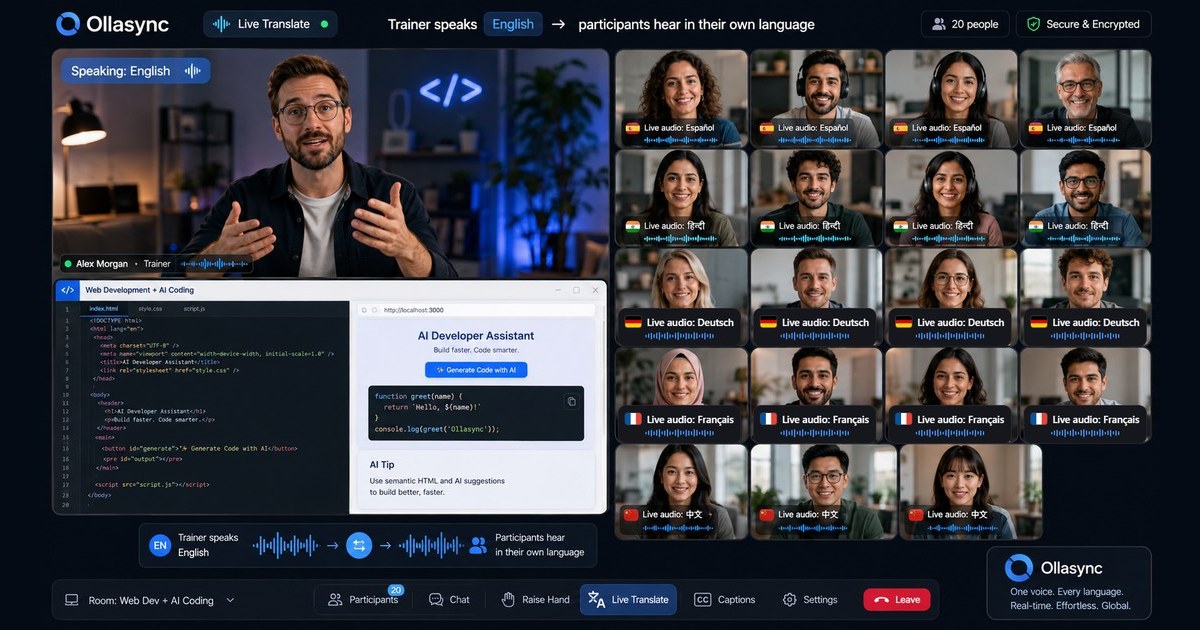
What equipment and software do I need for a professional home studio webinar?
Chapter 1: The Direct Answer & Executive Summary
To build a professional home studio for high-converting B2B webinars, you need an integrated ecosystem of broadcast-grade hardware and reliable SaaS platforms.
When evaluating what equipment and software do the heavy lifting in a modern broadcast pipeline, the ecosystem breaks down into five mandatory layers:
- Audio Capture: A dynamic cardioid microphone (e.g., Shure SM7B) connected via an XLR audio interface (e.g., Elgato Wave XLR or Focusrite Scarlett 2i2) with closed-back studio monitors.
- Video Capture: A mirrorless camera with a clean HDMI output and large sensor (e.g., Sony FX30 or Sony a6700) paired with a fast prime lens (24mm or 35mm at f/1.4–f/1.8) and an ultra-low latency HDMI-to-USB capture card (e.g., Elgato Cam Link 4K).
- Studio Illumination: A three-point lighting system featuring a high-CRI (95+) bi-color key light with a softbox diffuser (e.g., Amaran 100x S / 200x S), accompanied by a subtle fill light and a dedicated hair/rim backlight.
- Encoding & Switching Hardware: A dedicated workstation with an independent GPU (Nvidia RTX series for hardware NVENC encoding) controlled via a macro console (e.g., Elgato Stream Deck).
- Software Infrastructure: A robust broadcast engine (OBS Studio or vMix), a low-latency webinar hosting platform (Livestorm, ON24, Demio, or Zoom Events), and virtual audio routing software (e.g., Loopback or Voicemeeter Banana).
The Master Matrix: Professional Webinar Tech Stack
The table below outlines the exact specifications required to run an enterprise-ready home studio, comparing a high-ROI professional baseline against a broadcast-grade enterprise setup.
| Category | Component | Professional Baseline Tier | Enterprise Broadcast Tier | Primary Function & Impact |
|---|---|---|---|---|
| Audio | Microphone | Shure MV7+ (USB/XLR hybrid) | Shure SM7B / Electro-Voice RE20 | Rejects off-axis room echo; delivers clear, broadcast-quality vocal presence. |
| Audio | Interface / Preamp | Built-in DSP or Focusrite Scarlett Solo | Elgato Wave XLR + Cloudlifter CL-1 | Powers low-output dynamic mics with clean, noise-free gain (+60dB). |
| Audio | Acoustic Treatment | Strategic placement of 2” foam panels | Custom Owens Corning 703 rigid fiberglass panels | Eliminates flutter echo and room resonance for dry audio capture. |
| Video | Camera Body | Sony ZV-E10 (APS-C) | Sony FX30 / Panasonic Lumix GH6 | Provides clean 4K HDMI out downsampled to 1080p without thermal throttling. |
| Video | Lens | Sigma 16mm f/1.4 DC DN Contemporary | Sony FE 24mm f/1.4 GM | Creates authentic optical depth of field (bokeh) and excels in low-light environments. |
| Video | Capture Card | Elgato Cam Link 4K | Magewell USB Capture HDMI 4K Plus | Converts uncompressed clean HDMI video to a low-latency UVC webcam feed. |
| Lighting | Key Light | Elgato Key Light Air (x2) | Amaran 200x S with Light Dome III Softbox | Casts soft, wrapped light across the face to eliminate harsh shadows. |
| Lighting | Fill & Rim Lights | Neewer 660 LED Panel | Amaran 60c (RGBWW) on c-stand boom | Separates the presenter from the background, creating visual depth. |
| Platform | Webinar Engine | Livestorm / Demio | ON24 / Zoom Sessions / Webex Events | Manages attendee registration, interactive polling, dynamic CTAs, and analytics. |
| Local Logic | Production Suite | OBS Studio (Open Source) | vMix HD / Pro | Controls NDI routing, custom scene layouts, lower-thirds, and multi-source inputs. |
Understanding What Equipment and Software Do for B2B Pipeline Growth
In high-stakes B2B sales cycles, technical execution directly impacts brand credibility and pipeline conversion. Low-resolution video, compressed audio, and sudden software crashes signal a lack of operational maturity to enterprise buyers. Understanding what equipment and software do to secure your revenue funnel helps justify the upfront capital investment.
+-------------------------------------------------------------------------+
|                  THE PROFESSIONAL WEBINAR PIPELINE                      |
+-------------------------------------------------------------------------+
|                                                                         |
|  [ ACOUSTIC ENVIRONMENT ]                                               |
|           │                                                             |
|           ▼                                                             |
|   ( Dynamic Mic ) ──► [ Audio Interface ] ──► [ DSP / Noise Gate ] ──┐  |
|                                                                      │  |
|  [ CONTROLLED LIGHTING ]                                             │  |
|           │                                                          ▼  |
|           ▼                                                  ┌──────────────┐
|   ( Mirrorless 4K ) ─► [ Capture Card ] ─► [ Local Switcher] │ WEBINAR SAAS │
|                                                (OBS/vMix)    │ (Browser/App)│
|                                                      ▲       └──────────────┘
|                                                      │               │  |
|   [ Hardwired Gigabit Ethernet Network (Cat6) ] ─────┘               ▼  |
|                                                             [ ATTENDEE BROWSER ]
+-------------------------------------------------------------------------+
1. Audio Fidelity Minimizes Cognitive Fatigue
Research shows that degraded audio fidelity causes immediate listener fatigue, drastically lowering retention and engagement rates. Condenser microphones pick up too much ambient room noise, HVAC rumble, and keyboard clatter.
A high-output dynamic cardioid microphone paired with a clean analog-to-digital preamplifier captures only the presenter’s direct voice. This isolates your vocal delivery and delivers a confident, authoritative sound to prospective buyers.
2. Large Sensors and Fast Optics Establish Authority
Standard built-in webcams rely on tiny 1/4-inch sensors and digital noise reduction, resulting in flat, grainy video feeds.
A dedicated mirrorless camera equipped with a larger APS-C or Full-Frame sensor paired with a wide-aperture lens ($f/1.4 - f/2.8$) creates real optical shallow depth-of-field (bokeh). This natural separation keeps the audience focused entirely on the speaker rather than background distractions.
3. High-CRI Continuous Lighting Prevents Video Noise
Digital sensors require adequate light to prevent visual artifacts and digital noise. Standard overhead consumer bulbs cycle at frequencies that cause camera flicker and register low Color Rendering Index (CRI) values, washing out skin tones.
Dedicated high-CRI (95+) LED lighting with softbox diffusion produces consistent color reproduction and eliminates harsh shadows without blinding the speaker.
4. Local Switching Offloads Real-Time Resource Consumption
While browser-based webinar platforms can handle screen sharing, they often introduce video lag, lower frame rates, and limit branding customization.
Routing all inputs through local broadcast switchers like OBS Studio or vMix gives you precise control over:
- Animated lower-thirds and custom overlay graphics
- Dynamic multi-source layouts (e.g., side-by-side presenter and product demo feeds)
- Hardware-level encoding that keeps the host machine responsive and stable
The Three Non-Negotiable Environmental Factors
Investing in top-tier gear won’t solve issues caused by a poor recording environment. Before purchasing equipment, make sure your space meets these three baseline requirements:
                  ┌────────────────────────────────────────┐
                  │    ROOM GEOMETRY & ACOUSTIC DAMPING    │
                  │   Minimize hard reflective surfaces    │
                  └───────────────────┬────────────────────┘
                                      │
                                      ▼
                  ┌────────────────────────────────────────┐
                  │       LIGHT CONTROL & DIFFUSION        │
                  │  Block sunlight; control ambient temps │
                  └───────────────────┬────────────────────┘
                                      │
                                      ▼
                  ┌────────────────────────────────────────┐
                  │       DEDICATED NETWORK BACKBONE       │
                  │   Hardwired Cat6; 25+ Mbps upload QoS  │
                  └────────────────────────────────────────┘
- Acoustic Absorption: Bare drywall, hardwood floors, and glass windows cause sound to bounce around the room, reducing audio clarity. Place heavy area rugs, dense drapery, or acoustic panels at primary reflection points to eliminate flutter echo.
- Ambient Light Control: Never rely on natural sunlight. Outdoor light changes intensity and color temperature constantly throughout the day, which disrupts your camera’s exposure and white balance settings. Block all windows with blackout shades to maintain complete control over your lighting setup.
- Hardwired Network Connections: Wi-Fi is vulnerable to packet loss, radio frequency interference, and sudden latency spikes. Always run a dedicated Cat6 Ethernet cable directly from your router to the streaming PC to maintain a consistent upload speed of at least 25 Mbps.
Executive Implementation Checklist
Use this high-level checklist to audit your technical readiness before producing live client-facing webinars:
- Acoustic Treatment Installed: High-frequency slap-back echo dampened using targeted wall absorption and floor coverage.
- Isolated Audio Chain Deployed: Dynamic cardioid mic mounted on a decoupled boom arm, routed through an XLR interface with clean gain staging.
- Mirrorless Video Configured: 4K clean HDMI output enabled, auto-focus tuned to real-time face/eye tracking, camera powered continuously via a dummy battery (AC adapter).
- Lighting Calibrated: Key light diffused at a 45-degree angle from the presenter, fill light balanced, and background rim light set to a distinct color temperature.
- Stream Routing Programmed: Video and audio feeds mapped into OBS Studio/vMix and delivered to the webinar platform via a high-bitrate virtual camera or direct RTMP stream.
- Dedicated Network Verified: System hardwired via Cat6 Ethernet, achieving symmetrical upload speeds and zero dropped frames under load tests.
The following chapters cover the individual engineering specifications, hardware routing maps, and software configurations required to build this setup.# Chapter 2: The Data & Competitor Comparison — Legacy Video Tools vs. Modern AI Webinar Platforms
Selecting the right production stack requires understanding how software architecture directly dictates hardware performance. When evaluating what equipment and software do the heavy lifting in a professional home studio webinar, enterprise production teams often make a critical mistake: pairing high-end audiovisual hardware with legacy video conferencing software designed strictly for peer-to-peer internal calls.
This chapter breaks down the architectural, technical, and performance benchmarks separating legacy platforms (Zoom Events/Webinars, Cisco Webex, Microsoft Teams Live Events) from modern, AI-native webinar and live-streaming engines.
The Technical Reality: How Software Bottlenecks Studio Hardware
Broadcasters frequently spend thousands of dollars on mirrorless cameras, XLR dynamic microphones, and discrete lighting systems, only to experience washed-out, compressed, and out-of-sync outputs. The root cause is software-level compression and transmission protocol design.
+-------------------------------------------------------------------------------+
|                        STUDIO HARDWARE PIPELINE                               |
|  [4K Mirrorless / Cam Link]  --->  [XLR Mic / Preamp]  --->  [Local Machine]   |
|         (4K 60fps RAW)                (48kHz 24-bit)         (Zero Latency)   |
+---------------------------------------+---------------------------------------+
                                        |
                 +----------------------+----------------------+
                 |                                             |
                 v                                             v
+----------------------------------+       +------------------------------------+
|     LEGACY MEETING SOFTWARE      |       |      MODERN AI WEBINAR STACK       |
|  - Aggressive 720p H.264 clamp   |       |  - 1080p/4K 60fps VP9 / AV1 codec   |
|  - 16kHz mono audio downsampling |       |  - 48kHz stereo Opus audio         |
|  - Variable framerate (jitter)   |       |  - Cloud AI processing offload     |
|  - High local CPU consumption    |       |  - Deterministic WebRTC pipelines  |
+----------------------------------+       +------------------------------------+
                 |                                             |
                 v                                             v
      [ Degraded Attendee UX ]                     [ Studio-Grade Broadcast ]
1. Compression Algorithms and Bitrate Clamping
- Legacy Platforms: Standard enterprise tools prioritize packet survivability over high fidelity across poor corporate networks. Platforms like Zoom and Teams default to 720p resolution at 1.2–1.8 Mbps using legacy H.264 encoding. Even when “Group HD” (1080p) is enabled, aggressive server-side bandwidth throttling downsamples feeds whenever network contention occurs.
- Modern AI Engines: Modern broadcast suites leverage high-efficiency WebRTC pipelines alongside VP9 and AV1 codecs. Bitrates scale dynamically up to 4.5–6.0 Mbps for 1080p60 video, preserving the high dynamic range and chromatic fidelity captured by DSLR and mirrorless sensors.
2. Audio Codec Processing and Dynamic Range
- Legacy Platforms: Default audio configurations apply aggressive noise gates and acoustic echo cancellation (AEC) tailored for low-quality laptop microphones. This processing truncates the frequency spectrum to 160 Hz–8 kHz (speech-band mono), stripping the warmth and proximity effect of broadcast microphones like the Shure SM7B or Sennheiser MKH 416.
- Modern AI Engines: Full-band Opus audio codecs operate at 48 kHz / 24-bit (20 Hz–20 kHz) with dedicated stereo capabilities up to 510 kbps. AI-based noise isolation runs locally or in the cloud using deep neural networks (DNNs), eliminating environmental noise without flattening vocal dynamics.
3. Client-Side CPU Overhead vs. Cloud Rendering
- Legacy Platforms: Desktop clients handle compositing, screen sharing, virtual backgrounds, and local layout rendering entirely via the host machine’s CPU/GPU. Running dynamic lower-thirds, multiple video inputs, and 4K screen shares simultaneously causes thermal throttling and frame drops.
- Modern AI Engines: Browser-first and hybrid platforms offload stream compositing, layout transitions, dynamic overlays, and real-time captioning to cloud servers, reducing local workstation load to a lightweight capture node.
Architectural Comparison: Legacy Tools vs. Modern AI Platforms
To assess what equipment and software do to maximize studio ROI, review the architectural differences across video transmission, hardware integration, and intelligent automation:
| Evaluation Dimension | Zoom Events / Webinars | Cisco Webex Webinars | Microsoft Teams (Live/Town Hall) | Modern AI Webinar Platforms |
|---|---|---|---|---|
| Max Broadcast Resolution | 1080p (Requires Support Request / Custom Provisioning) | 1080p | 1080p | Native 1080p60 / Select 4K Cloud Ingest |
| Default Video Bitrate | 1.2 – 2.0 Mbps | 1.5 – 2.5 Mbps | 1.5 – 2.0 Mbps | 4.0 – 8.0 Mbps (Adaptive) |
| Audio Pipeline | 16–32 kHz Mono (High Fidelity Music Mode optional) | 32 kHz Mono/Stereo (Music Mode available) | 16 kHz Mono (Satin codec speech optimized) | 48 kHz Uncompressed Opus Stereo (Broadcast quality) |
| Hardware Interoperability (NDI / SDI / Virtual Cam) | Basic Virtual Cam; Native NDI restricted to Enterprise Room accounts | Limited Virtual Cam; strict hardware ecosystem lock-in | Restricted NDI out; high compute overhead | Native NDI, RTMP Ingest, Multi-Camera Virtual Routing |
| Real-Time AI Automation | Basic Cloud Transcription, Post-session AI summaries | Noise removal, standard translation captions | Basic live captions, Copilot meeting recap | Live generative Q&A triage, automated dynamic lower-thirds, real-time clip clipping, smart engagement scoring |
| Stream Latency | 200–800 ms (WebRTC / Proprietary) | 500–1,200 ms | 5–15 seconds (HTTP Live Streaming / Teams Town Hall) | Sub-500 ms Ultra-Low Latency WebRTC / Sub-second RTMP |
| Attendee Barrier to Entry | App install strongly pushed; web client feature-limited | App install preferred; browser fallback | App install or authenticated Microsoft account often required | 100% Frictionless Zero-Install WebRTC Browser Experience |
Deep-Dive Analysis: Legacy Enterprise Platforms
Zoom Webinars & Zoom Events
Zoom remains the enterprise standard for utility, but falls short as a dedicated home studio broadcast engine:
- The Pros: Universal familiarity among B2B attendees, robust registration routing, and high resilience on unstable network connections.
- The Cons: Heavy-handed automatic gain control (AGC) and noise suppression that degrade studio-grade audio; strict administrative barriers required to unlock true 1080p streaming; rigid stage management and limited brand customizability.
- Ideal Use Case: Internal all-hands meetings, technical product trainings, and standard corporate panels where functional delivery outweighs brand differentiation.
Cisco Webex Webinars
Webex offers high-grade encryption and enterprise infrastructure compatibility:
- The Pros: Exceptional security compliance (FedRAMP, HIPAA), deep integration with hardware video endpoints (Cisco Room Kit series), and strong administrative governance.
- The Cons: Proprietary hardware ecosystem biases; high latency on composite stream layouts; rigid browser participant experience that frequently pushes native client downloads.
- Ideal Use Case: Highly regulated industries (banking, defense, healthcare) operating within legacy enterprise infrastructures.
Microsoft Teams Live Events & Town Halls
Teams relies heavily on Microsoft’s Azure Media Services infrastructure:
- The Pros: Seamless identity management through Azure AD/Entra ID; embedded naturally within Microsoft 365 licensing.
- The Cons: Noticeable broadcast latency (often 10–20 seconds over HLS/DASH pipelines), preventing true real-time audience interaction; restrictive external camera switching; lack of dynamic marketing conversion overlays.
- Ideal Use Case: Global internal broadcasts, one-way corporate updates, and company-wide executive communications.
The Modern Alternative: Cloud & AI-Native Broadcast Engines
Modern platforms (such as Livestorm, Demio, Goldcast, and professional cloud switchers like StreamYard/Restream paired with WebRTC distribution) change how hardware interacts with the viewing audience:
Legacy Workflow:
[High-End Studio Rig] -> [Heavy Desktop App Engine] -> [Severe Compression] -> [Restricted Attendee View]

Modern AI-Native Workflow:
[High-End Studio Rig] -> [Low-Overhead WebRTC Node] -> [Cloud Render Engine] -> [Interactive 1080p Stream]
                                                             |
                                            +----------------+---------------+
                                            |                                |
                                     [Cloud AI Layer]               [Dynamic Overlays]
                                   - Multi-Track Record            - Real-Time CTAs
                                   - Auto Repurposing              - On-Brand Graphics
- Deterministic Hardware Pass-Through: Modern platforms allow mirrorless camera captures via capture cards (e.g., Elgato Cam Link 4K, Blackmagic DeckLink) to pass video directly to high-bitrate canvas pipelines without downscaling or altering color profiles (Rec.709/sRGB).
- AI-Assisted Stage Operations: AI modules automatically balance multi-speaker audio levels, dynamically switch camera layouts based on vocal activity detection (VAD), and generate contextual CTA banners without dedicated production engineers.
- Automated Content Repurposing: Cloud-side processing produces dual-track recordings (clean feed without overlays + fully composited program feed) and isolates speaker audio tracks for rapid post-production distribution.
Strategic Selection Framework
To identify what equipment and software do the best job for your specific organizational requirements, use this technical decision matrix:
                                [Define Primary Objective]
                                             |
                   +-------------------------+-------------------------+
                   |                                                   |
        [Internal Operations]                                 [Pipeline & Marketing]
                   |                                                   |
      +------------+------------+                             +--------+--------+
      |                         |                             |                 |
[Security-First]       [Ecosystem-Locked]             [Turnkey Browser]   [Broadcast-Grade]
      |                         |                             |                 |
      v                         v                             v                 v
[Cisco Webex]           [MS Teams / Zoom]                [Demio / AI Stack] [OBS/vMix + RTMP Engine]
- Select Legacy Enterprise Tools if your primary requirement is single-sign-on (SSO) governance, integration with existing company-wide software licenses, and closed-loop internal corporate communications.
- Select Modern AI Webinar Platforms if your primary metric is pipeline generation, conversion rate optimization, broadcast visual authority, and zero-friction attendee engagement.## Chapter 3: The Deep Dive — Technical and Operational Architecture
Creating an enterprise-grade home webinar studio in 2026 requires moving beyond consumer-grade plug-and-play accessories. High-retention B2B events demand broadcast-level visual fidelity, pristine low-latency audio, and automated, fail-safe software pipelines. When evaluating what equipment and software do the heavy lifting in a modern studio environment, you must approach your setup as an integrated signal chain rather than a disconnected collection of gadgets.
Below is the definitive technical blueprint covering hardware acquisition, local and cloud software routing, real-time edge processing, and operational redundancy.
                       SIGNAL CHAIN ARCHITECTURE

 [ 4K Mirrorless ] ──(Micro HDMI)──> [ Capture Card (UVC) ] ──┐
 [ Dynamic XLR Mic] ──(XLR Analog)──> [ Preamp/Interface ] ────┼──> [ Local Host PC ]
 [ Elgato StreamDeck ] ─────────────(USB-C HID)───────────────┘           │
                                                                           │ (Direct Virtual Output)
                                                                           ▼
 [ AI Edge Engine ] <────── Low-Latency Audio/Video DSP ───────── [ OBS Studio / vMix ]
 (NVIDIA Broadcast)                                                        │
                                                                           │ (RTMP / SRT / NDI)
                                                                           ▼
                                                             [ Enterprise Webinar Platform ]
                                                             (ON24 / Demio / Riverside)
1. Hardware Infrastructure: The Physical Signal Chain
The physical capture layer establishes the baseline quality of your production. Modern home studios bypass traditional webcams in favor of dedicated imaging sensors and dynamic acoustic isolation.
A. Video Capture and Optics
- Camera Sensor: A dedicated mirrorless camera utilizing an APS-C or Full-Frame sensor (e.g., Sony FX30, Sony a6700, or Panasonic Lumix S5II) equipped with a clean HDMI output is mandatory. These sensors provide superior dynamic range, natural depth of field (bokeh), and clean high-ISO performance in non-studio ambient conditions.
- Optics: Prime lenses with wide apertures ($f/1.4$ to $f/2.8$) and focal lengths between 24mm and 35mm (full-frame equivalent) provide the optimal field of view for desktop environments without introducing wide-angle facial distortion.
- Capture Interface: Hardware capture cards featuring PCIe or USB 3.2 Gen 2 interfaces (e.g., Elgato Cam Link 4K, Magewell USB Capture HDMI) convert the raw uncompressed video feed to an ultra-low-latency UVC stream at 4K/30p or 1080/60p.
B. Acoustic Processing & Microphone Transduction
- Transducer Selection: Dynamic broadcast microphones with cardioid or supercardioid pickup patterns (e.g., Shure SM7dB, Earthworks ETHOS, Electro-Voice RE20) are technically superior to condenser microphones in untreated residential environments due to their off-axis noise rejection.
- Audio Interface & Preamplification: Ultra-low-noise preamps with high gain margins ($>60\text{ dB}$ of clean gain) paired with a 24-bit/48kHz or 32-bit float analog-to-digital converter (e.g., Focusrite Scarlett 4th Gen, Rodecaster Pro II, Elgato Wave XLR) eliminate audible floor noise and digital clipping.
- Monitoring: Low-impedance In-Ear Monitors (IEMs) prevent audio bleed into the microphone while maintaining a clean, unobtrusive visual profile on camera.
C. Photometric Topology (Lighting)
Professional illumination relies on high Color Rendering Index (CRI $\ge 96$, TLCI $\ge 98$) continuous LED fixtures:
- Key Light: 100W–200W daylight-balanced (or bi-color) fixture paired with a minimum 36-inch parabolic softbox positioned $45^\circ$ off-axis at eye level.
- Fill Light: Low-intensity, highly diffused soft panel or passive reflector positioned opposite the key light to maintain a 2:1 or 3:1 lighting ratio.
- Rim/Hair Light: Compact overhead or rear-mounted spotlight to separate the presenter from the background plane.
- Acoustic Treatment: Placement of high-density open-cell acoustic foam panels, bass traps, and heavy wool floor rugs to reduce Room Impulse Response (RIR) and RT60 decay times below 0.3 seconds.
2. Software Infrastructure & Signal Routing
Software orchestrates your physical hardware into a dynamic, production-ready stream. The architecture divides into local scene generation and cloud distribution.
+---------------------------------------------------------------------------------------+
|                                    SOFTWARE STACK                                     |
+------------------------------------+--------------------------------------------------+
| Local Control & Routing (Layer 1)  | OBS Studio (v30+), vMix, Dante Virtual Soundcard |
| Edge DSP & Enhancements (Layer 2)  | NVIDIA Broadcast SDK, Waves Clarity VX           |
| Distribution & Hosting (Layer 3)   | Livestorm, Goldcast, ON24, Riverside Enterprise  |
| Hardware Orchestration (Layer 4)   | Elgato Stream Deck CLI, Companion by Bitfocus    |
+------------------------------------+--------------------------------------------------+
Local Video and Audio Routing
- Software Vision Mixers (OBS Studio / vMix): OBS Studio acts as the local compositor, pulling the hardware capture feeds, rendering downstream lower-thirds, managing motion transitions via GPU shaders, and delivering a clean virtual camera output directly into target platforms.
- Digital Audio Routing: Using tools like Rogue Amoeba Loopback (macOS) or Dante Virtual Soundcard/Voicemeeter (Windows) isolates discrete software channels (e.g., soundboard audio, slide audio, co-host feedback) into dedicated, mix-minus virtual audio lines to eliminate echo loops.
Production Distribution Platforms
For enterprise delivery, browser-based WebRTC platforms (Goldcast, Demio, Livestorm) or custom RTMP ingest engines bypass traditional video conference downscaling. These platforms support:
- Deterministic slide synchronization (presenting deck assets natively via cloud rendering rather than screen-sharing frames).
- Dual-stream local ISO recording (recording the uncompressed 4K video locally in browser cache while streaming 1080p).
3. Edge-AI Processing & Latency Control
Modern production utilizes machine-learning acceleration on local tensor cores (e.g., NVIDIA RTX or Apple Neural Engine) to execute computationally intensive tasks without inducing frame drops or latency penalties.
                          AUDIO-VISUAL LATENCY BUDGET
 0ms                     20ms                    40ms                    60ms
  ├───────────────────────┼───────────────────────┼───────────────────────┤
  [ Dynamic Mic Capture ] ──> [ DSP Noise Filter ] ──> [ Virtual Audio Loop ]
  [ Clean HDMI Camera ]   ──> [ Capture Card Sync ] ──> [ Scene Compositor ]
- Zero-Latency Noise Suppression: Neural network noise reduction models (such as Waves Clarity VX or Elgato Wave Link Elgato/NVIDIA AI) isolate human vocal formants while scrubbing steady-state and non-steady-state background noise with less than $12\text{ ms}$ of latency.
- Depth-Map Compositing & Eye Tracking: Real-time segmentation algorithms can generate background depth maps without green screens. Gaze-correction models imperceptibly align eye vector paths to the camera lens during slide review, maintaining continuous audience engagement.
- A/V Sync Calibration: Because software-based audio processing executes faster than raw 4K video frame buffer translation, hardware audio delays must be indexed directly inside the mixer ($+40\text{ ms}$ to $+120\text{ ms}$ delay typically required) to guarantee lip-sync parity down to the individual frame.
4. Operational Redundancy and Network Architecture
Hardware crashes and ISP degradations destroy live conversion rates. Enterprise setups must implement active-passive failover paths across power and connectivity.
                           NETWORK & POWER FAILOVER

  [ Primary ISP (Fiber) ] ─────┐
                               ├──> [ Dual-WAN Failover Router ] ──> [ Host PC ]
  [ Backup ISP (5G Sim) ] ─────┘                                           ▲
                                                                           │
  [ Online UPS Battery ] ──────────────────────────────────────────────────┘
- Dual-WAN SD-WAN & Network Bonding: Routers supporting automated multi-WAN failover (e.g., Peplink Balance, UniFi Dream Machine Pro) or software bonding (Speedify protocol) combine a primary fiber line with a low-latency 5G cellular failover. Switchover triggers in $<100\text{ ms}$ upon packet loss thresholds exceeding 3%.
- Uninterruptible Power Supply (UPS): Dedicated online (double-conversion) UPS units rated at $\ge 1500\text{VA} / 900\text{W}$ isolate the camera, lighting, router, and host PC from voltage sags and provide $30+$ minutes of complete runtime during municipal power dropouts.
- Deterministic Control Surfaces: Macro control systems (e.g., Elgato Stream Deck XL coupled with Bitfocus Companion) map multi-step logic paths—such as transitioning camera angles, muting downstream DSPs, and launching interactive webinar polls—to physical hardware keys, removing interface navigation friction from the presenter.
When architected with this degree of technical isolation, processing separation, and hardware failover, your home studio transitions from a standard teleconferencing station into an automated, broadcast-grade production facility designed for high-conversion enterprise B2B webinars.## Chapter 4: The Unified Solution & Complete Implementation Blueprint
The Modern Dilemma: Tool Sprawl vs. Studio Simplicity
When evaluating what equipment and software do top-tier B2B marketers, sales leaders, and educators actually rely on, a clear pattern emerges: hardware is rarely the primary failure point. You can purchase a high-end Sony mirrorless camera, a Shure dynamic microphone, and three-point studio lighting, but your webinar will still underperform if your software architecture is fragmented, complex, or unreliable.
Traditional Fragmented Stack (High Friction):
[Camera + Mic] ➔ [OBS / VMix Encoder] ➔ [Zoom / RTMP Bridge] ➔ [Third-Party Chat/Polls] ➔ [External Cloud Recording] ➔ [Manual CRM Sync]

Modern Unified Stack with Ollasync (Zero Friction):
[Camera + Mic] ➔ [ Ollasync Cloud Broadcast Studio & Conversion Engine ] ➔ [Native HD Stream + Live Engagement + Auto-CRM Sync]
The conventional approach forces creators to duct-tape multiple disparate systems together:
- A local software encoder (e.g., OBS, vMix) that consumes heavy CPU/GPU resources.
- A legacy video conferencing bridge that compresses video feeds down to 720p with washed-out color palettes.
- Third-party audience interaction tools for polls, forms, and Q&A overlays.
- Post-event workflows requiring manual video rendering, downloading, editing, and manual CSV exports to CRMs.
This fragmented workflow introduces latency, technical vulnerabilities during live broadcasts, high churn rates from mandatory software downloads, and lost attribution data.
To solve this, professional home studios are shifting away from fragmented setups toward integrated, cloud-native webinar operating systems.
Ollasync: The Definitive All-In-One Webinar Platform
Ollasync is engineered specifically to eliminate software bloat while maximizing the return on your studio hardware investment. Instead of juggling separate encoding software, landing page builders, engagement widgets, and CRM connectors, Ollasync consolidates the entire broadcast lifecycle into a unified, browser-native command center.
+-------------------------------------------------------------------------------+
|                             OLLASYNC STUDIO HUB                               |
+-------------------------------------------------------------------------------+
|  [Input Engine]         [Cloud Production]         [Conversion & Data]        |
|  - Ultra-HD Audio/Video - Dynamic Scene Builder    - Native In-Stream CTAs    |
|  - Multi-Mic/Cam Sync   - Lower Thirds & Overlays  - Live Gamified Polls      |
|  - Lossless Screen-Share- Multi-Presenter Greenroom- Bi-Directional CRM Sync  |
+-------------------------------------------------------------------------------+
1. Native Cloud Encoding with Zero CPU Strain
Traditional setups require dedicated encoding hardware or intense local processing to manage multi-source scenes. Ollasync processes your video assets, overlays, lower thirds, and screen-shares directly in the cloud. You plug your USB interface or capture card into your computer, open your browser, and broadcast in crisp 1080p60/4K without your computer’s fans spinning out of control.
2. Frictionless, Zero-Download Attendee Experience
Every additional barrier reduces webinar attendance rates. Legacy platforms demand executable downloads, mobile app installations, or account creation. Ollasync leverages modern WebRTC infrastructure to deliver instantaneous, ultra-low-latency video streams directly inside any mobile or desktop browser. Attendees click a link and are instantly inside the broadcast room.
3. Real-Time Conversion & Dynamic Engagement Modules
Most software platforms treat webinars as passive viewing experiences. Ollasync transforms webinars into active conversion funnels:
- Interactive Live CTAs: Deploy timed, customizable buy-buttons, demo booking modals, and lead capture forms that overlay cleanly onto the broadcast without interrupting the presenter.
- Synchronized Engagement: Launch native polls, upvoted Q&A boards, and live sentiment reactions that update in real time with sub-second latency.
- VIP Backstage & Co-Host Greenrooms: Coordinate with guest speakers, test audiovisual levels, and stage presentations privately before transitioning live to main stage.
4. Automated Post-Production & Pipeline Attribution
The webinar does not end when the stream stops. Ollasync automatically records full uncompressed video feeds to the cloud, generates immediate on-demand replays, and syncs engagement metrics (watch time, poll responses, CTA clicks) directly to HubSpot, Salesforce, Marketo, and Zapier workflows.
Stack Comparison: Traditional Setup vs. Ollasync Studio
The table below demonstrates how consolidating your software stack dramatically reduces complexity, failure points, and monthly subscription costs:
| Studio Component | Traditional Hardware + Software Stack | Ollasync Integrated Architecture |
|---|---|---|
| Video Production Engine | OBS Studio / vMix (Demands high CPU/GPU) | Cloud Studio inside browser (Zero hardware strain) |
| Stream Delivery | RTMP with 10–20s delay or Zoom compression | Ultra-low latency WebRTC (Crystal-clear, sub-second lag) |
| Attendee Access | Mandatory software download / plugins | 1-Click Instant Browser Access (Universal device support) |
| Audience Engagement | External tools (Slido, Mentimeter, Typeform) | Built-in, high-converting interactive overlays |
| Guest Management | Awkward external calls / manual link swaps | Dedicated Private Greenroom & Host Stage Controls |
| Data & CRM Pipeline | Manual CSV downloads & manual mapping | Real-time automated sync to major CRMs |
| Total Software Overhead | 3–5 disparate subscriptions ($250+/month) | Single Unified Operating Platform |
Step-by-Step: The Ultimate Home Studio Setup Blueprint
To bring everything together, follow this production matrix to ensure your hardware and software work in harmony:
[ PHYSICAL LAYER ]              [ PROCESSING LAYER ]           [ ENGAGEMENT LAYER ]
+-------------------+           +-------------------+          +-------------------+
| 4K Mirrorless Cam | ──HDMI──> | Cam Link 4K       | ──USB──> |                   |
+-------------------+           +-------------------+          |                   |
                                                               |  OLLASYNC CLOUD   | ──> High-Converting
+-------------------+           +-------------------+          |      STUDIO       |     Live Audience
| Dynamic XLR Mic   | ──XLR───> | Audio Interface   | ──USB──> |                   |
+-------------------+           +-------------------+          |                   |
                                                               +-------------------+
+-------------------+                                                    │
| Key + Fill Lights | ──Lumens──> [ Presenter Subject ]                  ▼
+-------------------+                                            [ Auto-Sync CRM ]
- Acoustic & Visual Isolation: Position your desk facing away from reflective glass. Mount your key light at a 45-degree angle, set your fill light to eliminate harsh shadows, and dial in a subtle background light for depth.
- Audio Routing: Connect your dynamic microphone (e.g., Shure SM7B or MV7) into your USB audio interface. Set gain levels to peak around -12dB to -6dB. Select this interface as the primary audio input inside Ollasync.
- Video Routing: Connect your camera via micro-HDMI into a dedicated capture card. Launch Ollasync in your browser, configure your video resolution to 1080p or 4K, and lock your shutter speed at double your frame rate (e.g., 1/60 for 30fps).
- Cloud Scene Setup: Pre-load your slide decks, product videos, lower-third speaker labels, and custom branded themes directly inside the Ollasync Studio dashboard.
- Set Conversion Triggers: Pre-program your time-stamped call-to-action cards, live offer links, and audience polls so your co-host or moderator can deploy them with a single click during the presentation.
Conclusion: Elevate Your Studio from Basic to World-Class
Answering what equipment and software do you need for a professional home studio webinar is no longer about assembling an intimidating room full of broadcast gear and managing half a dozen software tools.
Professionalism is defined by clarity, reliability, and audience conversion.
By pairing solid, reliable hardware fundamentals—a high-fidelity dynamic mic, clean optical video, and balanced lighting—with a comprehensive, unified broadcast engine like Ollasync, you eliminate technical vulnerabilities and focus on what matters most: delivering high-impact content that engages attendees and drives measurable pipeline.
Transform Your Webinars with Ollasync
Ready to eliminate software chaos, simplify your studio workflow, and host broadcast-quality webinars that convert?
- Eliminate downloads: Give your attendees frictionless, one-click access on any device.
- Simplify production: Run dynamic studio scenes, overlays, and screen shares directly from your browser.
- Accelerate revenue: Deploy interactive CTAs, polls, and forms that turn viewers into qualified pipeline.
[Start Your Free Trial with Ollasync Today] or [Book a 1-on-1 Studio Architecture Demo] to see how modern teams scale their live broadcasts effortlessly.