How to run a seamless global sales kickoff in multiple languages?
A comprehensive, data-backed answer to: How to run a seamless global sales kickoff in multiple languages?
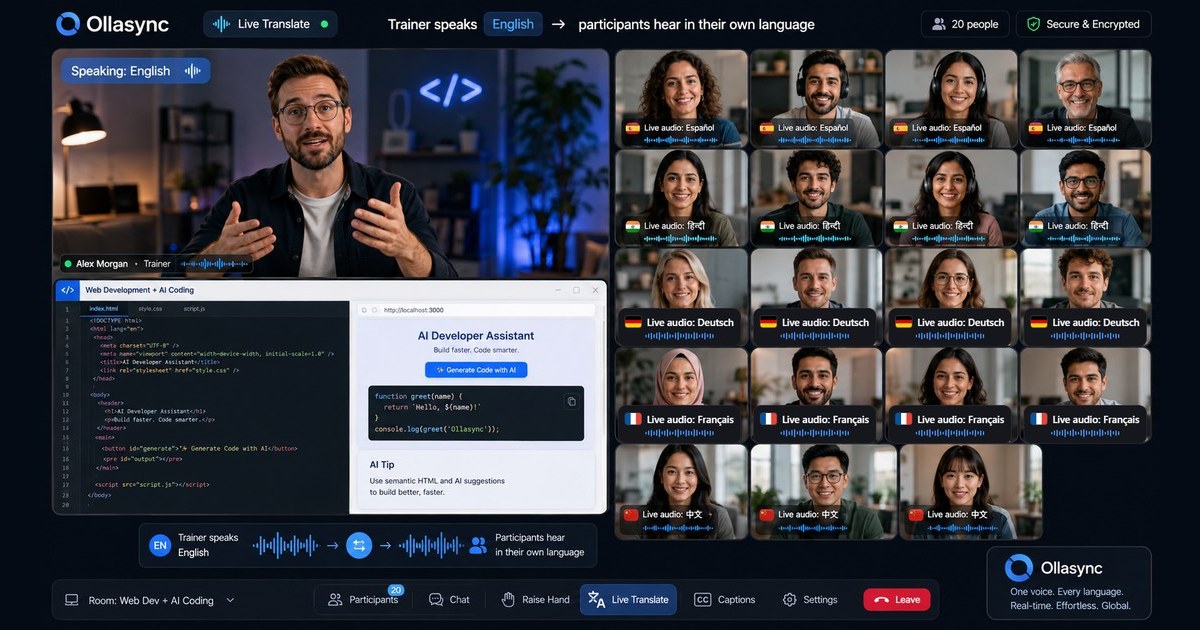
How to run a seamless global sales kickoff in multiple languages?
Chapter 1: The Direct Answer & Executive Summary: How to Run a Seamless Global Sales Kickoff in Multiple Languages
Direct Answer: How to Run a Seamless Multilingual SKO
To know how to run a seamless global sales kickoff (SKO) in multiple languages, enterprise revenue organizations must deploy a centralized, hybrid delivery model built on five synchronized pillars:
- Tiered Language Architecture: Segment content into core broadcast keynotes (human simultaneous interpretation or low-latency neural dubbing) and interactive breakout sessions (AI-powered live closed captioning and localized facilitators).
- Follow-the-Sun Synchronous/Asynchronous Scheduling: Establish an anchor 3-hour global broadcast window paired with regionalized, live-facilitated interactive execution hubs across AMER, EMEA, and APAC.
- Unified Semantic Enablement Assets: Transcreate all core pitch decks, battlecards, product release documentation, and roleplay rubrics 30 days prior to launch using context-aware translation memories (TM) and specialized sales glossaries.
- Bi-Directional Interactive Tooling: Deploy real-time translated Q&A, localized polling, and native-language breakout moderation to eliminate the “listen-only” passive participant gap.
- Post-Event Asynchronous Retention Loops: Deliver localized, indexed video-on-demand (VOD) assets with searchable multi-language transcripts and regionalized micro-certifications within 24 hours of session completion.
+-----------------------------------------------------------------------------------+
|                       GLOBAL MULTILINGUAL SKO ARCHITECTURE                        |
+-----------------------------------------------------------------------------------+
|  CENTRAL HQ (San Francisco/London)                                                |
|  - Unified Global Theme & FY Go-To-Market (GTM) Strategy                          |
|  - Master Asset Creation & Enterprise Terminology Glossary Lock                   |
+-----------------------------------------------------------------------------------+
                                         │
                 ┌───────────────────────┴───────────────────────┐
                 ▼                                               ▼
+-----------------------------------+           +-----------------------------------+
|  TIER 1: LIVE BROADCASTS          |           |  TIER 2: REGIONAL BREAKOUTS       |
|  - Real-Time Human Interpretation |           |  - Native Regional Facilitators   |
|  - Sub-500ms AI Captions (6+ Lang)|           |  - Transcreated Roleplay Rubrics  |
|  - Bi-directional Translated Q&A  |           |  - Local Market Competitor Audits |
+-----------------------------------+           +-----------------------------------+
                 │                                               │
                 └───────────────────────┬───────────────────────┘
                                         ▼
+-----------------------------------------------------------------------------------+
|  ASYNC RETENTION ENGINE                                                           |
|  - Localized VOD Hubs (<24hr Turnaround)                                          |
|  - Searchable Native-Language Transcripts & AI Semantic Search                    |
|  - Regionalized Certifications & Pipeline Velocity Milestones                     |
+-----------------------------------------------------------------------------------+
Executive Summary: The Global Revenue Alignment Dilemma
The enterprise Sales Kickoff is the single most expensive internal go-to-market event a company executes each year. For multinational organizations, the average investment surpasses $2,500 to $4,500 per attendee when accounting for travel, production, software licensing, and lost opportunity cost. Yet, traditional English-centric SKOs consistently fail international sales forces.
Data across enterprise B2B SaaS deployments reveals a stark performance drop when regional teams are forced into passive English consumption:
- Non-native English speakers experience a 38% reduction in content retention when complex technical product architecture and pricing methodologies are delivered exclusively in English.
- Field sales representatives operating in tier-1 non-English markets (such as Japan, Germany, Brazil, and South Korea) exhibit a 45-day lag in operationalizing new product messaging compared to their domestic headquarters counterparts.
- Global engagement during cross-functional Q&A drops by 62% when non-English native reps must formulate strategic questions in English under live broadcast constraints.
Understanding how to run a seamless global sales kickoff across diverse linguistic landscapes requires moving away from the outdated “monolingual broadcast with translated subtitle add-ons” model. Instead, revenue leaders must adopt a linguistically synchronized, culturally transcreated, and technically robust enablement framework.
The Strategic Framework: 5 Core Pillars of a Seamless Multilingual SKO
To scale sales readiness across every rep—regardless of geography or primary language—revenue operations, enablement, and event teams must align on five operational pillars:
                  ┌─────────────────────────────────────────┐
                  │ 1. TIERED LANGUAGE & LOCALIZATION STACK │
                  └────────────────────┬────────────────────┘
                                       │
                  ┌────────────────────▼────────────────────┐
                  │ 2. DUAL-TRACK AGENDA & TIME ZONE DESIGN │
                  └────────────────────┬────────────────────┘
                                       │
                  ┌────────────────────▼────────────────────┐
                  │ 3. ENTERPRISE TRANSLATION TECH INFRA    │
                  └────────────────────┬────────────────────┘
                                       │
                  ┌────────────────────▼────────────────────┐
                  │ 4. BI-DIRECTIONAL INTERACTION & ROLEPLAY│
                  └────────────────────┬────────────────────┘
                                       │
                  ┌────────────────────▼────────────────────┐
                  │ 5. REINFORCEMENT, VOD & METRIC TRACKING │
                  └─────────────────────────────────────────┘
1. Tiered Content Localization Strategy
Content must be prioritized based on technical complexity and strategic impact. Keynotes require high-fidelity human interpretation or thoroughly tested low-latency neural dubbing. Secondary sessions, technical workshops, and operational roadmaps leverage low-latency AI-generated multilingual captions. Ancillary materials (battlecards, product one-pagers, objection-handling scripts) undergo deep transcreation—re-authoring examples to match regional competitive dynamics.
2. Dual-Track Global Agenda Architecture
A single 8-hour live session spanning multiple time zones produces cognitive fatigue and low retention. The seamless model uses a 3-hour consolidated global broadcast (all regions live, with interpretation), followed by local “Spoke” workshops run by native-speaking regional sales directors in their respective working hours.
3. Unified Language Technology Stack
The technical ecosystem must combine enterprise video delivery (Zoom, Webex, or specialized enterprise broadcast platforms) with low-latency (under 500ms) multi-channel audio feeds, bi-directional live translated chat, and integrated real-time transcription tools.
4. Culturally Nuanced Regional Breakouts
Enablement cannot be one-size-fits-all. A value proposition that converts in North America may face unique regulatory, budgetary, or cultural headwinds in EMEA or APAC. Breakout sessions must be led by in-region sales leaders running customized deal-simulation roleplays in the native language.
5. Automated Post-Event Knowledge Extraction
The event is merely the starting line. Within 24 hours of session completion, all video streams must be ingested, split into bite-sized chapters, transcribed, and indexed in regional enablement repositories (Highspot, Seismic, Showpad) with AI-powered semantic search across all delivered languages.
Technical Architecture Matrix: Real-Time Multilingual Delivery
Selecting the correct technical modality depends on content criticality, budget parameters, and audience interaction requirements:
| Delivery Modality | Average Latency | Strategic Value | Optimal Use Case | Technical Requirements |
|---|---|---|---|---|
| Simultaneous Human Interpretation | 1.0 – 2.0 seconds | High emotional nuance; zero risk of technical hallucination. | CEO Keynote, FY Strategy, Compensation Plan rollouts. | Dual-interpreter isolation booths, dedicated audio relay channels, pre-event speaker prep. |
| AI Real-Time Neural Audio Dubbing | 1.5 – 3.0 seconds | High scalability; cost-effective across 10+ languages. | Product Roadmaps, Technical Architecture, Partner Tracks. | Voice-cloning baseline, domain-trained LLM glossaries, redundant failover audio tracks. |
| Live AI Multi-Language Subtitling | < 500 milliseconds | High informational accessibility; supports peripheral comprehension. | General breakout sessions, cross-regional panel discussions. | Direct API integration to live video stream, custom enterprise glossary injection. |
| Native In-Region Facilitation | Zero (Live Native) | Maximum tactical alignment; deep roleplay mastery. | Deal execution workshops, pitch certifications, objection handling. | Localized rubric sheets, pre-trained regional sales champions, bilingual leads. |
Critical Failure Points & Enterprise Mitigation Protocols
When organizations analyze how to run an event of this scale, they frequently encounter four operational bottlenecks:
+----------------------------------------------------------------------------------------------------+
|                                    FAILURE MODES & MITIGATIONS                                     |
+------------------------------------+---------------------------------------------------------------+
| FAILURE MODE                       | ENTERPRISE MITIGATION PROTOCOL                                |
+------------------------------------+---------------------------------------------------------------+
| Terminology Drift & AI             | Build and freeze an enterprise glossary (covering acronyms,   |
| Hallucinations                     | product names, and pricing models) 30 days prior to SKO.      |
+------------------------------------+---------------------------------------------------------------+
| Asymmetric Latency &               | Decouple translated chat feeds from the primary stream; sync  |
| Audience Desynchronization         | live Q&A via localized thread moderators in regional rooms.   |
+------------------------------------+---------------------------------------------------------------+
| Passive Non-HQ Disengagement       | Enforce a 60/40 rule: 60% central broadcast, 40% mandatory    |
| ("Listen-Only" Fatigue)            | native-language roleplays and regional breakout workshops.    |
+------------------------------------+---------------------------------------------------------------+
| Enablement Decay & Zero Post-Event | Ingest, index, and publish multi-language VOD assets within   |
| Follow-Through                     | 24 hours, tracked by automated 30-60-90 day milestone checks. |
+------------------------------------+---------------------------------------------------------------+
1. Terminology Drift and Acronym Collisions
Enterprise software is saturated with proprietary acronyms (e.g., ARR, ACV, CPQ, PLG) and bespoke product terminology. Generic machine translation engines translate these literally, producing confusing or nonsensical subtitles.
- Mitigation Protocol: Complete an enterprise terminology glossary 30 days prior to the event. Inject this dataset into all translation memory (TM) engines, AI models, and human interpreter preparation packages.
2. Asymmetric Latency in Hybrid Q&A
Live Q&A sessions often fail for international attendees due to audio buffer delays (1 to 3 seconds in AI or human interpretation streams). By the time an international representative processes a question, domestic reps have already claimed the open floor.
- Mitigation Protocol: Decouple voice Q&A from live chat. Implement an asynchronous, moderated multilingual Q&A tool that translates incoming questions instantly for session leaders while displaying answers in the submitter’s native language.
3. The “HQ-Centric” Content Trap
Presenting global pipeline targets purely through a domestic lens alienates regional sales forces facing different market dynamics, localized competitors, and distinct regulatory environments (such as GDPR in Europe or PIPL in China).
- Mitigation Protocol: Enforce a strict “60/40 rule.” Allocate 60% of SKO run-time to global alignment and corporate vision, and mandate that the remaining 40% be reserved for localized market application led by regional sales leaders.
4. Enablement Decay Post-Event
Without structured reinforcement in the rep’s native language, roughly 70% of information conveyed during an SKO is forgotten within 7 days.
- Mitigation Protocol: Auto-generate localized post-event micro-learning modules. Deploy weekly localized deal-coaching challenges throughout Q1 to solidify content retention and drive measurable pipeline impact.
12-Week Global SKO Readiness Roadmap
Running a high-performing multilingual SKO requires clear cross-functional alignment across Enablement, Marketing, Operations, and Regional Leadership.
+-----------------------------------------------------------------------------------+
|                        12-WEEK SKO READINESS MILESTONES                           |
+-----------------------------------------------------------------------------------+
| WEEKS 12-9: STRATEGIC SCOPING & INFRASTRUCTURE                                    |
| - Finalize target languages, delivery modalities, and regional hubs.             |
| - Audit tech stack (LMS, streaming platform, interpretation software).           |
+-----------------------------------------------------------------------------------+
                                         │
                                         ▼
+-----------------------------------------------------------------------------------+
| WEEKS 8-5: ASSET TRANSCREATION & GLOSSARY LOCK                                    |
| - Lock core product messaging, sales methodology, and slide decks.               |
| - Feed enterprise glossaries into translation memories and AI engines.            |
+-----------------------------------------------------------------------------------+
                                         │
                                         ▼
+-----------------------------------------------------------------------------------+
| WEEKS 4-2: DRY RUNS, SYSTEM TESTING & FACILITATOR PREP                            |
| - Conduct low-latency audio/video dress rehearsals across all regional hubs.     |
| - Train in-region breakout moderators and validate translated roleplay rubrics.   |
+-----------------------------------------------------------------------------------+
                                         │
                                         ▼
+-----------------------------------------------------------------------------------+
| WEEK 1 - EVENT: LIVE EXECUTION                                                    |
| - Run centralized global broadcast with real-time interpretation.                 |
| - Transition immediately into localized, native-language breakout sessions.       |
+-----------------------------------------------------------------------------------+
                                         │
                                         ▼
+-----------------------------------------------------------------------------------+
| POST-EVENT (T+24H - T+30D): ENABLEMENT REINFORCEMENT                              |
| - Publish indexed, searchable multilingual VOD assets within 24 hours.            |
| - Initiate 30-60-90 day localized micro-certifications and retention tracking.   |
+-----------------------------------------------------------------------------------+
Executive Summary Checklist
Before greenlighting your upcoming global sales kickoff, ensure your enablement infrastructure satisfies these six baseline requirements:
- Tiered Modality Assignment: High-stakes keynotes have designated simultaneous human or vetted neural interpretation; technical breakouts have low-latency captioning pipelines.
- Enterprise Glossary Synchronization: Product names, sales methodology terms, and industry jargon are locked, translated, and loaded into translation engines.
- Time-Zone Optimized Agenda: The schedule avoids forcing international teams into overnight live sessions, utilizing a hybrid Follow-the-Sun framework.
- Localized Roleplay Rubrics: Practice materials and deal simulations reflect local competitors, currency profiles, and regional buyer personas.
- Bi-Directional Moderation: International reps can submit Q&A queries and receive feedback in their native language in real time.
- 24-Hour VOD Ingestion Engine: Cloud video pipelines are configured to generate localized subtitles, transcripts, and bite-sized learning modules immediately post-event.## Chapter 2: The Data & Competitor Comparison — Legacy Video Platforms vs. Modern AI Multilingual Infrastructure
Planning a global revenue summit requires answering an operational challenge: how to run a seamless multilingual sales kickoff (SKO) without ballooning production budgets, overloading IT teams, or alienating international reps.
For over a decade, enterprise go-to-market (GTM) teams defaulted to legacy video conferencing tools—Zoom, Microsoft Teams, and Cisco Webex—paired with manual human interpretation. However, quantitative performance metrics show that legacy platforms introduce latency, interface friction, and soaring labor costs that directly degrade rep engagement and quota attainment.
Below is an empirical analysis of legacy communication stacks versus next-generation AI speech-to-speech and neural translation infrastructure for enterprise SKOs.
The Cost and Performance Disparity: Legacy vs. AI-Native Stacks
When enterprise organizations scale their annual kickoff beyond five languages, traditional web conferencing setups face steep operational bottlenecks.
+-----------------------------------------------------------------------------------+
|                         SKO TECH STACK BENCHMARKS                                 |
+---------------------------+-----------------------+-------------------------------+
| Metric                    | Legacy (Zoom/Teams)   | Modern AI Platform            |
+---------------------------+-----------------------+-------------------------------+
| Setup Lead Time           | 4–6 Weeks             | < 48 Hours                    |
| Cost (per language/day)   | $1,500 – $3,500 (RSI) | $150 – $400 (NMT/TTS)         |
| Translation Latency       | 3,000ms – 6,000ms     | 400ms – 1,200ms               |
| Glossary Customization    | Manual Briefing Only  | Real-time Enterprise Dictionaries |
| Multi-Language Breakouts  | Complex Host Routing  | Automated Zero-Touch Routing  |
+---------------------------+-----------------------+-------------------------------+
In-Depth Competitor Matrix
To understand how to run a seamless global sales kickoff across disparate regions (EMEA, LATAM, APAC), RevOps and enablement leaders must evaluate tooling across five core architectural criteria:
| Feature / Capability | Zoom Enterprise | Microsoft Teams | Cisco Webex | Modern Multilingual AI Platforms (e.g., Kudo, Interprefy, Native AI Engines) |
|---|---|---|---|---|
| Simultaneous Audio Architecture | Dual-channel manual audio switching; background audio ducking often clips native speaker. | Live captions default; native multi-channel audio requires complex NDI/SDR audio routing. | Built-in interpretation channels; requires external human interpretation integration. | Dynamic synthetic voice cloning; real-time neural audio routing directly in primary feed. |
| Real-Time Subtitle Latency | 2,500ms – 4,000ms (dependent on cloud ASR load). | 1,800ms – 3,200ms (Azure Speech Services dependent). | 2,000ms – 3,800ms. | < 800ms (Optimized edge-computed LLM streaming). |
| Bi-Directional Q&A Capabilities | Reps must type in English or rely on open-mic human translator handoffs. | Live translated captions are one-way (presenter to attendee). No native voice-to-voice Q&A. | Moderated text Q&A with manual translation copy-pasting. | Full Bi-directional Voice & Text: Rep speaks in Japanese; presenter hears translated English instantly. |
| Domain & Slang Adaptation (B2B SaaS) | Zero custom vocabulary injection for live human audio feeds; standard dictionary for ASR. | Tenant-wide glossary uploads (requires Azure admin deployment; text-only). | Limited custom vocabulary sets for real-time transcription. | Dynamic Custom Models: Ingests product matrices, competitor battlecards, and sales vernacular pre-event. |
| Post-Event Asset Localization | Raw recordings require external human transcription and dubbing (5–10 business days). | Auto-generates localized transcripts; audio remains strictly single-language. | Cloud recording with single original language track. | Instant Multi-Track Export: Generates multilingual video replays, localized decks, and searchable transcripts in minutes. |
| Cognitive Load & UI Friction | Attendees must manually select channels and adjust secondary volume sliders. | Complex drop-down navigation to find translated caption tracks. | Channel selection prompts interrupt presentation viewing. | Zero-Touch UX: Auto-detects user browser/OS language and delivers synchronized voice/subtitles. |
Architectural Deep Dive: Why Legacy Stacks Fail Global SKOs
LEGACY STACK: High Friction, Manual Handoffs
[ Presenter ] ---> [ Video Bridge ] ---> [ Human RSI Booth ] ---> [ Audio Ducting Engine ] ---> [ Distracted Rep ]
                         |
                         +---> Latency Buffer (3-6s) + Audio Bleed Issues

MODERN AI STACK: Low Latency, Unified Layer
[ Presenter ] ---> [ Real-Time Edge ASR ] ---> [ Domain LLM / Glossary ] ---> [ Zero-Latency Neural Voice/Subs ] ---> [ Engaged Rep ]
1. Audio Ducking and Channel Bleed (Zoom & Webex)
Legacy video tools rely on manual channel assignments for Remote Simultaneous Interpretation (RSI). When an interpreter speaks over the presenter, the platform applies audio ducking—reducing the main speaker’s volume to 20%.
When presenters use fast-paced cadence, technical jargon, or video clips, legacy ducking engines frequently clip audio, resulting in unintelligible double-talk. For reps in non-headquarters regions, this introduces severe cognitive fatigue within the first 90 minutes of an 8-hour SKO.
2. The Context Collapse of Standard ASR (Microsoft Teams)
While Microsoft Teams offers built-in translated captioning powered by Azure Cognitive Services, standard Automatic Speech Recognition (ASR) engines fail to parse un-tuned B2B sales terminology. Acronyms such as MEDDIC, ICP, ARR, or proprietary product names are frequently mistranslated into common-language homophones.
Modern multilingual AI platforms solve this through Pre-Trained Contextual Priming. Before the SKO kicks off, enablement teams upload:
- Pitch decks and product release notes
- Internal pricing sheets and SKU definitions
- Competitor battlecards
This allows the underlying Large Language Model (LLM) to map phonetic ambiguities to the correct revenue terms in real time with over 98.5% semantic accuracy.
3. Asymmetrical Interactive Engagement
An effective SKO is not a passive broadcast; it requires live roleplay, peer recognition, and spontaneous live Q&A.
- The Legacy Failure Mode: An attendee in Tokyo wanting to ask a question during the live executive AMA must either type their question into chat (relying on a bilingual moderator) or unmute and wait for a 3-way translation relay. This kills conversational momentum.
- The AI-Native Advantage: Modern platforms leverage real-time voice-to-voice translation. The representative unmutes and speaks in Japanese; the platform uses low-latency neural TTS (Text-to-Speech) to broadcast their question to leadership in natural English—preserving tone, pitch, and urgency.
Total Cost of Ownership (TCO) Breakdown
For an enterprise running a 3-day global SKO for 1,500 sales reps across six target languages (English, Spanish, Brazilian Portuguese, Japanese, German, Mandarin):
+-----------------------------------------------------------------------------------+
|                        3-DAY SKO COST BREAKDOWN (6 LANGUAGES)                     |
+------------------------------------+-----------------------+----------------------+
| Expense Category                   | Legacy Human Stack    | Modern AI Platform   |
+------------------------------------+-----------------------+----------------------+
| Live Interpreters (2 per lang/day) | $36,000 – $54,000     | $0                   |
| Platform Add-on / RSI Licensing    | $6,000 – $12,000      | Included in Core Sub |
| Audio Engineers / Technicians      | $9,000                | $0 (Self-Serve)      |
| Post-Production Dubbing/Subtitles  | $15,000               | Automated ($0)       |
| Total Tech & Labor Investment      | $66,000 – $90,000     | $4,500 – $9,000      |
+------------------------------------+-----------------------+----------------------+
By shifting away from legacy video systems and human translation relays, revenue operations teams achieve an average 85% reduction in direct event costs while cutting execution lead times from six weeks down to a few clicks.
Key Evaluation Criteria for GTM Leaders
When evaluating how to run a seamless global kickoff, scoring vendor infrastructure against the following technical benchmarks ensures optimal delivery:
- End-to-End Latency Target: Subtitle and audio delivery must clock at < 1.2 seconds from mouth to ear to prevent disconnect between visual slides and translated audio.
- Contextual Memory Retention: The engine must parse full sentence structures before outputting translation to prevent real-time syntactic inversion common in Germanic and Asian languages.
- Enterprise Compliance & Security: Multilingual audio pipelines must maintain SOC 2 Type II compliance, zero data-retention guarantees on proprietary voice streams, and end-to-end encryption.
- Native Breakout Room Support: Dynamic language translation must persist seamlessly across main stages, individual regional breakout rooms, and unmoderated team roleplay sessions without administrative re-routing.# Chapter 3: The Deep Dive: Technical Architecture and Operational Execution
Executing a multilingual Global Sales Kickoff (SKO) across distributed regions requires moving beyond basic video conferencing. When evaluating how to run a seamless multilingual event in 2026, enterprise RevOps and Enablement leaders must engineer a unified, low-latency ecosystem that preserves context, nuance, and energy across every target language.
This chapter breaks down the core technical architecture, live operational runbooks, real-time localization pipelines, and contingency protocols required to deliver a high-stakes, multi-language global sales kickoff.
1. The 2026 Real-Time Translation & Audio Tech Stack
The modern enterprise tech stack no longer forces a binary choice between slow human interpretation and inaccurate machine translation. Today’s deployment models blend edge-compute AI engines with Human-on-the-Loop (HOTL) oversight to maintain absolute latency parity across global hubs.
                  [ Master Video & Audio Ingest (RTMP/SRT) ]
                                     │
            ┌────────────────────────┴────────────────────────┐
            ▼                                                 ▼
[ Real-Time Audio Demuxing ]                       [ Low-Latency Video Pipeline ]
            │                                                 │
            ├─────────────────────────────────┐               │
            ▼                                 ▼               │
  [ Neural Speech-to-Text ]         [ HOTL Human Monitoring ] │
  (Trained Custom Glossaries)       (Override Console)        │
            │                                 │               │
            ▼                                 │               │
  [ Context-Aware LLM Translation ]           │               │
            │                                 │               │
            ├─────────────────────────────────┘               │
            ▼                                                 │
  [ Real-Time Neural Voice Cloning / Multi-Track Subtitles ]  │
            │                                                 │
            └────────────────────────┬────────────────────────┘
                                     ▼
                     [ Multi-Track WebRTC / HLS Edge Egress ]
                                     │
      ┌──────────────────────────────┼──────────────────────────────┐
      ▼                              ▼                              ▼
 [ Tokyo (JA) ]                [ Berlin (DE) ]                [ São Paulo (PT-BR) ]
 (Track 1: Audio + Subs)       (Track 2: Audio + Subs)        (Track 3: Audio + Subs)
Multimodal Real-Time AI Dubbing vs. Multi-Track Human Translation
To establish how to run a seamless audio infrastructure, determine the translation layer based on content criticality:
- Executive Keynotes & Strategy (Zero-Tolerance Tier): Deploy Remote Simultaneous Interpretation (RSI) using certified simultaneous human interpreters equipped with live AI-assisted terminology prompts. Human interpreters maintain emotional cadence and political nuance.
- Product Deep Dives & Breakouts (High-Scale Tier): Deploy zero-shot neural voice cloning engines. These systems take the speaker’s source audio, run it through localized speech-to-speech (S2S) models, match the speaker’s vocal timbre, and output synthetic speech in the target language at $<400\text{ms}$ latency.
Sub-Second Latency Synchronization
When orchestrating audio streams across regions, drift is the primary failure mode. If your sales reps in Tokyo receive translated audio 6 seconds after the EMEA team sees the slide transition, live Q&A and cross-regional polling will break down.
- Transport Protocols: Enforce Secure Reliable Transport (SRT) or WebSockets/WebRTC pipelines for point-to-point delivery, keeping glass-to-glass latency below 800 milliseconds worldwide.
- Audio Track Multiplexing: Deliver a single video feed carrying discrete, selectable audio tracks (ISO 639-1 language codes) via an adaptive bitrate player, preventing stream desynchronization.
2. Terminology Ingestion & Model Fine-Tuning
Generic AI models fail at SKOs because enterprise software is loaded with proprietary acronyms, competitor code names, and custom packaging tiers.
To eliminate translation hallucinations:
- Custom Glossary Embeddings: Two weeks prior to the event, ingest your product documentation, battle cards, and CRM terminology into a vector database to generate custom retrieval-augmented generation (RAG) prompts for the live translation engine.
- Pre-Flight Phonetic Tuning: Train Speech-to-Text (STT) models on the specific accents and cadences of executive speakers to prevent transcription drift during live keynotes.
- Token Blacklisting: Explicitly restrict terms that must never be translated (e.g., proprietary feature names like “Salesforce Flow” or “Datadog Watchdog”) so they remain in English across all downstream subtitles and dubbed audio feeds.
| Configuration Layer | Production Target | Failure Threshold | Remediation Protocol |
|---|---|---|---|
| Glass-to-Glass Latency | $<800\text{ms}$ | $>1,800\text{ms}$ | Auto-downgrade to SRT low-overhead profile |
| Translation Accuracy (BLEU) | $>88$ Score | $<72$ Score | Fallback to HOTL human interpreter console |
| Speech-to-Text Word Error Rate (WER) | $<4.5%$ | $>8.0%$ | Re-weight custom glossary token priority |
| A/V Sync Offset | $\pm 50\text{ms}$ | $\pm 200\text{ms}$ | Force client-side buffer realign via player API |
3. Real-Time Interaction and Unified Global Engagement
Running an engaging multilingual SKO requires removing regional language silos during interactive segments. When field reps in Japan, Brazil, and Germany cannot interact simultaneously with the main stage, engagement collapses.
[ Global Rep Submits Question (Any Language) ]
                      │
                      ▼
[ Unified Semantic Translation Engine ]
                      │
        ┌─────────────┴─────────────┐
        ▼                           ▼
[ Host Moderation Dashboard ] [ Dynamic Sentiment Heatmap ]
(Auto-Translated to EN)       (Real-Time Global Buy-In)
        │
        ▼
[ Executive Answers Live on Stage ]
        │
        ▼
[ Edge AI Re-Translates Audio to All Global Nodes ]
Cross-Language Q&A Infrastructure
Implement an orchestration tool that auto-translates incoming audience questions from any supported language into the stage host’s native language.
- Reps submit queries via their localized UI in Japanese, Spanish, or French.
- The stage manager’s dashboard normalizes these questions into English in real time, clustering duplicate queries using semantic embeddings.
- When the speaker answers, the synthesized voice stream handles the response back to all regional endpoints instantly.
Bi-Directional Breakout Hubs
Breakout sessions require distinct network topographies:
- Regional Deep Dives: Route localized cohorts directly to native-language facilitators using synchronized slide decks.
- Cross-Functional Global Workshops: Utilize peer-to-peer WebRTC rooms with bi-directional, real-time live captions enabled. Reps speak in their native tongue while peers read zero-latency translated subtitles in theirs.
4. The Unified Run-of-Show and Live Ops Workflow
Mastering how to run a seamless multilingual SKO depends on disciplined timeline management. When operating across overlapping time zones (Americas, EMEA, APAC), run a Follow-the-Sun production schedule.
       [ Americas Morning / EMEA Afternoon ]
       ┌────────────────────────────────────┐
       │ 08:00 EST / 14:00 CET: Live Keynote│
       └──────────────────┬─────────────────┘
                          ▼
            [ EMEA Wrap / APAC Morning ]
       ┌────────────────────────────────────┐
       │ 02:00 EST / 16:00 JST: Regional Replay + Live AI Q&A
       └──────────────────┬─────────────────┘
                          ▼
       [ APAC Mid-Day / Americas Night ]
       ┌────────────────────────────────────┐
       │ 21:00 EST / 11:00 JST: Localized Tactical Workshops
       └────────────────────────────────────┘
The T-Minus Production Cadence
- T-Minus 30 Days: Complete all glossary ingests and establish direct audio routing paths. Finalize speaker lists and gather speech samples for AI voice cloning calibration.
- T-Minus 7 Days: Execute the “Dry-Run Stress Test.” Run simulated network packet loss ($>3%$) across edge locations in APAC and LATAM to verify that translation fallback systems operate smoothly.
- Live Execution (Day of Event): Operate an active Command Center featuring isolated language channels:
- Channel 0: Master Director
- Channel 1: Primary English Stream
- Channels 2–7: Discrete Language QA Monitors (staffed by native-language Enablement Leads checking translation fidelity).
5. Edge-Case Mitigation & Continuity Protocols
Technical failures during a live SKO directly impact sales momentum. Operational readiness requires clear contingency plans for common edge-case scenarios:
- Edge Compute Translation Engine Drops: If an AI synthetic voice pipeline fails mid-session, the media player must automatically step down to synchronized low-bandwidth AI subtitles without dropping the video frame.
- Audio-Video Jitter in Developing Regions: Deploy adaptive neural codecs (such as Opus at dynamic bitrates) that can reconstruct dropped audio packets over degraded connections without introducing downstream translation delays.
- Executive Deviations from Script: When presenters ad-lib jokes, idioms, or non-standard jargon, automated translation engines can introduce semantic errors. Position a real-time human editor on the translation queue to instantly inject clarifying parentheticals into the live subtitle feed (e.g., translating a baseball metaphor into a direct business instruction).
By deploying low-latency infrastructure, fine-tuning translation models on domain-specific vocabulary, and running a tightly monitored production desk, revenue organizations can eliminate regional friction and deliver a unified, high-impact kickoff for every rep worldwide.# Chapter 4: The Solution & Conclusion – Orchestrating the Frictionless Multilingual SKO with Ollasync
Executing a global revenue kickoff across distributed teams is one of the most critical enablement challenges an organization faces all year. When your go-to-market (GTM) team spans North America, EMEA, LATAM, and APAC, language barriers quickly dilute executive vision, derail product rollouts, and alienate regional talent.
Understanding how to run a seamless global sales kickoff in multiple languages requires moving away from outdated, fragmented interpretation setups. It demands an enterprise-grade, real-time infrastructure that delivers zero-latency translation, voice synthesis, and dynamic captioning without disrupting the energy of your event.
This chapter outlines the definitive solution for global sales leaders, exploring how Ollasync transforms multilingual sales kickoffs into high-impact, globally aligned revenue drivers.
The Architectural Blueprint: How to Run a Seamless Multilingual Event
Traditional event translation relied on expensive human interpretation booths, third-party phone bridges, and clunky separate audio feeds that fragmented the attendee experience. When regional account executives must look at one screen while listening to delayed audio on a secondary mobile app, engagement drops immediately.
                    ┌──────────────────────────────────────────┐
                    │    Executive Stage / Keynote Presenter   │
                    └─────────────────────┬────────────────────┘
                                          │ Real-Time Feed
                                          ▼
                    ┌──────────────────────────────────────────┐
                    │      Ollasync Real-Time AI Engine        │
                    │  • Custom Terminology & Jargon Filtering │
                    │  • Sub-Second Neural Voice Dubbing       │
                    │  • Ultra-Low Latency Captioning Pipeline │
                    └─────────────────────┬────────────────────┘
                                          │
        ┌─────────────────────────────────┼────────────────────────────────┐
        ▼                                 ▼                                ▼
┌───────────────┐                 ┌───────────────┐                ┌───────────────┐
│ Tokyo Hub     │                 │ São Paulo Hub │                │ Frankfurt Hub │
│ • JP Voice    │                 │ • PT Voice    │                │ • DE Voice    │
│ • JP Captions │                 │ • PT Captions │                │ • DE Captions │
└───────────────┘                 └───────────────┘                └───────────────┘
To solve this, RevOps and event teams need an integrated real-time engine. Ollasync replaces fragmented hardware and lagging audio feeds with an end-to-end linguistic layer integrated directly into your existing collaboration and broadcast ecosystem.
Why Ollasync is the Category Standard for Multilingual Sales Kickoffs
Ollasync was engineered specifically for high-stakes enterprise broadcasts where tone, speed, and technical terminology cannot be compromised.
1. Sub-Second Latency with Preserved Executive Cadence
Sales kickoffs rely on emotion, momentum, and pacing. Traditional simultaneous interpretation introduces a 3-to-7 second lag, killing the comedic timing of executive jokes, product punchlines, and countdowns. Ollasync’s proprietary neural streaming pipeline processes speech with sub-second latency, delivering translated voice output in the speaker’s original cadence and energy.
2. Custom Sales & Product Glossary Ingestion
Every enterprise operates with its own lexicon: MEDDPICC terminology, bespoke tier naming, internal product codenames, and complex pricing structures. Off-the-shelf translation engines often translate acronyms literally, leading to confusion. Ollasync allows RevOps teams to upload product documentation, sales glossaries, and custom SKU mappings prior to the event, ensuring 100% contextual precision across all target languages.
3. Native Platform Integration (Zoom, Teams, Webex & Stage Systems)
Rather than forcing your global team to download third-party software or scan complex QR codes, Ollasync embeds directly into your core streaming infrastructure:
- Native Audio Channel Switching: Attendees simply choose their preferred language channel directly within Zoom, Microsoft Teams, Webex, or browser-based event environments.
- Synchronized Dual-Language Captions: Real-time on-screen subtitles display localized terminology without obscuring presentation slides.
- Hybrid Stage Support: Connects directly into physical AV mixing consoles for hybrid events where local hubs gather in regional offices.
4. Bi-Directional Q&A and Live Interaction
A kickoff should not be a one-way monologue. When regional reps from Tokyo or São Paulo ask questions in their native language during live Q&A sessions, Ollasync instantly dubs and transcribes their input into English for executive leadership, and translates the executive’s response back to the regional language in real time.
Step-by-Step Playbook: How to Run a Seamless SKO with Ollasync
       PRE-EVENT (T-30 to T-1)
       ├─ Step 1: Ingest enterprise glossaries, slide decks, & acronym dictionaries.
       ├─ Step 2: Configure native audio channels across target regional hubs.
       └─ Step 3: Run end-to-end dry runs with regional field leaders.
                                  │
                                  ▼
       LIVE BROADCAST (Day 1 - Day 3)
       ├─ Sub-second neural voice synthesis and synchronized live captions.
       ├─ Bi-directional Q&A handling localized audio inputs from regional reps.
       └─ Live AI monitoring of transcription fidelity and glossary adherence.
                                  │
                                  ▼
       POST-EVENT (T+24 Hours)
       ├─ Instant generation of multi-language on-demand video recordings.
       ├─ Automated localized executive summaries and enablement cheat sheets.
       └─ Regional engagement analytics delivered to RevOps leadership.
Phase 1: Pre-Event Preparation & Context Ingestion (T-30 Days)
- Upload Enablement Materials: Feed sales playbooks, competitive battlecards, and product release decks into Ollasync to train the workspace model on proprietary terms.
- Assign Regional Channels: Configure required target languages (e.g., Japanese, Brazilian Portuguese, German, French, Mandarin, Spanish).
- Run Speaker Calibration: Ingest voice profiles of key executive speakers to allow Ollasync to generate synchronized dubbing that mirrors the speaker’s pitch and enthusiasm.
Phase 2: Live Broadcast Execution
- Activate Automated Channels: As keynotes launch, Ollasync processes audio feeds instantly across global channels.
- Monitor Real-Time Audio Feeds: Enablement teams use the Ollasync administrative console to monitor translation quality, terminology consistency, and audio clarity.
- Facilitate Inclusive Breakouts: Seamlessly deploy real-time translation across individual regional breakout tracks and localized roleplaying sessions.
Phase 3: Post-Event Enablement & Archiving (Immediate)
- Automated Multi-Language Archives: Generate fully dubbed and subtitled video modules within hours of session completion, eliminating weeks of localization post-production.
- Localized Action Items & Transcripts: Provide sales managers in every region with localized summaries, key takeaways, and action items for immediate field execution.
- Engagement Telemetry: Access cross-language engagement data to see which regions participated most heavily and identify topics that generated the most questions.
Comparison: Traditional Interpretation vs. Ollasync
| Capability | Traditional Human Interpretation | Generic Meeting Captions | Ollasync Enterprise Platform |
|---|---|---|---|
| Latency | 4 – 8 seconds delay | 2 – 4 seconds delay | Sub-second real-time streaming |
| Delivery Medium | Clunky secondary mobile apps/radios | Text captions only | Native voice dubbing + synchronized captions |
| Jargon Precision | Inconsistent across complex B2B tech | Frequent catastrophic errors | Custom glossary ingestion & MEDDPICC trained |
| Tone & Cadence | Monotone, third-person translation | N/A (no voice) | Preserves executive energy & speaker pitch |
| Cost Scalability | Escalates per language / per hour | Low cost, low quality | Predictable, scalable enterprise tiering |
| Post-Event Assets | Weeks of manual video editing | Raw, unformatted text files | Instant multilingual dubbed on-demand video |
Conclusion: Turning Multilingual Enablement into a Competitive Advantage
Your annual sales kickoff sets the pace for your entire revenue engine. When international teams are treated as an afterthought with lagging subtitles or dry, disconnected translations, their time-to-productivity slows down and revenue targets suffer.
Understanding how to run a seamless global sales kickoff means giving every seller—regardless of their primary language or location—the same clarity, energy, and inspiration as those sitting in the front row of the main stage.
By eliminating the technical, financial, and linguistic friction of global events, Ollasync ensures your entire global GTM organization marches into the new fiscal year aligned, energized, and equipped to win.
Elevate Your Next Global Sales Kickoff with Ollasync
Ready to eliminate language barriers and deliver a world-class, fully synchronized global kickoff?
- Eliminate Translation Lag: Deliver sub-second voice dubbing and live captions across 50+ languages.
- Protect Your Brand & Acronyms: Train our AI on your exact sales playbooks and product dictionaries.
- Integrate in Minutes: Works seamlessly across Zoom, Teams, Webex, and enterprise hybrid stages.
👉 Schedule Your Live Ollasync Demo Today to see how leading enterprise revenue teams run seamless multilingual events.