How to repurpose webinar content into 100+ marketing assets?
A comprehensive, data-backed answer to: How to repurpose webinar content into 100+ marketing assets?
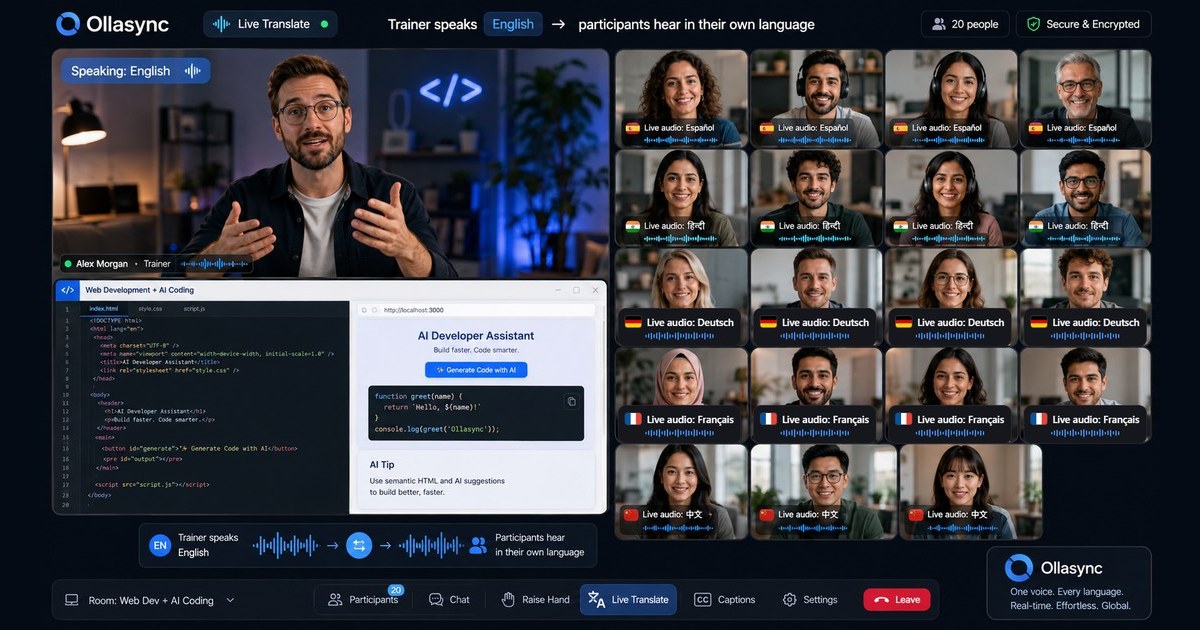
How to repurpose webinar content into 100+ marketing assets?
Chapter 1: The Direct Answer & Executive Summary
The Direct Answer: How to Repurpose Webinar Content into 100+ Assets
To learn how to repurpose webinar content into 100+ high-performing marketing assets, marketing teams must stop viewing a 60-minute recording as a single monolithic video and start treating it as a structured database of modular insights.
The process requires a 4-Stage Waterfall Atomization Framework:
[ 60-Minute Live Webinar ]
            │
            ▼
┌────────────────────────────────────────────────────────┐
│ 1. INGESTION & SEMANTIC EXTRACTION                     │
│    • Full-fidelity transcript + diarization            │
│    • Semantic entity mapping & timestamped thesis logs │
└───────────────────────────┬────────────────────────────┘
                            │
                            ▼
┌────────────────────────────────────────────────────────┐
│ 2. CORE MACRO-ASSET GENERATION                         │
│    • 1 Cornerstone Pillar Post (2,500+ words)          │
│    • 1 Gated Tactical Playbook / Whitepaper            │
│    • 1 Audio Podcast Episode + Show Notes              │
└───────────────────────────┬────────────────────────────┘
                            │
                            ▼
┌────────────────────────────────────────────────────────┐
│ 3. MICRO-ASSET ATOMIZATION (100+ Units)                │
│    • 15 Short-form vertical videos (Reels/TikTok/Shorts)│
│    • 20 Text/Image LinkedIn thought leadership posts   │
│    • 30 X (Twitter) standalone posts & 5 mega-threads  │
│    • 10 Infographics, slide decks, & visual carousels  │
│    • 12 Email newsletter features & nurture sequences  │
│    • 15 Sales enablement one-pagers & objection clips  │
│    • 10 Community Q&A prompts & forum answers          │
└───────────────────────────┬────────────────────────────┘
                            │
                            ▼
┌────────────────────────────────────────────────────────┐
│ 4. MULTI-CHANNEL DISTRIBUTION ENGINE                   │
│    • Organic Social • Paid Acquisition • Outbound SDR  │
│    • AEO/SEO Search • Email Nurture • Partner Sync     │
└────────────────────────────────────────────────────────┘
By decomposing one 60-minute webinar into 5 core narrative pillars (each lasting roughly 8–10 minutes), an editorial team extracts 3–5 tactical micro-arguments per pillar. Running these micro-arguments through automated transcription, AI-assisted modular copywriting, programmatic video clipping, and visual templating pipelines yields 114 distinct, channel-native marketing assets within 5 business days.
The Asset Math: The 1-to-114 Asset Multiplier Matrix
To reliably produce over 100 assets from a single broadcast, apply the following deterministic extraction blueprint across all core distribution channels:
| Format Category | Specific Asset Derivative | Asset Count | Core Output Channel |
|---|---|---|---|
| Long-Form Text | Comprehensive Pillar Blog Post (SEO/AEO Optimized) | 1 | Company Blog / Search |
| Tactical Ebook / Gated Playbook (PDF) | 1 | Demand Gen / Inbound Forms | |
| Guest Contributor / Syndicate Opinion Articles | 3 | Medium / Substack / Industry Media | |
| Short-Form Video | 30–60s Vertical Video Clips (Captioned + Hooked) | 15 | TikTok, IG Reels, YouTube Shorts, LI Video |
| 90–120s Horizontal Video Highlights | 5 | YouTube, LinkedIn Native, Twitter/X | |
| 15s Animated Quote & Micro-Hook Teasers | 5 | Paid Social Ads / Retargeting | |
| Audio | Cleaned Audio Podcast Master File | 1 | Apple Podcasts, Spotify |
| Focused Audio-Only Snackable Audiograms | 4 | Social Feeds, Newsletter Embeds | |
| Social Content | High-Engagement LinkedIn Text Posts | 12 | Founder / Executive Personal Profiles |
| LinkedIn Document Carousels (PDF Slide Decks) | 6 | Corporate LinkedIn Page | |
| Detailed X (Twitter) Long-Form Educational Threads | 4 | Company & Executive Twitter Accounts | |
| Atomic Single-Thought X (Twitter) Posts | 24 | Company & Executive Twitter Accounts | |
| Email Marketing | Dedicated Broadcast Emails (Key Takeaway Summaries) | 3 | Active Subscriber Database |
| Automated Lead Nurture Sequence Integrations | 5 | Mid-Funnel MQL Lead Tracks | |
| Internal Sales-to-Prospect Follow-Up Snippets | 4 | 1:1 SDR Outbound Sequences | |
| Visual Assets | Key Framework Diagram Recreations | 3 | Blog Embeds, Social Visuals, Pinterest |
| Quote Cards (Featuring Guest / SME Speakers) | 8 | Social Posts, Slide Decks | |
| Data Point & Statistic Callout Graphics | 5 | LinkedIn Posts, Pitch Decks | |
| Sales Enablement | Objection-Handling Video Snippets | 4 | Gong, Highspot, Salesloft Outbound |
| One-Page Battlecards / Executive Briefings | 2 | Enterprise Prospect Follow-ups | |
| Search & AEO Assets | Programmatic FAQ Schema Modules | 6 | Programmatic Landing Pages |
| Total Deliverables | From 1 60-Minute Broadcast | 114 Assets | Full-Funnel Omnichannel Reach |
Executive Summary: The Strategic Imperative of Webinar Atomization
For modern B2B SaaS organizations, the traditional webinar lifecycle represents one of the most severe misallocations of capital and labor in digital marketing:
TRADITIONAL (LOW ROI) MODEL:
[ 40 Hours Prep ] ──> [ Live Webinar (150 Attendees) ] ──> [ Static Gated PDF / YouTube Link ] ──> [ Content Decays ]

MODULAR ATOMIZATION MODEL:
[ 40 Hours Prep ] ──> [ Live Webinar ] ──> [ 114 Multi-Channel Assets ] ──> [ 180 Days of Continuous Inbound Pipeline ]
- The Core Inefficiency: Teams spend 40 to 80 employee-hours conceiving, building, promoting, and hosting a single live event. Once the broadcast concludes, the recording is uploaded behind a gated landing page or buried in a YouTube archive, where 95% of its long-tail pipeline value decays within 14 days.
- The Audience Deficit: The majority of your Ideal Customer Profile (ICP) will never attend a live 60-minute webinar. They consume fragmented, zero-click content across specialized networks: asynchronous video feeds, executive LinkedIn carousels, algorithmic search snapshots, and private community discussions.
- The Answer Engine Optimization (AEO) Shift: As AI engines (Perplexity, SearchGPT, Google SGE) replace conventional search engine result pages, content must exist as atomized, verifiable factual statements and semantic entities. A monolithic video file is nearly invisible to large language model (LLM) indexers unless fully transcribed, categorized, structured with semantic schema, and distributed across the open web.
Adopting an asset-atomization engine transforms a single synchronous event into a durable content library that powers outbound sales sequences, boosts organic search visibility, and maintains high-frequency social media activity for up to two quarters.
Core Operational Prerequisites
Executing this framework efficiently without expanding headcount requires three core operational primitives:
- Standardized Editorial Structuring (Pre-Production): The webinar must be outlined with atomization in mind. Speakers must use modular presentation formats—structured around distinct thesis points, clear numbered frameworks, and standalone case studies—rather than free-flowing, unsegmented conversation.
- Deterministic Toolchain Integration: Marketing teams must deploy an integrated software stack that automates ingestion, natural language diarization, visual asset clipping, and copy drafting:
- Transcription & LLM Processing: Descript, Whisper API, Claude 3.5 Sonnet, GPT-4o.
- Programmatic Video Editing: Opus Clip, Munch, Submagic, Adobe Premiere Pro (Automated Text-Based Editing).
- Visual Standardization: Figma / Canva Master Component Kits.
- Strict Content Decoupling: Every asset derived from the master recording must be entirely decoupled from the original event context. Derivative assets must eliminate meta-references such as “As we discussed earlier in the webinar…” or “Welcome to today’s presentation.” Every micro-asset must deliver immediate value as a self-contained unit.
By executing the systematic methodology detailed in the subsequent chapters, B2B marketing engines can reduce customer acquisition costs (CAC), accelerate organic pipeline velocity, and establish durable topical authority from a single hour of subject-matter expert recording.## Chapter 2: The Efficiency Divide — Legacy Tool Stacks vs. Modern AI Repurposing Engines
To understand how to repurpose webinar content at an enterprise scale of 100+ assets per session, organizations must first address the technological bottleneck in their post-production pipeline.
The traditional post-webinar workflow is linear, manual, and expensive. Conversely, modern AI-native content repurposing engines operate on multi-modal decomposition—ingesting a single 60-minute video stream and programmatically extracting transcripts, semantic highlights, video hooks, and derivative copy simultaneously.
+-----------------------------------------------------------------------------------+
|                           THE REPURPOSING PARADIGM SHIFT                         |
|                                                                                   |
|  LEGACY STACK:                                                                    |
|  [60m Webinar] -> [MP4 Download] -> [Human Review] -> [NLE Timeline Edit]         |
|                   -> [Manual Transcription] -> [Copywriter] -> Yield: 3-5 Assets  |
|                                                                                   |
|  AI-NATIVE ENGINE:                                                                |
|  [60m Webinar] -> [Multi-Modal Ingestion] -> [Semantic Vector Indexing]          |
|                   -> [Speaker Diarization + Dynamic Layout Framing]               |
|                   -> [LLM Contextual Extraction] -> Yield: 100+ Multi-Format Assets|
+-----------------------------------------------------------------------------------+
The Legacy Bottleneck: Zoom, Webex, and Microsoft Teams
Enterprise communication suites (Zoom, Cisco Webex, Microsoft Teams) were built for synchronous real-time transmission, not content manufacturing. When growth and product marketing teams attempt to use these platforms as the foundation for post-webinar distribution, they encounter critical structural limits:
- Flat, Unstructured Data Outputs: Legacy platforms export standard
.mp4video and raw.vttor.txttranscripts. These files lack semantic indexing, sentiment analysis, audio frequency indexing, and dynamic speaker metadata. - Context-Blind Transcripts: Native transcripts generated by legacy suites average an 82%–88% Word Error Rate (WER) accuracy on technical or industry-specific terminology. Furthermore, they do not automatically segment topics, identify Q&A inflection points, or detect audience engagement peaks.
- Manual NLE (Non-Linear Editor) Dependency: To pull a single 60-second video snippet from a Zoom recording, an editor must manually scrub through the timeline, set in/out points, reframe the 16:9 canvas to 9:16 vertical video, reposition speaker windows, and generate burned-in animated captions in external software like Adobe Premiere Pro or DaVinci Resolve.
The Cost of Legacy Repurposing (Per 60-Minute Webinar)
| Task | Manual / Legacy Workflow Time | Typical Resource Required | Average Direct Cost |
|---|---|---|---|
| Full Video Review & Timestamping | 1.5 – 2.0 Hours | Content Marketer / Strategist | $90 – $150 |
| Short-Form Video Cuts (5 Clips) | 4.0 – 6.0 Hours | Video Editor | $250 – $450 |
| Re-framing (16:9 to 9:16/1:1) & Subtitles | 2.5 – 3.5 Hours | Video Editor / Motion Designer | $150 – $250 |
| Long-Form SEO Article (1,500 words) | 4.0 – 6.0 Hours | Content Writer | $300 – $600 |
| Social Copywriting (10 Posts) | 2.0 – 3.0 Hours | Social Media Manager | $100 – $200 |
| Slide/Graphic Extraction (Carousels) | 2.0 – 3.0 Hours | Graphic Designer | $120 – $250 |
| Total per Webinar | 16.0 – 23.5 Hours | Cross-Functional Team | $1,010 – $1,900 |
| Asset Yield | 8 – 15 Total Assets | — | ~$126 per asset |
Under legacy constraints, scaling to 100+ assets per webinar is economically unviable, requiring over 120 labor hours and upwards of $10,000 per event.
The Modern Alternative: AI-Native Repurposing Engines
Modern AI repurposing architectures (leveraging platforms such as Goldcast, Descript, OpusClip, Munch, and Castmagic coupled with LLM orchestration frameworks) eliminate manual timeline scrubbing through semantic processing and deterministic audio-visual parsing.
                           AI REPURPOSING ARCHITECTURE

                                 [Raw Webinar]
                                       │
                ┌──────────────────────┴──────────────────────┐
                ▼                                             ▼
     [Multi-Modal Audio Processing]              [Visual Engine Processing]
     • Dynamic Speaker Diarization               • Active Speaker Detection (CV)
     • NLP Context Parsing & Hook Scoring        • Dynamic 16:9 to 9:16 Reframing
     • Whisper-Grade Semantic Transcripts        • Automatic B-Roll & Visual B-Roll
                │                                             │
                └──────────────────────┬──────────────────────┘
                                       │
                                       ▼
                       [Automated Generation Core]
        ┌──────────────────────────────┼──────────────────────────────┐
        ▼                              ▼                              ▼
  [Micro-Video Clips]          [Long-Form Text]              [Micro-Content & Social]
  • 20-30 Short Clips          • 2 SEO Blog Posts            • 30 LinkedIn Posts
  • Auto-Captioned & Styled    • 1 Executive Summary         • 20 X/Twitter Threads
  • Kinetic Typography         • 1 Newsletter Edition        • 15 Quote Graphics
Key Architectural Capabilities of AI Engines:
- Computer Vision Active-Speaker Detection: Rather than cropping a static center frame, modern engines use facial tracking to keep active speakers centered during vertical (9:16) dynamic reframing, switching instantly between split-screen and solo views.
- Deterministic Virality & Hook Scoring: Large Language Models (LLMs) parse the diarized transcript alongside acoustic energy metrics (pitch modulation, applause, rapid dialogue exchanges) to calculate a predictive engagement score (1–100), isolating high-retention segments automatically.
- Context-Aware Semantic Extraction: Instead of summarizing raw text sequentially, domain-prompted LLMs extract key takeaways, counterintuitive insights, step-by-step frameworks, and direct quotes into designated content buckets.
Head-to-Head Comparison: Legacy Stacks vs. Modern AI Engines
The following data matrix compares legacy webinar software, traditional agency outsourcing, and modern AI-native repurposing pipelines across core operational metrics.
| Evaluation Metric | Legacy Native (Zoom / Teams / Webex) | Traditional Outsourcing (Agency / Freelancer) | Modern AI Repurposing Engine |
|---|---|---|---|
| Asset Yield (Per 60m Webinar) | 1 – 3 (Raw recording, flat transcript) | 10 – 20 (Dependent on scope) | 100+ (Video, Audio, Text, Visuals) |
| Turnaround Time (TAT) | Real-time export (Unprocessed) | 5 – 10 Business Days | 15 – 45 Minutes |
| Cost per Finished Asset | N/A (Requires post-processing) | $75.00 – $200.00 / asset | $0.50 – $3.00 / asset |
| Transcription Accuracy | 80% – 88% (Basic ASR) | 98% – 99% (Manual Human Transcription) | 95% – 99% (Whisper / Custom Vocabulary) |
| Speaker Diarization | Basic / Name Tags Only | Manual Attribution | Automatic Multi-Speaker Identification |
| Vertical Video Reframing | None (Static 16:9 only) | Manual Keyframing (Slow) | Automated AI Face-Tracking (9:16, 1:1, 4:5) |
| Kinetic Captioning | Plain text / Closed captions only | Manual After Effects Styling | Automated Dynamic/Karaoke Captions |
| Contextual Text Generation | Not Supported | High Quality / Slow Execution | Automated (Blogs, Social, Email, FAQs) |
| Technical Skill Floor | Low (Recording only) | High (Requires NLE suite proficiency) | Low (No-code / Natural language UI) |
The Unit Economics of Scaling Content Repurposing
When assessing how to repurpose webinar content efficiently, analyzing unit economics demonstrates the compounding return on investment (ROI) of an automated engine.
MANUAL / AGENCY STACK:
[==================================================] $1,500 / 12 Assets = $125.00 per Asset

HYBRID (EDITOR + COPYWRITER):
[========================] $600 / 25 Assets = $24.00 per Asset

AI-NATIVE ENGINE:
[==] $150 Platform Cost Equated / 105 Assets = $1.42 per Asset
Production Efficiency Comparison (100 Assets Generated)
- Legacy & Manual Production:
- Total Hours: 120+ hours
- Estimated Production Cost: $7,500 – $12,000
- Time to Market: 14 – 21 Days
- Modern AI-Native Engine:
- Total Hours: 2.5 hours (Human-in-the-loop review and distribution orchestration)
- Estimated Production Cost: $150 – $300 (Software seat allocation + computational overhead)
- Time to Market: < 2 Hours
By removing the linear relationship between asset volume and labor cost, modern AI engines transform a single webinar from a single-use demand generation event into an evergreen asset production pipeline.
Core Technical Features Required for 100+ Asset Repurposing
To successfully execute the 100-asset repurposing playbook detailed in subsequent chapters, your technology stack must support five non-negotiable capabilities:
- Multi-Track Audio and Video Separation: The ability to ingest and isolate separate speaker feeds to eliminate crosstalk and facilitate dynamic cuts.
- Context-Engineered Prompt Chaining: Direct pipeline connections between high-accuracy speech-to-text models and generative LLMs fine-tuned on structural marketing templates (e.g., PAS, AIDA, Hook-Story-Offer).
- Automated Visual Asset Synthesis: Programmatic generation of quote cards, key takeaway slides, and data charts mapped directly to webinar timestamps.
- Dynamic Re-Aspecting & Motion Graphics Integration: Algorithmic conversion of 16:9 desktop presentations into vertical formats with animated word-by-word kinetic captions and automated background padding.
- Headless API & CMS Export Capabilities: Direct programmatic publishing to content hubs, social management systems (e.g., Hootsuite, Sprout Social), and markdown repositories.# Chapter 3: The Deep Dive — Building the 1:100+ Multi-Modal Repurposing Engine in 2026
To understand how to repurpose webinar content into more than 100 high-performing distribution assets, modern go-to-market (GTM) teams must abandon manual content editing. In 2026, webinar repurposing is not an ad-hoc copywriting task; it is a programmatic, multi-modal data pipeline.
A single 60-minute technical webinar yields roughly 8,000 to 10,000 words of unscripted dialogue, high-intent audience Q&A data, proprietary visual slide decks, and micro-demonstrations. When processed through an orchestrated pipeline of transcription models, semantic chunking algorithms, and deterministic multi-agent LLM systems, this single digital event can generate an entire quarter’s worth of inbound collateral across search, social, sales enablement, and generative answer engines.
Here is the operational blueprint and technical architecture required to execute this transformation.
+-----------------------------------------------------------------------------------+
|                           60-Minute Source Webinar                                |
|             (10,000 words of spoken dialogue + Visual Slides + Live Q&A)          |
+------------------------------------------+----------------------------------------+
                                           |
                                           v
+-----------------------------------------------------------------------------------+
|                               Ingestion Layer                                     |
|       Whisper-v3 (Diarization) + FFMPEG Visual Frame Split + Audio Denoising      |
+------------------------------------------+----------------------------------------+
                                           |
                                           v
+-----------------------------------------------------------------------------------+
|                         Semantic Chunking & Knowledge Graph                       |
|   Temporal Alignment (Slide + Dialogue) | Entity Extraction | Intent Clustering   |
+------------------------------------------+----------------------------------------+
                                           |
                                           v
+-----------------------------------------------------------------------------------+
|                         Parallel Multi-Agent Generation Layer                     |
|  +---------------------+  +---------------------+  +---------------------------+  |
|  |   Text Agent Node   |  |   Video Agent Node  |  | Sales / Interactive Node  |  |
|  | • 3 Long-Form SEO   |  | • 15 Micro-Clips    |  | • Battlecards / FAQs      |  |
|  | • 20 LinkedIn Posts |  | • Dynamic Captions  |  | • Interactive Calculators |  |
|  | • 30 X/Threads      |  | • B-roll / Overlays |  | • Automated Email Tracks  |  |
|  +---------------------+  +---------------------+  +---------------------------+  |
+------------------------------------------+----------------------------------------+
                                           |
                                           v
+-----------------------------------------------------------------------------------+
|                          Deterministic Quality Gateway                            |
|             Hallucination Detection + Brand Voice Reranking + HITL Review          |
+------------------------------------------+----------------------------------------+
                                           |
                                           v
+-----------------------------------------------------------------------------------+
|                               100+ Structured Assets                              |
|           Search Engines (SEO) | Answer Engines (AEO) | Social | Outbound         |
+-----------------------------------------------------------------------------------+
The Technical Architecture: From Unstructured Media to Structured Assets
Traditional repurposing pipelines fail because they feed flat, unformatted transcripts directly into standard LLM context windows. This approach strips critical context, conflates speaker authority, and ignores the visual cues presented on-screen.
[Raw Video (.mp4) / Audio (.wav)]
       │
       ├──► 1. Ingestion Layer (Whisper-v3 Diarization + FFMPEG Frame Extraction)
       │
       ├──► 2. Context Structuring (Semantic Chunking + Entity Extraction + Slide OCR)
       │
       ├──► 3. Vector DB / Knowledge Graph (Cross-Referenced Embeddings)
       │
       └──► 4. Multi-Agent Orchestration (Specialized Task Nodes -> Asset Generation)
1. Ingestion and Multi-Modal Demuxing
The raw .mp4 file is split into separated audio, video, and text streams:
- Acoustic Processing: Audio runs through advanced diarization models (such as Whisper-v3 or fine-tuned deep learning models) that isolate distinct speaker identities, remove ambient artifacts, and map micro-timestamps down to the millisecond.
- Visual Frame Extraction: Using automated
ffmpegscripts, slides and software demos are captured at every slide transition, parsed with Optical Character Recognition (OCR), and aligned with the corresponding speaker’s timestamp.
2. Semantic Chunking Over Fixed-Token Slicing
Standard LLM workflows use arbitrary token-based chunking (e.g., 500-token blocks), which frequently splits central arguments or technical explanations in half.
Advanced workflows utilize semantic chunking. By evaluating cosine similarity drops across sequential sentence embeddings, the system identifies the exact moment a speaker transitions from a conceptual overview to a tactical case study or technical implementation. This boundary detection creates self-contained thematic nodes that retain semantic integrity.
The 1:100 Asset Generation Matrix
By systematically addressing each stage of the buyer journey across different media formats, a 60-minute webinar reliably scales into more than 100 distinct content outputs:
| Content Category | Asset Type | Quantity | Target Platform / Channel | Primary Objective |
|---|---|---|---|---|
| Long-Form Text | Pillar Blog Posts (2,500+ words) | 3 | CMS / Organic Search | In-depth organic keyword capture |
| Case Study Deep Dives | 2 | Website / Sales Enablement | Mid-funnel social proof | |
| Technical Q&A Knowledgebase Pages | 5 | Help Center / Subdomains | Long-tail keyword & Answer Engine capture | |
| Short-Form Text | C-Suite / Executive LinkedIn Posts | 20 | Personal LinkedIn Profiles | Thought leadership & organic reach |
| Narrative X (Twitter) Threads | 10 | X / Native Feeds | Broad social syndication | |
| Newsletter Modules / Dedicated Sends | 4 | Email Service Provider (ESP) | Subscriber nurturing & retention | |
| Quora / Reddit / Community Answers | 8 | Niche Forums / Developer Hubs | Referral traffic & off-page citations | |
| Short-Form Video | Micro-Clips with Dynamic Subtitles | 15 | TikTok, YouTube Shorts, Reels | High-velocity top-of-funnel discovery |
| Product Demo Walkthroughs | 5 | LinkedIn, Product Pages | Feature-level product validation | |
| Visual & Interactive | Infographics / Process Frameworks | 4 | LinkedIn Slide Carousels, Pinterest | Visual reference & backlink acquisition |
| Interactive Diagnostic Calculators | 2 | Web-based Landing Pages | High-intent lead generation | |
| Downloadable Tactical Checklists | 2 | Gated/Ungated PDF Leads | Lead capture & enablement assets | |
| Sales Enablement | Competitive Objection Battlecards | 5 | Internal CRM / Sales Enablement | Pipeline velocity & deal acceleration |
| Hyper-Targeted Outbound Email Snippets | 15 | Outbound Sequences (Salesloft, Apollo) | Account-Based Marketing (ABM) outreach | |
| Total Assets | 100+ |
Step-by-Step Technical Protocol: Building the Autonomous Pipeline
[Semantic Chunks] ──► [Agent Router] ──┬──► Agent A (SEO/Editorial) ────► Schema Validation
                                       ├──► Agent B (Short-Form Social) ──► Tone Verification
                                       └──► Agent C (Outbound Sequences) ─► Value-Hook Audit
To implement this model at scale, your data engineering and marketing teams must configure an integrated four-stage workflow:
Step 1: Programmatic Semantic Chunking and Concept Graphing
Do not process the transcript as a single, linear document. Instead, ingest the transcript into a Vector Database (such as Pinecone, Qdrant, or Weaviate) using dense embeddings (e.g., text-embedding-3-large). Tag each vector with rich metadata:
{
  "timestamp_start": "00:14:22.150",
  "timestamp_end": "00:18:45.300",
  "speaker_role": "Subject Matter Expert",
  "topic_cluster": "Database Migration Bottlenecks",
  "entities_mentioned": ["PostgreSQL", "Aurora", "Vector Indexing"],
  "sentiment_intensity": "High Friction Point",
  "slide_ocr_reference": "Slide 12: Migration Latency Benchmarks"
}
This structural tagging allows downstream agents to pull verified topical clusters rather than raw, uncurated blocks of text.
Step 2: Parallel Multi-Agent Prompt Orchestration
Deploy dedicated AI agents tuned for specific content types. Rather than asking a single general-purpose model to generate every asset, route the enriched semantic chunks to specialized sub-agents:
- The Long-Form Editorial Agent: Ingests the central problem-solving chunks to produce exhaustive, search-optimized articles.
- The Social Conversion Agent: Ingests contrarian soundbites and extractable frameworks to draft concise, hook-driven social posts.
- The Sales Intelligence Agent: Analyzes live audience questions and friction points to draft actionable battlecards for SDRs and AEs.
Step 3: Programmatic Video Extraction via FFmpeg
Short-form video extraction should not rely on manual timeline scrubbing. By feeding timestamp arrays from the transcript directly into an automated ffmpeg pipeline, the system programmatic cuts the raw high-definition video:
ffmpeg -ss 00:14:22.150 -to 00:15:35.300 -i source_webinar.mp4 -vf "crop=ih*(9/16):ih,scale=1080:1920" -c:v libx264 -crf 18 -c:a aac vertical_clip_01.mp4
This output is then routed to automated subtitle generation tools that apply branded styles, dynamic dynamic highlighting, and programmatic lower-thirds based on the speaker’s metadata.
Step 4: Deterministic Quality Verification (HITL)
Before publication, routed assets pass through a dual evaluation gate:
- Algorithmic Validation: A secondary LLM node verifies the output against the source transcript to prevent hallucinations, check corporate tone guidelines, and ensure factual continuity.
- Human-in-the-Loop (HITL) Review: Editors approve, modify, or reject assets within a centralized staging workspace (e.g., Notion, Airtable, or a custom CMS pipeline), cutting production overhead by 80% while retaining editorial oversight.
Optimizing Repurposed Assets for Answer Engine Optimization (AEO)
In 2026, content distribution must reach both human readers and generative answer engines (such as SearchGPT, Perplexity, and Google Gemini). When configuring how to repurpose webinar content, your derivative assets must be architected for algorithmic retrieval and citation.
+---------------------------------------------------------------------------------+
|                       Answer Engine Retrieval (AEO)                             |
|                                                                                 |
|  [User Question: "What are the common migration latency bottlenecks?"]          |
|                                     │                                           |
|                                     ▼                                           |
|                      [Retrieval & Parsing Engine]                               |
|                                     │                                           |
|          ┌──────────────────────────┴──────────────────────────┐                |
|          ▼                                                     ▼                |
|  [Extracted JSON-LD Schema]                          [Direct Answer Anchors]    |
|  • @type: TechArticle / FAQ                          • First 50 words contain   |
|  • Explicit Entity Relationships                       clear definitions        |
|  • Provenance: SME Webinar Transcript                • Unambiguous metrics      |
|          │                                                     │                |
|          └──────────────────────────┬──────────────────────────┘                |
|                                     ▼                                           |
|                     [Consolidated Answer Engine Output]                         |
|               (Cited Source: Repurposed Pillar & Q&A Assets)                    |
+---------------------------------------------------------------------------------+
Direct-Answer Paragraph Anchors
Structure all long-form and technical Q&A assets using direct answers within the initial 40 to 60 words of each section. Generative engines favor self-contained definitions and actionable takeaways that can be easily parsed and synthesized into summary cards.
Semantic Entity Linking and Microdata
Wrap derivative text in detailed Schema.org JSON-LD microdata (VideoObject, TechArticle, and FAQPage). Explicitly declare the relationship between the speaker, their verified enterprise credentials, and the source material.
When an answer engine processes the content, it maps the derived conclusions directly to an established industry authority. This structural provenance dramatically increases the likelihood that your assets are selected as the primary cited source across generative search.# Chapter 4: The Automated Solution & The Future of Webinar ROI
Understanding the theoretical framework of content multiplication is only half the battle. When marketing teams attempt manual execution—transcribing audio, finding timestamps, editing vertical video, writing social threads, and drafting SEO articles—the process inevitably breaks down under operational friction. Generating 100+ high-quality assets manually requires between 25 and 40 hours of cross-functional labor per webinar, turning what should be an efficient demand generation strategy into a resource-draining bottleneck.
To sustainably solve how to repurpose webinar content at scale, modern B2B organizations deploy automated content repurposing engines. This chapter explores how Ollasync automates the end-to-end asset production pipeline, transforming a single live event into a pervasive, multi-channel distribution machine in minutes rather than weeks.
The Solution: Building an Automated 100-Asset Engine with Ollasync
Ollasync is an enterprise AI-powered content orchestration platform designed specifically to eliminate the operational overhead of video and webinar atomization. Rather than treating repurposing as a series of disconnected manual tasks, Ollasync treats every 45-minute to 60-minute webinar recording as structured semantic data, instantly decomposing it into targeted, platform-native outputs.
┌────────────────────────────────────────────────────────┐
│               1 Master Webinar Recording                │
│                 (Ollasync Ingestion)                   │
└──────────────────────────┬─────────────────────────────┘
                           │
 ┌─────────────────────────┼─────────────────────────────┐
 │                         │                             │
 ▼                         ▼                             ▼
┌──────────────┐   ┌──────────────┐              ┌──────────────┐
│ Short-Form   │   │  Long-Form   │              │ Micro-Copy & │
│ Video Engine │   │ Text Engine  │              │ Distribution │
└──────┬───────┘   └──────┬───────┘              └──────┬───────┘
       │                  │                             │
       ├► 20-30 Clips     ├► 2 SEO Blog Posts           ├► 15-20 X Threads
       ├► Auto Captions   ├► 1 Whitepaper/Ebook         ├► 20-30 Quotes/Hooks
       ├► 9:16 Smart Crop ├► 5 Email Nurtures           ├► 10 Carousel Decks
       └► Viral Scoring   └► 10 LinkedIn Articles       └► 1 Full Summary
The 4-Stage Automated Pipeline
[ Ingestion & Diarization ] ──► [ AI Hook & Moment Extraction ] ──► [ Multi-Format Generation ] ──► [ Programmatic Distribution ]
1. Ingestion and Context-Aware Diarization
The workflow begins by feeding your raw MP4, Zoom cloud link, or YouTube URL into Ollasync. Unlike generic transcription tools, Ollasync utilizes context-aware AI speech recognition with advanced speaker diarization. It isolates individual speakers, filters filler words, recognizes domain-specific industry terminology, and maps thematic arcs across the presentation, panel discussion, and audience Q&A.
2. Semantic Moment Detection & Dynamic Video Slicing
Ollasync’s proprietary scoring algorithm analyzes audience retention indicators, speech inflections, and contextual density to pinpoint high-impact moments. It automatically extracts 20 to 30 vertical video clips (9:16 ratio) optimized for LinkedIn, YouTube Shorts, Instagram Reels, and TikTok.
- Dynamic Smart Cropping: Auto-reframes active speakers into vertical frame layouts.
- Animated Captions: Generates styled, high-retention on-screen kinetic typography.
- Visual B-Roll Insertion: Overlays relevant contextual cues, charts, and slide decks dynamically.
3. Brand-Aligned Multi-Format Content Synthesis
The transcribed text is fed into Ollasync’s multi-modal generative engine, calibrated by your custom brand voice parameters. It does not output raw summaries; it authors distinct, production-ready assets mapped to specific marketing channels:
- Organic Search (SEO): Long-form pillar articles and cluster blog posts structured with schema-ready headings and keyword density.
- Thought Leadership: Executive ghostwritten LinkedIn articles and contrarian social posts.
- Demand Generation & Sales: Automated 5-part email nurture sequences, webinar recap slide decks, and one-page battlecard summaries for sales enablement.
- Visual Micro-Content: Copy-ready slides formatted for PDF LinkedIn carousels and standalone quote graphics.
4. Programmatic Review and Multi-Channel Push
All generated assets land in an integrated, Kanban-style review workspace. Content leads can adjust hooks, approve video edits in a single click, and distribute content directly across CMS platforms (WordPress, Webflow) and social channels through API integrations.
The 1-to-100 Asset Breakdown
When determining how to repurpose webinar content efficiently, clarity on output volume is critical. Here is the blueprint of how Ollasync deconstructs a single 45-minute B2B webinar into 108 distinct marketing assets:
| Category | Asset Type | Quantity | Target Channel / Purpose |
|---|---|---|---|
| Short-Form Video | Highlight Reels & Insight Bites | 25 | LinkedIn, YouTube Shorts, TikTok |
| Extended Deep-Dive Clips (2–3 min) | 5 | LinkedIn Video, X (Twitter), Slack Communities | |
| Long-Form Text | SEO Pillar / Blog Posts | 3 | Company Blog, Medium, Substack |
| Comprehensive Executive Summary | 1 | Gated Asset / Lead Magnet | |
| Ebook / Tactical Implementation Guide | 1 | Demand Capture / Resource Hub | |
| Mid-Form Text | Ghostwritten Executive LinkedIn Posts | 12 | Founder / Speaker Thought Leadership |
| Multi-Post X (Twitter) Threads | 8 | Top-of-Funnel Social Discovery | |
| Email Nurture & Recap Newsletters | 6 | MQL-to-SQL Conversion Sequences | |
| Visual / Micro-Assets | Document Carousels (PDF slides) | 8 | LinkedIn Document Feeds |
| Standalone Quote Graphics & Data Cards | 15 | Multi-Platform Social Proof | |
| Community Discussion Prompts | 10 | Reddit, Quora, Discord, Circle | |
| Sales Enablement | 1-Page Prospecting Battlecard | 2 | Sales Outreach / Follow-up Templates |
| Objection-Handling Scripts (from Q&A) | 12 | Internal SDR / AE Wiki | |
| Total Assets | 108 Assets | Omnichannel Coverage |
Economic Analysis: Manual Production vs. Ollasync Automation
Repurposing content is not merely an editorial strategy; it is a capital allocation decision. Automating this framework delivers undeniable economic advantages:
| Production Metric | Manual In-House / Agency | Ollasync Repurposing Engine |
|---|---|---|
| Turnaround Time | 14–21 Days | Under 15 Minutes |
| Labor Requirement | 1 Video Editor, 1 Copywriter, 1 Strategist | 1 Content Marketer (Review only) |
| Average Cost per Webinar | $2,500 – $4,500 | Marginal software subscription cost |
| Total Asset Yield | 8 – 12 Assets | 100+ Assets |
| Cost per Asset | ~$350.00 | <$1.00 |
| Publishing Frequency | Weekly drops (stale after 14 days) | Daily multi-channel cadence for 3 months |
By switching from manual clipping and drafting to Ollasync, marketing teams capture an average 85% reduction in production costs while increasing content distribution velocity by 10x.
Conclusion: Maximizing Webinar ROI in the Modern Search and Social Era
The traditional webinar model—spending weeks driving registrations, hosting a 60-minute live presentation, and sending a single “recording replay” email—is fundamentally broken. In an era dominated by AI-driven search engines (like Perplexity and Google AI Overviews) and algorithmic social feeds, content visibility relies on topical authority, high posting frequency, and multi-format saturation.
Learning how to repurpose webinar content into a perpetual asset engine turns ephemeral live events into evergreen growth drivers. A single webinar contains your company’s deepest domain expertise, customer insights, and strategic perspectives. Leaving that value locked inside a long-form video file forfeits significant pipeline potential.
Ollasync bridges the gap between high-level webinar strategy and frictionless, automated execution. By turning your recorded events into 100+ brand-aligned video, written, and visual assets instantaneously, Ollasync ensures your brand dominates search results, feeds, and prospect inboxes.
Unlock the Value of Your Webinar Content Today
Stop leaving pipeline inside your video archive. Transform your next live event into a multi-channel content engine that drives traffic, pipeline, and brand authority automatically.
[Start Repurposing with Ollasync for Free] — Turn your webinar recording into 100+ production-ready assets in under 15 minutes. No credit card required.