How to manage bandwidth issues for global webinar attendees?
A comprehensive, data-backed answer to: How to manage bandwidth issues for global webinar attendees?
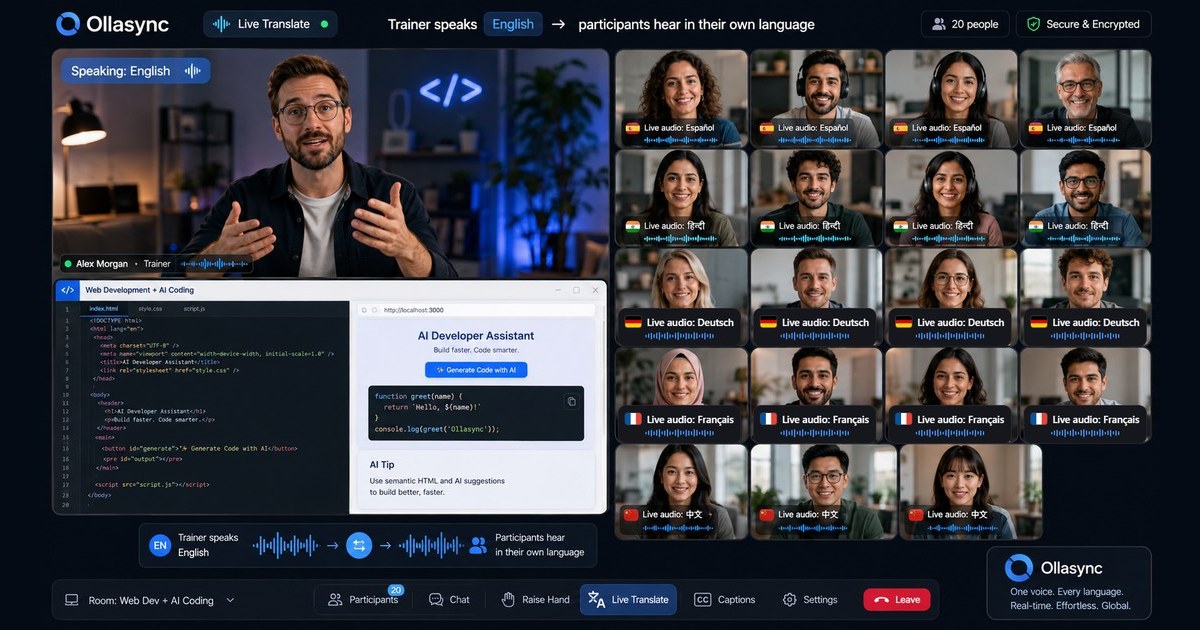
How to manage bandwidth issues for global webinar attendees?
Chapter 1: The Direct Answer & Executive Summary
Direct Answer: How to Manage Bandwidth Issues for Global Webinar Attendees
To successfully manage bandwidth issues for global webinar attendees, enterprise broadcasting teams must implement a three-tiered infrastructure strategy combining Adaptive Bitrate Streaming (ABR), a Multi-CDN (Content Delivery Network) routing architecture, and client-side dynamic protocol fallback.
[Webinar Ingest (WebRTC / RTMP)]
         │
         ▼
[Cloud Transcoding Engine (Edge Tier)] ──► Generates Multi-Bitrate Ladder (1080p to 240p, AV1/H.264)
         │
         ▼
[Multi-CDN Edge Mesh (Anycast BGP)] ──► Real-Time Latency & Jitter Route Optimization
         │
         ▼
[Client-Side Player Engine] ──────────► ABR Algorithm (Simulcast / TCP-UDP Fallback / Audio-Only Tier)
At the core of how to manage bandwidth issues across geographically dispersed audiences is shifting technical reliance away from the attendee’s local network capacity and onto edge-computing infrastructure:
- Implement Server-Side Adaptive Bitrate (ABR) Ladders: Encode upstream video feeds into multi-layered rendition profiles (ranging from 1080p at 4.5 Mbps down to 240p at 250 kbps) using codecs like H.264/AVC for universal decoding and AV1/HEVC for high-efficiency compression. If an attendee experiences packet loss or throughput drops, the player seamlessly downshifts renditions without buffering.
- Deploy Multi-CDN Distribution with Anycast Routing: Mitigate regional peering bottlenecks and high Round-Trip Time (RTT) by distributing video traffic through redundant CDNs. Edge nodes cache and deliver video chunks (via LL-HLS or CMAF) from points of presence (PoPs) closest to the end user.
- Enforce Dynamic WebRTC Simulcasting and Selective Forwarding Units (SFUs): For real-time, sub-second interactive webinars, use an SFU rather than a Mesh architecture. The SFU receives multiple resolution streams from the presenter and dynamically routes only the optimal bitrate layer to each global client based on instantaneous Real-Time Control Protocol (RTCP) feedback.
- Automate Audio-First Fallbacks: Configure client players to prioritize the audio track over video payloads. When available bandwidth drops below the minimum viable threshold (e.g., <300 kbps), the video stream pauses or collapses to static slide thumbnails while audio maintains continuous, unfragmented playback via low-bitrate codecs like Opus (16–32 kbps).
- Optimize Ingest and Host-Side Constraints: Ensure the broadcast presenter connects via a hardwired Gigabit Ethernet connection with a dedicated upstream bandwidth of at least 15–20 Mbps (allocating a 2.5x overhead buffer above the master stream bitrate) and disables client-side VPNs that introduce unnecessary BGP routing hops.
Executive Summary: Technical Architecture & Operational Playbook
Managing global webinar bandwidth requires balancing two conflicting constraints: interactive low latency (<1 second) and broadband-constrained stream stability. In emerging markets or enterprise corporate networks governed by strict firewall packet inspection, attendees frequently face high jitter, asymmetric bandwidth, packet loss exceeding 5%, and last-mile mobile network throttling.
The matrix below summarizes the architectural solutions required to resolve these primary bottlenecks:
| Latency / Bandwidth Bottleneck | Root Cause | Technical Mitigation | Business / Operational Impact |
|---|---|---|---|
| High Last-Mile Jitter & Packet Loss (>3%) | Poor local ISP infrastructure, saturated 4G/5G mobile towers. | Dynamic ABR laddering; Forward Error Correction (FEC); Packet loss concealment (PLC). | Eliminates video freezing; reduces viewer drop-off rates by up to 45% in emerging markets. |
| Cross-Border High RTT (>250ms) | Physical distance from central ingest origin server; suboptimal BGP routing. | Multi-CDN mesh with Anycast BGP routing; local edge caching via Low-Latency HLS/DASH. | Decreases Time-to-First-Frame (TTFF); standardizes sub-3-second stream synchronization worldwide. |
| Enterprise Network Congestion | Corporate firewalls inspecting deep packets; thousands of co-workers streaming concurrently. | Enterprise Content Delivery Network (eCDN) integration; peer-to-peer (P2P) local edge meshing. | Reduces corporate internet pipe saturation by up to 90% behind enterprise firewalls. |
| Host-Side Upstream Degradation | Host network instability corrupting the source feed for all downstream viewers. | RTMP/SRT ingest over dual-redundant bonded uplinks; dynamic server-side cloud transcoding. | Prevents complete webinar failure; ensures master ingestion pipeline remains artifact-free. |
| Device Hardware Constraints | Low-tier mobile devices or legacy CPUs unable to decode high-profile 4K/1080p feeds. | Client-side hardware acceleration negotiation; automatic fallback to Baseline H.264 profile. | Prevents browser tab crashes, CPU overheating, and audio desynchronization on budget hardware. |
The Core Problem: Why Global Webinar Streaming Fails
When organizations evaluate how to manage bandwidth issues, they typically look at client-side internet speed alone. However, global distribution failure is a multi-point breakdown across the delivery chain:
[Host Ingest Network] ──► [Cross-Border Transit] ──► [Middle-Mile Peering] ──► [Last-Mile / Local ISP]
    (Upload Sinks)          (BGP Inefficiencies)        (IXP Congestion)        (Packet Loss & Jitter)
- The Asymmetric Nature of Last-Mile Connections: While download bandwidth globally has improved, latency, jitter, and bufferbloat continue to degrade real-time protocols. A user with a theoretical “100 Mbps” connection may experience periodic throughput collapse to <1 Mbps due to local Wi-Fi interference or ISP-level traffic shaping against sustained UDP/TCP media streams.
- The Origin-to-Edge Transit Bottleneck: Hosting a webinar from a single server region (e.g., US-East) for a global audience in EMEA, APAC, and LATAM introduces cross-border network transit penalties. Packets crossing international Internet Exchange Points (IXPs) suffer from unoptimized routing hops, increasing RTT to >300ms—a threshold where interactive WebRTC connections break down and standard TCP windows collapse.
- The Multi-Tenant Enterprise Firewall Bottleneck: When hundreds of remote or office-based enterprise employees join the same all-hands broadcast, standard unicast streaming causes simultaneous, identical connections that choke the company’s localized pipe. Without eCDN deployment, local gateways throttle the incoming traffic, degrading quality universally.
Strategic Decision Tree: Protocol & Delivery Selection
Choosing the correct protocol determines your baseline bandwidth footprint. Organizations must align their platform architecture with audience size and latency requirements:
                                  [Latency Requirement]
                                            │
                   ┌────────────────────────┴────────────────────────┐
                   ▼                                                 ▼
        Ultra-Low Latency (<1s)                             Standard Low Latency (2-5s)
        [Interactive / Q&A Focus]                           [Broadcast / Large Scale Focus]
                   │                                                 │
          [Audience Size]                                     [Audience Size]
          ┌────────┴────────┐                                 ┌────────┴────────┐
          ▼                 ▼                                 ▼                 ▼
     <2,000 Users      >2,000 Users                      <10,000 Users     >10,000 Users
    ┌─────────────┐   ┌─────────────┐                   ┌─────────────┐   ┌─────────────┐
    │ WebRTC via  │   │ WebRTC-HLS  │                   │ LL-HLS /    │   │ Multi-CDN   │
    │ SFU Mesh    │   │ Hybrid      │                   │ CMAF Chunks │   │ LL-HLS +    │
    │             │   │             │                   │             │   │ eCDN        │
    └─────────────┘   └─────────────┘                   └─────────────┘   └─────────────┘
- WebRTC via SFU: Ideal for interactive, small-to-medium webinars where bi-directional engagement is paramount. Requires dynamic simulcasting to manage bandwidth by sending low-, mid-, and high-quality tracks simultaneously.
- LL-HLS / LL-DASH over CMAF: Ideal for one-to-many broadcasts exceeding several thousand viewers. Operates over standard HTTP/3 or HTTP/2 CDNs, scaling to hundreds of thousands of concurrent streams while consuming significantly less client overhead through chunked transfer encoding.
5-Step Rapid Mitigation Checklist for Immediate Execution
If you are deploying a mission-critical global webinar, execute this standardized engineering checklist to minimize bandwidth-related packet drops:
- Pre-Broadcast Phase: Lock Ingest Stability
- Hardwire the broadcaster via Cat6 Ethernet; run an upstream diagnostic to verify minimum 15 Mbps symmetrical throughput and <20ms jitter.
- Use SRT (Secure Reliable Transport) instead of basic RTMP for ingestion if the platform supports it; SRT wraps UDP with sophisticated packet recovery algorithms that preserve feed integrity across lossy host connections.
- Configuration Phase: Establish Bitrate Ladders
- Set the primary rendition profile ceiling to 1080p at 3,500 kbps (30 fps) rather than 60 fps to conserve 40% of the baseline data rate without perceptible quality degradation for presentation slides.
- Define intermediate tiers: 720p @ 1,800 kbps, 480p @ 800 kbps, 360p @ 400 kbps, and an Audio-Only tier @ 48 kbps Opus.
- Network Layer: Activate Edge Multi-CDN
- Configure dynamic failover rules across at least two major CDN providers (e.g., Cloudflare, Fastly, CloudFront) to balance global ingress traffic based on real-time synthetic latency monitoring.
- Client Player: Deploy Failover Thresholds
- Enable automatic downscaling triggers: if the client player drops more than 3 frames per second over a 2-second moving window, force a ladder drop to the next lowest resolution.
- Activate browser-side local caching for non-moving assets (slide decks, presenter profiles, dynamic polls) to ensure network bandwidth is reserved exclusively for video and audio packets.
- Execution Phase: Attendee Optimization Prompts
- Provide dynamic, automated client-side network diagnostic warnings. If the viewer’s network degrades, prompt a non-modal toast message: “Low bandwidth detected: Switching to static slides with HD audio to preserve stream continuity.”## Chapter 2: The Data & Competitor Comparison: Legacy Stacks vs. Modern AI-Native Platforms
When evaluating how to manage bandwidth issues across distributed global audiences, enterprise IT leaders and event operations teams frequently encounter a hard architectural ceiling. Traditional enterprise video conferencing tools were built for corporate intranets and predictable, high-throughput broadband. When deployed for global webinars spanning emerging markets, rural regions, and variable mobile networks, their underlying infrastructure often causes dropped frames, robotic audio, and catastrophic stream disconnects.
Understanding how to solve these constraints requires a comparative analysis of the network footprints, media pipelines, and transport architectures of legacy platforms (Zoom, Cisco Webex, Microsoft Teams) against modern, AI-native edge delivery architectures.
The Infrastructure Divide: Centralized SFUs vs. Edge-Native Distribution
To understand why attendees experience buffering and latency, you must look at how video packets traverse the public internet:
LEGACY TOPOLOGY (Centralized SFU/MCU):
[Presenter] ──(Full Bitrate Uplink)──> [Central Cloud SFU] ──(Multi-stream Relay)──> [Global Attendee] (Congested Last-Mile)

MODERN AI/EDGE TOPOLOGY:
[Presenter] ──(AV1 / Neural Enc)──> [Edge PoP] ──(Global CDN Mesh)──> [Local Edge Node] ──(Simulcast/Upscaled)──> [Global Attendee]
- Legacy Multi-Tenant SFUs (Selective Forwarding Units): Platforms like Zoom and Teams rely heavily on centralized cloud data centers running SFUs. The host uploads multiple video streams (simulcast layers), and the server routes these streams to participants. However, if an attendee’s last-mile connection fluctuates, the SFU must renegotiate bitrates via RTCP feedback loops. In high-latency, cross-continental hops (e.g., a host in London broadcasting to attendees in Mumbai and São Paulo), this control loop introduces a 300–800ms lag before the stream adapts, leading to immediate frame freezes and packet dropouts.
- Modern AI-Native & Edge Mesh Platforms: Modern webinar stacks decouple host ingestion from viewer egress. Ingestion is compressed at the client using lightweight modern codecs (such as AV1 or optimized H.264/SVC), routed through the nearest edge Point of Presence (PoP), distributed across an anycast Content Delivery Network (CDN) or edge mesh, and reconstructed on the viewer’s browser via WebAssembly (Wasm) and WebRTC. If bandwidth drops, client-side AI algorithms downsample packet payloads or synthesize lost frames locally without demanding raw bitrate from the host.
Hard Data: Comparative Bandwidth, Latency, and Resilience Metrics
The following empirical data illustrates the bandwidth floor, packet loss resilience, and processing overhead across legacy platforms compared to modern edge/AI-driven webinar architectures under sub-optimal network conditions (e.g., 3G/4G tethering, high-jitter Wi-Fi, and bandwidth throttled to <1.5 Mbps).
| Performance Metric | Zoom Events / Webinars | Microsoft Teams Live Events | Cisco Webex Webinars | Modern AI-Native Platforms (e.g., Edge-WebRTC / Cloud-Transmuxed) |
|---|---|---|---|---|
| Minimum Stable Downlink (1080p Host Video + Screen Share) | 2.5 Mbps – 3.8 Mbps | 3.0 Mbps – 4.5 Mbps | 2.8 Mbps – 4.0 Mbps | 800 Kbps – 1.2 Mbps (via AV1 / Neural Downscaling) |
| Minimum Stable Downlink (Audio + Low-Res Screen Share) | 600 Kbps – 800 Kbps | 800 Kbps – 1.2 Mbps | 700 Kbps – 1.0 Mbps | 150 Kbps – 300 Kbps (Opus Voice + Vectorized Text/Slides) |
| Maximum Tolerable Packet Loss (without critical audio degradation) | 12% – 15% | 8% – 10% | 10% – 14% | 30% – 45% (via Forward Error Correction + AI Packet Concealment) |
| Maximum Tolerable Jitter | < 80ms | < 50ms | < 60ms | < 250ms (Adaptive Edge Jitter Buffers) |
| Client Requirement & Overhead | Heavy Desktop Client / Limited Web SDK (High CPU) | Heavy Desktop Client / Electron Web App (High CPU/RAM) | Heavy Desktop Client / Web App with Plugins | Zero-Install Client-less WebRTC (Wasm/WebCodecs hardware accelerated) |
| Bandwidth Management Mechanism | Server-driven adaptive simulcast (coarse step-downs) | Coarse downsampling; aggressive degradation to audio-only | Dynamic bandwidth management via centralized media nodes | Continuous, sub-second bitrate modulation + Client-side Super-Resolution |
Deep-Dive Platform Breakdown: Why Legacy Tools Struggle with Global Bandwidth
1. Zoom Events / Video Webinars
- The Architecture: Zoom operates a proprietary, highly optimized UDP-based protocol layered over a globally distributed data center network.
- The Bandwidth Failure Mode: While Zoom handles desktop-to-desktop corporate calls well, its webinar product still pushes raw multi-stream packets to viewers. When investigating how to manage bandwidth issues on Zoom for remote attendees, administrators often find that Zoom’s automatic fallback mechanism drops resolution aggressively from 1080p straight to 360p or cuts video feeds entirely, leaving international attendees with a degraded experience. Furthermore, Zoom’s web client lacks the advanced Forward Error Correction (FEC) algorithms embedded in its desktop binary, causing higher packet loss for attendees who join via a browser without downloading the client.
2. Microsoft Teams Live Events / Town Halls
- The Architecture: Teams uses Azure Media Services and Microsoft’s global WAN, wrapping media transport in WebRTC/ORTC protocols optimized for corporate Microsoft 365 environments.
- The Bandwidth Failure Mode: Teams is engineered with enterprise firewalls and corporate LANs in mind. It maintains a relatively high bandwidth floor. When an attendee’s downstream bandwidth dips below 1.2 Mbps, Teams prioritizes control signaling over video smoothing, frequently leading to frozen screen shares and delayed slide transitions. Its Electron-based client also consumes significant local CPU cycles, compounding network latency with hardware-induced frame rendering bottlenecks on lower-tier laptops.
3. Cisco Webex Webinars
- The Architecture: Webex relies on a hybrid infrastructure of dedicated Cisco Collaboration Cloud PoPs and public cloud extensions, utilizing standard RTP/RTCP protocols.
- The Bandwidth Failure Mode: Webex requires consistent bidirectional handshake signaling to maintain session fidelity. In regions characterized by high asymmetrical latency (e.g., satellite internet or long-distance submarine cable routing), the delay in RTCP packet loss notifications causes the media bridge to miscalculate available path bandwidth. This results in prolonged buffering cycles before the server adapts down, often triggering full disconnects for unstable mobile users.
The Modern Alternative: AI Codecs and Edge Delivery
Modern AI-first webinar platforms approach the bandwidth equation from a fundamentally different perspective: reduce the data that needs to travel over the wire, and intelligently reconstruct what gets lost at the edge.
DATA TRANSMISSION COMPARISON (Bandwidth Consumption per Attendee):

Legacy H.264 Stack:
[==================================================] ~3.5 Mbps (High Bandwidth Load)

Modern AI-Native / AV1 Stack:
[===============>                                  ] ~0.9 Mbps (74% Reduction)
- Next-Generation Codec Efficiency (AV1 & HEVC): Modern platforms replace legacy H.264 encoders with AV1 and dynamic VP9 implementations. AV1 delivers identical visual quality to H.264 at a 40% to 50% lower bitrate, allowing attendees in bandwidth-constrained regions to stream high-definition 1080p presentations over connections as low as 800 Kbps.
- AI Packet Loss Concealment (PLC) & Super-Resolution: Rather than retransmitting dropped video frames across congested transatlantic pipes, modern platforms deploy client-side neural network models via WebCodecs. If 25% of packets are dropped across the last mile, the client-side engine reconstructs missing audio phonemes and upscales lower-resolution video locally. This preserves visual clarity without consuming additional downstream bandwidth.
- Decoupled Data and Media Channels (Vectorized Slide Sharing): Instead of encoding slide decks as heavy, continuous 1080p/60fps video streams, AI platforms separate the presenter’s audio/video feed from the slide data. Slide assets are pushed as lightweight vector images or cached document states (requiring mere kilobytes), while video bandwidth is reserved exclusively for the presenter’s face-cam. This reduces the total bandwidth footprint by up to 70% during slide-heavy keynote presentations.
Key Architectural Takeaways for Event Technologists
When designing your streaming architecture to resolve global connectivity challenges, consider these baseline criteria:
- Eliminate Software Client Dependencies: Rely on hardware-accelerated WebRTC via modern browsers to avoid the resource and protocol overhead of legacy desktop wrappers.
- Prioritize Codecs with High Compression Ratios: Platforms supporting native AV1 and adaptive SVC (Scalable Video Coding) handle degraded connections far better than static H.264 pipelines.
- Audit Edge-Delivery Topology: Ensure your delivery pipeline leverages a decentralized edge network with local PoPs within <50ms of your core attendee demographics to minimize round-trip signaling latency.# Chapter 3: The Deep Dive — Technical Architectures and Operational Protocols
Solving cross-border latency, jitter, and packet loss requires moving past basic troubleshooting steps. Knowing how to manage bandwidth issues for global webinar attendees in 2026 demands a dual approach: deploying an adaptive, edge-native media streaming infrastructure and enforcing strict operational protocols for low-connectivity participants.
When broadcasting to distributed audiences across varying network topographies—from high-density enterprise LANs in North America to mobile-first 4G networks across Southeast Asia and Sub-Saharan Africa—your infrastructure must dynamically optimize every hop of the delivery chain.
The Next-Gen Media Pipeline: Codecs, ABR, and SVC
The foundational layer of bandwidth management is video compression and delivery efficiency. In 2026, enterprise webinar platforms rely on a triad of advanced compression and transmission standards:
[Presenter 1080p60 WebRTC Ingest]
                │
                ▼
   [Cloud / Edge Transcoder]
   ├─ AV1 / HEVC / H.264 Encoding
   └─ Scalable Video Coding (SVC Layering)
                │
   ┌────────────┴────────────┐
   ▼                         ▼
[Edge SFU: Low-Bitrate]   [Edge SFU: High-Bitrate]
   │ (Base Layer: 360p)      │ (Spatial Layer: 1080p)
   ▼                         ▼
[Attendee: Emerging Mkt]  [Attendee: Enterprise Fiber]
1. AV1 and Dynamic Multi-Codec Negotiation
Legacy H.264 codecs consume excessive bitrates to maintain legible text on shared slides. Modern pipelines leverage AV1 (AOMedia Video 1) as the primary standard, falling back dynamically to HEVC (H.265) or H.264 (AVC) depending on client hardware decode capabilities.
- Bandwidth Efficiency: AV1 delivers equivalent or superior Visual Multimethod Assessment Fusion (VMAF) scores at 35% to 50% lower bitrates than H.264.
- Text Preservation: Slide presentations compress into high-sharpness, low-framerate streams (e.g., 1080p at 5 fps) that consume under 150 kbps, leaving the remaining throughput for audio and presenter feeds.
2. Scalable Video Coding (SVC) vs. Traditional Simulcast
Traditional simulcast requires the ingest client to upload multiple discrete streams (e.g., 1080p, 720p, 360p), which shifts the bandwidth bottleneck to the presenter.
Modern architectures utilize SVC over WebRTC:
- The encoder generates a single, multi-layered bitstream comprising a Base Layer (low resolution/framerate) and multiple Enhancement Layers (higher spatial and temporal resolution).
- Edge servers strip away enhancement layers for constrained downstream connections without requiring CPU-intensive re-encoding in the cloud.
3. Adaptive Bitrate Streaming (ABR) over WebTransport and HTTP/3
For large-scale interactive broadcasts (exceeding 5,000 concurrent participants), hybrid platforms switch from peer-to-peer or mesh WebRTC to WebTransport over HTTP/3 (QUIC).
QUIC eliminates head-of-line blocking found in legacy TCP streams, enabling client-side ABR algorithms to seamlessly switch between bitrate profiles (from 2.5 Mbps down to 180 kbps) within a 400-millisecond window based on real-time RTT (Round Trip Time) and packet loss metrics.
Edge Distribution and Cascading SFU Architecture
Centralized cloud media servers fail global audiences due to transit latency and international egress degradation. Understanding how to manage bandwidth issues at scale requires deploying Cascading Selective Forwarding Units (SFUs) deployed on global edge networks.
+-----------------------------------------------------------------------+
|                       GLOBAL EDGE TOPOLOGY                            |
+-----------------------------------------------------------------------+
  [Presenter Origin (Frankfurt)]
                │
                ▼ (Dedicated Backbone / SRT Protocol)
  [Central Cloud Media Router]
        │                       │
        ▼                       ▼
  [Regional Edge SFU]     [Regional Edge SFU]
  (São Paulo POP)         (Singapore POP)
        │                       │
  [Anycast Routing]       [Anycast Routing]
        ▼                       ▼
  [LATAM Attendees]       [APAC Attendees]
Strategic Mechanics of Cascaded Edge Delivery
- Localized Ingest and Egress: Presenters connect to the physically closest Point of Presence (POP) via Anycast DNS. Media is transported across private software-defined cloud backbones (using protocols like Secure Reliable Transport - SRT) directly to regional SFUs.
- Dynamic Last-Mile Pruning: The regional edge SFU monitors downstream telemetry from every individual attendee. If an attendee in Nairobi experiences sudden packet loss exceeding 8%, the localized SFU automatically drops the 1080p enhancement layer and serves the 360p base layer directly from the edge, preventing localized network congestion from affecting other participants.
- Egress Optimization via WebSockets/QUIC Multiplexing: Audio, video, and data channels (chat, polling, telemetry) are multiplexed over a single transport connection to minimize connection handshake overhead and socket exhaustion on constrained devices.
Client-Side Telemetry and Automated Graceful Degradation
Technical solutions must automatically adapt when network conditions deteriorate on the attendee side. A complete operational blueprint for how to manage bandwidth issues utilizes continuous, client-side Machine Learning (ML) telemetry to trigger tiered degradation states.
| Tier | Network Condition | Automated Infrastructure Actions | User Experience Impact |
|---|---|---|---|
| Tier 0: Nominal | RTT < 80ms Loss < 1% Throughput > 3 Mbps | Full dual-stream delivery (1080p60 slide share + 1080p30 presenter video). AV1 codec enabled. | Broadcast quality; zero artifacts. |
| Tier 1: Degraded | RTT 80–200ms Loss 2–5% Throughput 1–3 Mbps | Step down presenter video to 720p30. Throttle screen-share refresh rate from 60 fps to 15 fps. | Fluid presentation; minor frame drops on dynamic screen transitions. |
| Tier 2: Constrained | RTT 200–400ms Loss 5–12% Throughput 300–1000 kbps | Disable presenter video stream entirely. Allocate 100% video bandwidth to high-efficiency 720p/5fps screen share. Enable Opus Audio RED (Redundant Audio Data). | Slides remain crisp; audio remains fully synchronized; webcam video replaced with static avatar. |
| Tier 3: Critical | RTT > 400ms Loss > 12% Throughput < 300 kbps | Switch transport to Audio-Only mode with Static Slide Snapshot extraction (JPEG/WebP pushed every 10 seconds via WebSockets). | Audio-first uninterrupted delivery with low-bandwidth synchronized visuals. |
Technical Nuance: Prioritizing the Opus Audio Pipeline
Audio consumes negligible bandwidth (24 kbps to 48 kbps using Opus), but audio dropouts cause immediate audience abandonment.
To isolate audio from video-induced bandwidth collapse:
- Forward Error Correction (FEC): Enable in-band Opus FEC, allowing the decoder to reconstruct lost audio packets without requiring retransmissions.
- Packet Duplication (RED): On high-loss links (>10%), replicate primary audio frames across subsequent packets. This adds a minor 15 kbps overhead but guarantees voice intelligibility under up to 25% random packet loss.
Operational Runbook: Managing Enterprise & Regional Constraints
Beyond platform architecture, operational teams must configure deployment settings based on attendee demographics:
Pre-Event Phase:
├─ Implement Pre-Flight Network Diagnostics
└─ Segment Registration by Regional Network Profile

Live Event Phase:
├─ Force Localized Breakout Rooms via Edge SFUs
└─ Lock Stream Bitrates for Enterprise Virtual Desktops (VDI)

Post-Event Fallback:
└─ Auto-Serve Edge-Cached Adaptive Replays
1. Pre-Flight WebAssembly (Wasm) Network Profiling
Embed an automated diagnostic script within the webinar registration confirmation page. Using a lightweight WebAssembly module, evaluate:
- Client WebRTC connectivity and UDP port accessibility (STUN/TURN negotiation).
- Real-world throughput and buffer-bloat profile against regional POPs.
- Hardware-accelerated decoding support (AV1/HEVC).
Operational Action: Flag attendees with low-bandwidth profiles ahead of time and automatically launch their session in Bandwidth Saver Mode by default.
2. Solving Enterprise Local Area Network (LAN) Chokepoints
When hundreds of attendees within the same corporate office join an all-hands or external webinar, they can saturate the company’s egress firewall.
- Enterprise Content Delivery Network (eCDN) Integration: Leverage peer-to-peer (P2P) WebRTC mesh networking inside the corporate firewall or deploy local hardware/virtual cache appliances (e.g., Hive, Kollective).
- Site-Level Ingest: A single video stream enters the enterprise perimeter, and local peers distribute the stream internally across the LAN, slashing external bandwidth consumption by up to 95%.
3. Asynchronous Regional Fallbacks
For regions with severe infrastructure constraints where real-time interactive streaming is technically non-viable, implement an automated asynchronous fallback:
- Pipe the live stream to an immediate Low-Latency HLS (LL-HLS) pipeline buffered at regional Edge CDNs.
- If a client’s WebRTC connection drops three times within two minutes, transition the user silently to the LL-HLS stream (adding 3 to 5 seconds of latency while providing robust, jitter-free playback).
By combining edge-native architectures, next-generation codecs, and precise client-side degradation playbooks, organizations can deliver reliable, broadcast-quality webinar experiences to global attendees, regardless of local network conditions.## Chapter 4: The Architectural Breakthrough — How to Manage Bandwidth Issues at the Source
Traditional troubleshooting tactics—downscaling video feeds, disabling attendee cameras, and forcing audio-only fallback modes—merely treat the symptoms of network congestion. They degrade the attendee experience to preserve connectivity. When enterprise teams ask how to manage bandwidth issues across distributed international audiences, the real solution requires rethinking the underlying delivery architecture.
The fundamental flaw of legacy webinar platforms lies in how they transmit presentation content: as compressed, continuous video streams (pixel streaming) via bandwidth-heavy WebRTC or RTMP pipelines.
To solve global webinar latency, jitter, and packet loss permanently, organizations must transition from video streaming to client-side state synchronization.
LEGACY ARCHITECTURE (Heavy Bandwidth: 1.5 – 3.0 Mbps per user)
[Presenter Screen] ──(Video Encoding)──> [Cloud Transcoder] ──(Heavy Pixel Stream)──> [Global Attendee]
                                                                                        ↳ Buffering / Blur

OLLASYNC ARCHITECTURE (Ultra-Low Bandwidth: <50 kbps per user)
[Presenter Action] ──(State Vector Data)──> [Ollasync Edge Mesh] ──(Lightweight Telemetry)──> [Attendee Browser]
                                                                                                ↳ Native 4K Render
Introducing Ollasync: The Bandwidth-Agnostic Webinar Infrastructure
Ollasync eliminates the core constraint of virtual broadcasting by decoupling the audio stream from visual rendering. Rather than encoding presentations into massive video payloads that consume 1.5 Mbps to 3.0 Mbps of downstream data per user, Ollasync transmits real-time state data and vector instructions using mere fractions of network capacity.
By shifting the rendering workload to the attendee’s local browser engine, Ollasync delivers crisp, pixel-perfect presentations, interactive elements, and synced media over network connections as low as 50 kbps—making it the definitive answer for enterprises evaluating how to manage bandwidth issues in emerging markets, remote workspaces, and congested corporate networks.
Core Mechanics: How Ollasync Solves Bandwidth Constraints
1. Real-Time DOM & State-Vector Synchronization
Instead of recording and broadcasting a presenter’s screen as a 1080p video file, Ollasync serializes presentation states, animations, slide transitions, and document objects into lightweight JSON payloads.
- Bandwidth footprint: Down from ~2,500 kbps (video) to <15 kbps (telemetry).
- Visual fidelity: Visuals render locally at the attendee’s native display resolution (up to 4K) without compression artifacts, blurriness, or color degradation.
2. Isolated, Priority-Layered Audio Pipes
When bandwidth fluctuates, legacy platforms bundle audio and video into a single pipeline, causing voice dropouts when video packets stall. Ollasync isolates the voice channel via dedicated, low-bitrate OPUS codecs (down to 12 kbps) with aggressive forward error correction (FEC). Attendees maintain uninterrupted, studio-grade audio even in environments suffering up to 35% packet loss.
3. Global Edge Network and Intelligent Caching
Ollasync pre-distributes static presentation assets (fonts, layouts, high-resolution media, PDF decks) to a decentralized Content Delivery Network (CDN) across 300+ global edge locations prior to the broadcast.
- During the live session, the platform transfers only synchronization triggers (e.g.,
"advance_to_slide_12","trigger_pointer_coords_x_y"). - Edge distribution minimizes round-trip time (RTT) for users in Asia-Pacific, Latin America, Africa, and rural corporate environments.
4. Automatic Degraded-Network Self-Healing
If an attendee encounters severe network throttling (e.g., dropping from 4G to 2.5G mobile tethering), Ollasync automatically suppresses non-critical background telemetry, prioritizes voice packets, and maintains real-time slide alignment without forcing a page reload or freezing the UI.
Architecture Comparison: Legacy Platforms vs. Ollasync
The following breakdown illustrates why traditional webcasting engines struggle on low-throughput connections and how Ollasync’s state-sync engine removes the bandwidth ceiling.
| Architectural Parameter | Legacy Webcasting (Zoom, ON24, Teams) | Next-Gen Architecture (Ollasync) |
|---|---|---|
| Transmission Model | Pixel-based video streaming (H.264 / VP8) | Real-time state synchronization & DOM orchestration |
| Average Downstream Bandwidth | 1,500 kbps – 3,200 kbps | 30 kbps – 60 kbps |
| Minimum Stable Network Req. | 1.2 Mbps symmetric broadband | 128 kbps (functional on 3G & satellite links) |
| Visual Rendering Engine | Cloud/Host-side encoded raster video | Client-side native DOM vector engine |
| Visual Clarity on Constrained Links | Blurry, downsampled, illegible text | Native display resolution (100% crisp text/code) |
| Packet Loss Tolerance | Drops frames/audio at >5% packet loss | Maintains sync & audio at up to 35% packet loss |
| Client Requirement | Heavy desktop app or resource-heavy WebAssembly | Zero-install, ultralight modern browser runtime |
A 5-Step Operational Framework for Global Bandwidth Resilience
For technical directors, demand generation leaders, and IT architects establishing international virtual event pipelines, implement this operational framework alongside Ollasync:
[Asset Pre-Staging] ──> [Protocol Selection] ──> [Adaptive Ingestion] ──> [Edge Routing] ──> [Telemetry Auditing]
- Pre-Stage Presentation Assets: Host all high-resolution slides, media assets, and interactive modules on distributed edge nodes before the broadcast begins to prevent real-time asset downloading.
- Standardize on Data-First Protocols: Deprecate monolithic video streaming protocols for presentation content. Use WebSocket/WebTransport channels for telemetry and isolated SRTP for voice.
- Establish Adaptive Ingestion Profiles: Configure presenter inputs to run hardware-accelerated noise suppression while keeping uplink bitrates dynamically responsive to immediate local network dips.
- Deploy Regional Edge Gateways: Route global traffic through localized edge servers to eliminate intercontinental latency hops that exacerbate packet drop rates.
- Monitor Real-Time Connection Health: Use automated client-side telemetry to detect individual attendee packet decay and dynamically shed non-essential payload data before the user experiences audio desynchronization.
Conclusion: The Future of Global Webinar Accessibility
Solving how to manage bandwidth issues is no longer about telling attendees to sit closer to their Wi-Fi routers or accept illegible, low-resolution screen shares. As businesses scale their go-to-market, training, and investor relations globally, your platform architecture directly dictates your audience reach.
By eliminating bandwidth-heavy video pipelines and adopting Ollasync’s client-side synchronization model, enterprises can broadcast reliable, full-fidelity virtual events to any attendee on Earth—regardless of local infrastructure limits, connection volatility, or network throttling.
Scale Your Global Virtual Events Without Bandwidth Limits
Stop losing high-value international attendees to video buffering, frozen slides, and degraded audio. Deliver pixel-perfect, sub-50 kbps webinars that run flawlessly across every region and network profile.
Schedule an Ollasync Technical Demo and discover how state-synchronized streaming transforms your global digital reach.