How to host a 1,000-person webinar for under
A comprehensive, data-backed answer to: How to host a 1,000-person webinar for under
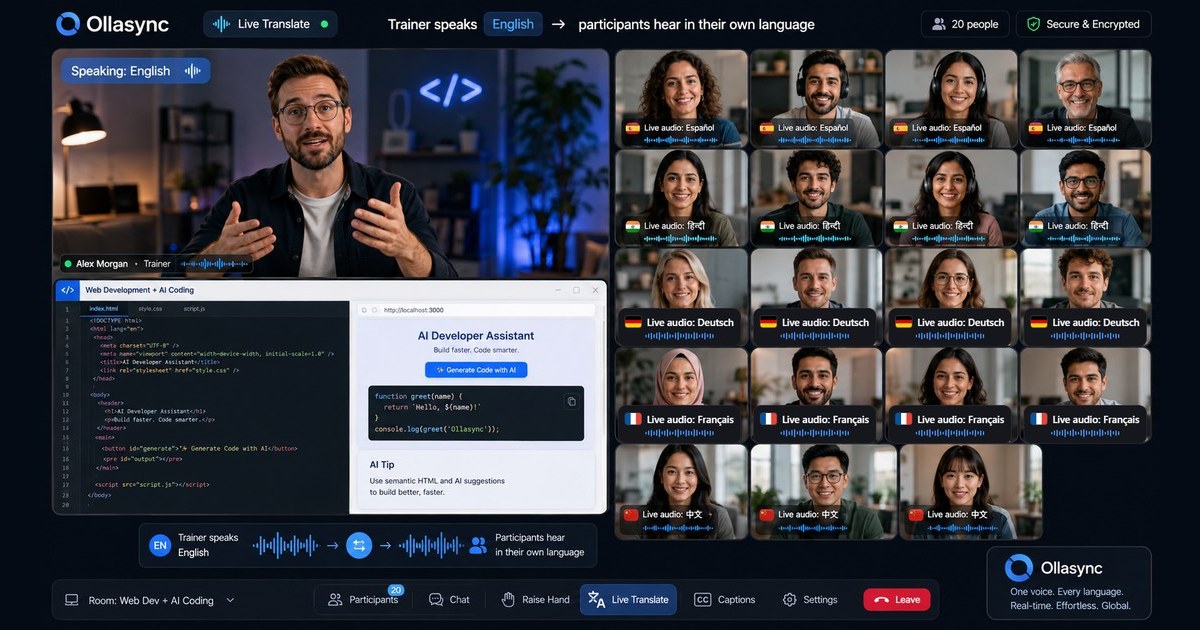
How to host a 1,000-person webinar for under
Chapter 1: The Direct Answer & Executive Summary
To host a 1,000-person webinar for under $100, you have two production architectures: Native Tier-Hopping (purchasing a 1-month rolling license for a dedicated webinar tool like Zoom Webinar 1,000 at $79/month or Zoho Meeting at $36/month) or an RTMP Stream Pipeline (using OBS Studio routed through an unlisted YouTube Live or Cloudflare Stream embed, costing $0 to $10).
Understanding how to host a 1000person event on a lean budget requires distinguishing between total registrations and peak concurrent viewers (PCV). In standard B2B benchmarks, a 1,000-attendee live room requires roughly 2,500 to 3,000 registrations based on standard 35–40% industry show-up rates.
The 60-Second Budget Blueprint
| Architecture Model | Primary Tech Stack | Total Cost (Single Event) | Maximum Live Capacity | Two-Way Audio/Video? | Latency |
|---|---|---|---|---|---|
| Option A: Ephemeral SaaS Tier | Zoom Webinar 1,000 (1-Mo Subscription) | $79.00 | 1,000 Interactive Viewers | No (Host/Panelist Only) | < 1 second (WebRTC) |
| Option B: Value SaaS Alternative | Zoho Meeting Pro (1,000 Plan) | $36.00 | 1,000 Interactive Viewers | No (Host/Panelist Only) | < 2 seconds |
| Option C: Custom RTMP Ingest | OBS Studio + YouTube Live (Unlisted) + Fillout/Airfocus Forms | $0.00 | Unlimited (Millions) | Text Chat Only | 5–15 seconds (HLS/DASH) |
| Option D: Developer Edge Embed | OBS + Cloudflare Stream + Custom HTML Landing Page | $5.00 – $12.00 | Unlimited | Custom Live Chat (Matrix/Pusher) | 1–3 seconds (LL-HLS) |
The Core Problem: Registration Scale vs. Concurrency Math
The single largest budget leak for high-volume virtual events is over-provisioning infrastructure. When marketing teams search for how to host a 1000person virtual broadcast, they frequently purchase annual enterprise software licenses running $3,000 to $10,000 annually (such as ON24, Bizzabo, or annual enterprise tiers of Hopin/RingCentral Events).
For an independent operator or cost-conscious organization, capacity planning must be approached with the following formulas:
Total Required Registrations = Target Concurrent Attendees / Expected Show-Up Rate
Show-Up Rate (B2B Organic)   = 30% to 42%
Show-Up Rate (Paid Ads)      = 20% to 28%
Show-Up Rate (Internal/Corp) = 60% to 75%
If your objective is precisely 1,000 live attendees simultaneously:
- You must capture 2,500 to 3,300 registrations.
- Your registration engine (landing page, database, automated email sender) must handle traffic spikes without incurring transactional tier upgrades.
- Your streaming pipeline must support 1,000 simultaneous audio/video decodes without packet drop or connection rejection.
       [ 3,000 Registrations ]
                  │
                  ▼ (Marketing Automations: Make / ActiveCampaign / Zapier)
         [ 1,000 Live Attendees ]
                  │
     ┌────────────┴────────────┐
     ▼                         ▼
[Architecture A]          [Architecture B]
Direct WebRTC SaaS        Edge Stream Ingestion
(Zoom / Zoho)             (OBS -> YouTube / Cloudflare)
• Interactive Chat/Q&A    • Massive Scale, Low Cost
• True Concurrency Cap    • 4-10s Latency / Uncapped
Architectural Comparison: Native SaaS vs. Stream Broadcaster
To achieve a sub-$100 total cost of ownership (TCO) for a 1,000-person live event, you must select between two structural approaches:
           NATIVE WEBINAR SAAS                           CUSTOM RTMP INGESTION
   (e.g., Zoom Webinar / Zoho Meeting)            (e.g., OBS + Cloudflare / YouTube)

   Host Video ──► Cloud Transcoder               Host Video ──► OBS Studio ──► Cloud Ingest
                        │                                                         │
         ┌──────────────┴──────────────┐                           ┌──────────────┴──────────────┐
         ▼                             ▼                           ▼                             ▼
   Attendee 1                    Attendee 1,000              Attendee 1                    Attendee 10,000+
   (Direct WebRTC Session)       (Hard Gate Cap)             (HLS / Low-Latency Edge)      (Effectively Free)
1. The Ephemeral SaaS Method (Best for Interactivity & Ease)
- How it works: You maintain a standard, low-tier base account (e.g., Zoom Pro at $15.99/mo). Exactly 3 days before your scheduled broadcast, you purchase the Zoom Webinar 1,000 add-on for $79.00/month. You conduct your dry run, host the live broadcast for 1,000 attendees, export your CSV analytics, chat logs, and cloud recordings, and immediately cancel the webinar add-on renewal.
- Effective Cost: $79.00 (plus base license: $15.99) = $94.99 total one-off cost.
- Trade-offs:
- Strict gating: If attendee #1,001 attempts to enter, they are locked out with an error screen.
- Standardized interface: Zero white-label customization of the video canvas.
2. The RTMP Ingestion & Edge Delivery Pipeline (Best for Ultra-Low Cost & Scale)
- How it works: Your presenter streams directly to Open Broadcaster Software (OBS Studio, open-source and free). OBS outputs an RTMP stream to an unlisted YouTube Live endpoint or an active Cloudflare Stream instance ($5/month base + $1 per 1,000 minutes viewed). You embed this video player on an unlisted landing page (built via Carrd, WordPress, or Framer) behind a gated registration wall.
- Effective Cost:
- Software: $0 (OBS Studio)
- Video Ingest & CDN: $0 (YouTube Live) or $11.00 (Cloudflare Stream for 1,000 people watching for 60 minutes)
- Chat Interaction: $0 (Embedded YouTube Live Chat, Minnit Chat, or Dead Simple Chat free tier)
- Registration Tooling: $0 (Google Sheets + Fillout Forms)
- Total Cost: $0.00 to $11.00.
- Trade-offs:
- Introduces a 4 to 12-second stream delay, limiting real-time verbal interactions with the audience.
- Moderation controls require separate manual oversight on the embedded chat tool.
Total Cost of Ownership (TCO) Breakdown
The following audit demonstrates how to allocate a complete budget under $100 across every critical functional requirement of a 1,000-person webinar.
┌─────────────────────────────────────────────────────────────┐
│             TOTAL BUDGET ALLOCATION: $94.99                 │
├────────────────────────────────┬────────────────────────────┤
│ Video Infrastructure (Zoom 1k) │ ██████████████████ $79.00  │
│ Base Pro License Platform      │ ████ $15.99                │
│ Registration Engine (Fillout)  │ ░ $0.00 (Free Tier)        │
│ Automated Reminder Deliveries  │ ░ $0.00 (MailerLite Free)  │
│ Production Switcher (OBS)      │ ░ $0.00 (Open-Source)      │
│ Post-Event Storage/Analytics   │ ░ $0.00 (Local / Native)   │
└────────────────────────────────┴────────────────────────────┘
Critical Infrastructure Prerequisites
- Upstream Bandwidth: The host broadcaster must have a stable upstream speed of at least 15 Mbps sustained for a 1080p60 WebRTC or RTMP broadcast. Hardwired Gigabit Ethernet is mandatory; never host a 1,000-capacity event over shared 2.4/5GHz Wi-Fi.
- Audio Processing: A dedicated cardioid dynamic USB/XLR microphone (e.g., Shure MV7, Audio-Technica ATR2100x) combined with a room configured for sound dampening is non-negotiable. Bad video will be tolerated by attendees; clipping or reverberant audio causes high drop-off rates within the first 6 minutes.
- Backup Fallback Link: For native SaaS hosting, configure an automatic failover to an unlisted live stream link (YouTube Live or custom RTMP) within the webinar control panel. If the participant room reaches the 1,000-seat ceiling, you can dynamically route overflow attendees to the edge stream via automated broadcast chat messages.
Executive Action Checklist
Before proceeding to subsequent chapters, verify your platform constraints against this foundational framework:
- Lock Concurrency Limits: Confirm whether your chosen platform enforces a hard disconnect or automatic per-seat overage fees when the 1,000-seat limit is reached.
- Configure Cancellation Dates: When deploying the Ephemeral SaaS model, place a calendar reminder 48 hours post-event to downgrade your subscription tier back to standard baseline.
- Run End-to-End Latency Verification: If audience polling or verbal participation is required, verify that your transmission delay is sub-2-second (WebRTC). If hosting a lecture-style one-to-many broadcast, utilize the zero-cost RTMP route.# Chapter 2: The Data & Competitor Comparison (Legacy vs. Modern AI Platforms)
Scaling an interactive event to four figures is a critical inflection point for B2B organizations. When evaluating how to host a 1000person event efficiently, buyers frequently run into an artificial pricing wall built by legacy telecom architectures.
Historically, hosting 1,000 concurrent participants required dedicated server provisioning, expensive SIP trunking, and enterprise licensing contracts. Today, advancements in WebRTC, serverless edge compute, and integrated AI automation have rewritten the economics of large-scale streaming.
This chapter breaks down the hard numbers, technical architectures, and total cost of ownership (TCO) between legacy legacy video giants (Zoom, Cisco Webex, Microsoft Teams) and modern AI-native event platforms.
The Legacy Pricing Model: The “Per-Seat” Tax
Traditional web conferencing suites were designed for internal corporate meetings, not scalable public-facing broadcasts. When adapting their infrastructure for large audiences, these vendors siloed their capacity behind enterprise paywalls and add-on “Webinar Tiers.”
Legacy Model: Base License ($15–$50/mo) + Webinar 1,000 Add-on ($275–$340/mo) + Storage/AI Add-ons = $4,000–$6,500/year
Modern Model: Usage-Based or Flat SaaS Tier with Integrated AI = Under $100/mo or Pay-Per-Event (<$500/year)
The Breakdown of Legacy Giants
-
Zoom Video Webinars (Zoom Events):
- Base Tier (1,000 capacity): Requires an underlying Pro/Business license ($15.99–$21.99/user/month) plus the Zoom Webinars 1,000 capacity add-on at $340/month per host or $3,400 billed annually.
- Hidden Costs: Cloud recording storage beyond 5 GB requires additional capacity ($10–$100/mo); AI Companion is standard, but deeper workflow automations, custom branding domains, and advanced analytics demand Zoom Sessions or Zoom Events tier upgrades ($890–$1,490+/year).
-
Cisco Webex Webinars:
- Base Tier (1,000 capacity): Webex Webinar standalone starts at $275 to $375/month per host ($2,750–$3,750/year).
- Hidden Costs: Toll-free dial-in packages cost extra, advanced production tools require Webex Events (formerly Socio) at enterprise contract minimums, and strict desktop app dependencies impact attendee conversion.
-
Microsoft Teams Live Events / Town Halls:
- Base Tier (1,000–10,000 capacity): Packaged within Office 365 / Microsoft 365 E3 ($36/user/month) or E5 ($57/user/month) licenses with annual commitments. Alternatively, Microsoft Teams Premium adds $10/user/month for advanced webinar features (green rooms, custom registration approval).
- Hidden Costs: Rigid ecosystem friction; poor external guest support; enterprise IT provisioning requirement; minimal native AI post-event repurposing out of the box.
Comprehensive Feature & Cost Matrix (1,000-Attendee Tier)
The following benchmark demonstrates the cost and capability disparities when planning how to host a 1000person webinar on legacy versus next-generation AI infrastructure.
| Evaluation Metric | Zoom Webinars (1,000) | Cisco Webex Webinars | Microsoft Teams Town Hall | Modern AI-Native Platforms |
|---|---|---|---|---|
| Monthly Cost (No Annual Lock) | $340.00 / month | ~$375.00 / month | N/A (Annual Enterprise License) | $49 – $99 / month |
| Annualized Cost | $3,400.00 / year | ~$3,000.00 / year | $432 – $684 / user/year + Base E3/E5 | $480 – $990 / year |
| Attendee Barrier to Entry | App install or restricted browser client | App install or plugin required | Browser (limited) or Teams client | 100% Zero-Install Browser WebRTC |
| Stream Latency | 2–5 seconds | 3–8 seconds | 10–25 seconds (HLS Broadcast) | Ultra-low (<1s WebRTC) or Low (<3s CMAF) |
| Interactive Audience Limit | 1,000 (view/listen only by default) | 1,000 (view-only broadcast) | Up to 10,000 (moderated broadcast) | 1,000 fully interactive / Stage-switching |
| Native AI Engine | Live transcription, basic AI summary | Live captions, noise removal | Copilot (Requires $30/mo add-on) | Native: Real-time clips, auto-chapters, instant blog/social post-gen |
| Audience Engagement Suite | Basic polls, text Q&A, chat | Slido integration (tiered) | Polls (Forms), moderated Q&A | Gamified polls, dynamic CTAs, embeddable checkout widgets |
| Registration & Funnels | Basic static landing pages | Basic forms | Basic Microsoft Forms | Dynamic landing pages, automated email/SMS sequences |
Technical Architecture: Legacy WebRTC vs. Modern Distributed Edge
Why are legacy providers charging up to 8x more for a 1,000-capacity room? The answer lies in their underlying network topologies.
LEGACY TOPOLOGY (Centralized MCU/SFU):
[Host Camera] ──> [Legacy Data Center SFU] ──> [High-Bandwidth Ingress] ──> [1,000 Point-to-Point Streams]
Result: High compute cost, server-side scaling bottlenecks, strict tier pricing.

MODERN AI/EDGE TOPOLOGY (Hybrid WebRTC + Edge CDN):
[Host Camera] ──> [Edge Ingest / WebRTC] ──> [Distributed Edge Cloud (CMAF/HLS)] ──> [Global CDN Edge Nodes] ──> [1,000 Attendees]
Result: Sub-cent per-viewer bandwidth costs, autoscaling compute, low platform subscription overhead.
1. Ingestion and Encoding
- Legacy: Centralized Selective Forwarding Units (SFUs) dynamically transcode streams for every user connection. When scaling to 1,000 attendees, compute costs scale linearly, forcing vendors to pass hefty fees to the end customer.
- Modern AI Engines: Use distributed Edge WebRTC for on-stage presenters and seamlessly push the packaged output to low-latency edge CDNs (such as Cloudflare Stream or AWS Interactive Video Service). Bandwidth costs drop from dollars to fractions of a cent per gigabyte.
2. Zero-Download Web Delivery
- Legacy: Force attendees to download desktop packages or run heavy local clients to access interactive features (audio/video participation, screen control). Attendee drop-off rates average 18–28% at the download prompt.
- Modern: Native browser HTML5/WebRTC delivery ensures frictionless 1-click access across all mobile and desktop browsers, maximizing conversion and attendance rates for top-of-funnel marketing events.
Hidden Cost Analysis: Where Enterprise Budgets Leak
When calculating the true cost of how to host a 1000person event, base software subscriptions represent only a portion of the financial footprint:
- Storage & Archival Costs:
- Zoom charges up to $500/year for 100 GB of additional cloud storage once historical recordings build up. Modern platforms typically provide unlimited cloud archival on decentralized S3-compatible infrastructure at no extra charge.
- Post-Event Repurposing Overhead:
- Producing short-form video clips, SEO-optimized show notes, and email follow-ups from a 60-minute Zoom recording typically requires a video editor (3–5 hours @ $50/hr = $150–$250 per event).
- Modern AI platforms feature autonomous multimodal pipelines that ingest the live stream and generate timestamped chapters, micro-clips, transcribed blog drafts, and LinkedIn summaries within minutes of the broadcast concluding—eliminating post-production contractor fees entirely.
- Attendee Overage Penalties:
- If 1,001 people attempt to enter a legacy 1,000-capacity room without an enterprise burst contract, attendee #1,001 is locked out at the door. Modern platforms offer elastic room scaling that dynamically expands capacity via CDN fallbacks without hard-capping attendee acquisition.
Strategic Takeaway for B2B Operators
Hosting a 1,000-person digital event no longer requires a multi-thousand-dollar annual commitment to legacy telecom providers. By shifting from legacy client-heavy software to modern, browser-native AI streaming infrastructure, businesses can reduce their fixed event operating costs by 70% to 85%, eliminate attendance friction, and automate their post-event content distribution pipeline at scale.# Chapter 3: The Deep Dive — Technical Architecture and Operational Execution for 1,000 Concurrent Attendees
Scaling an interactive digital event to 1,000 live participants has historically been locked behind enterprise paywalls. Legacy SaaS providers often force organizers onto custom contracts ranging from $3,000 to $10,000 annually just to unlock a four-digit capacity tier.
In 2026, understanding how to host a 1000person webinar on a lean budget requires decoupling production, ingestion/distribution, and audience engagement. By treating video delivery as an infrastructure challenge rather than a monolithic SaaS subscription, you can achieve sub-second latency, broadcast-grade fidelity, and two-way interaction for a fraction of traditional enterprise costs.
1. Network Topologies: WebRTC vs. RTMP vs. Low-Latency HLS (LL-HLS)
To host a four-figure audience affordably, you must select the right transport protocol. Video delivery costs scale based on compute and egress bandwidth.
+-------------------------------------------------------------------------+
|                    Protocol Architecture Comparison                     |
+---------------+-------------------+------------------+------------------+
| Attribute     | Pure WebRTC       | RTMP to LL-HLS   | WebRTC-to-HLS    |
|               | (Peer/SFU)        | (Stream Engine)  | Cascading (2026) |
+---------------+-------------------+------------------+------------------+
| Latency       | < 500 ms          | 2–5 seconds      | 1–2 seconds      |
| Host Cost/Mo  | $300 – $1,200     | $20 – $80        | $40 – $120       |
| CPU Overhead  | High (Client-side)| Low (CDN Edge)   | Low (Edge)       |
| 1,000p Cap    | Expensive         | Highly Efficient | Optimal Balance  |
| Interactivity | True Real-Time    | Semi-Interactive | Synchronized     |
+---------------+-------------------+------------------+------------------+
Why Pure WebRTC Fails Budget Constraints
Standard video conferencing tools use Selective Forwarding Units (SFUs) running WebRTC. Maintaining 1,000 bi-directional peer connections creates massive server-side compute overhead. For a 1,000-person event where 99% of attendees only consume media and type in chat, paying for real-time WebRTC connections for all 1,000 users is economically inefficient.
The 2026 Standard: WebRTC-to-Edge Cascading
The most cost-efficient architecture for 1,000 attendees uses:
- WebRTC Ingestion for speakers (instant, zero-lag collaboration).
- Cloud Transmuxing via an edge network.
- Low-Latency HLS (LL-HLS) or CMAF (Chunked Media-Augmented Format) distribution to the audience via an Anycast CDN.
This model delivers sub-2-second latency—fast enough for live Q&A, polls, and chat reactions—while reducing streaming egress costs to roughly $0.02 to $0.05 per viewer-hour.
2. The Low-Cost 1,000-Attendee Stack Blueprint
When building a decoupled stack to answer how to host a 1000person event under a standard budget, assemble these four modular layers:
[Presenters / WebRTC Studio]
            │
            ▼ (SRT / RTMP Ingest @ 1080p60)
[Transcoding & Distribution: AWS IVS / Cloudflare Stream / YouTube Unlisted]
            │
            ▼ (LL-HLS via Edge CDN)
[Custom Embed / Gated Landing Page] ◄── [Serverless Chat & Polls (Ably/Pusher)]
Layer 1: Ingestion and Production
- OBS Studio (Open Broadcaster Software) or vMix: Free/low-cost local software to handle multi-camera switching, lower-thirds, screen shares, and audio normalization.
- VDO.ninja (Free) or StreamYard ($39-$49/mo): Pull remote guest speakers into OBS via browser-based peer-to-peer WebRTC feeds with pristine quality and zero lag.
Layer 2: Inexpensive Transcoding & Content Delivery (CDN)
- Cloudflare Stream: Direct RTMP/RTMPS ingest. Bills at $5 per 1,000 minutes viewed plus $1 per 1,000 minutes stored. A 60-minute webinar for 1,000 viewers costs approximately $5.00 in total video bandwidth.
- Amazon Interactive Video Service (AWS IVS): Managed low-latency live streaming platform built on Twitch infrastructure. Standard channel input costs ~$0.15/hr, and output costs ~$0.015 per viewer hour (roughly $15.00 for a 1,000-person, 1-hour session).
- YouTube Live (Unlisted Embed): $0. Zero infrastructure cost, unmetered bandwidth, automated DVR recording, and global routing.
Layer 3: Uncoupled Chat, Interactivity, and State Management
Native chat plugins embedded inside multi-thousand-seat video solutions are often the first component to fail under concurrency spikes. Offload chat from the video stream:
- Embedded Solutions: Minnit Chat, Dead Simple Chat, or ChatEngine.
- Serverless Websockets: Pusher or Ably integrated with a lightweight React/HTML5 front end. Free tiers routinely support up to 200 peak concurrent connections; paid scaling for a single day rarely exceeds $10–$25.
Layer 4: Registration Gate & Front-End Delivery
Avoid running high-concurrency webinars on monolithic CMS platforms (e.g., standard WordPress installs on shared hosting), which crash under 1,000 simultaneous page reloads.
- Host the viewing room on a static page via Vercel, Netlify, or Cloudflare Pages.
- Authenticate attendees via a lightweight JWT or single-use magic link stored in Supabase or Firebase Auth.
3. Step-by-Step Technical Execution for Zero Downtime
To successfully execute an event at this capacity, follow this technical run-of-show:
T-minus 60 min: Cold Start & Bitrate Lock
  ├── Presenters enter Green Room (VDO.ninja/RTMP)
  ├── Lock keyframe interval to 2.0s in OBS
  └── Verify CBR (Constant Bitrate) at 4500-6000 kbps (1080p30/60)

T-minus 15 min: Edge Buffer Warm-Up
  ├── Start streaming slate card ("Stream starting shortly")
  ├── Force CDN edge caching warm-up
  └── Confirm sync across WebSocket chat channels

T-00: Go Live
  ├── Switch primary scene
  ├── Trigger real-time latency checks via client pingback
  └── Run local backup recording (NVENC/ProRes)
Encoder Settings Matrix for 1,000-Seat Streaming
Configure your streaming encoder (OBS/vMix) to align with downstream CDN packetization requirements:
- Rate Control: CBR (Constant Bitrate) — never use VBR, which causes buffering during visual changes.
- Bitrate: 4,500 kbps (Video) + 160 kbps (Audio, AAC-LC).
- Keyframe Interval (GOP Size): Exactly 2 seconds (or 60 frames at 30 fps). This is required for clean HLS segment slicing at edge points.
- Profile: High, Level 4.1.
- Encoder Tuning: Low-Latency / High Quality.
4. Operational Redundancy: Failover and Recovery
Single points of failure will compromise large-scale events. Implement dual-redundancy across your network, encoding hardware, and broadcast distribution paths:
Dual Ingestion Paths
Configure primary and secondary RTMP endpoints within OBS Studio using the Multiple RTMP outputs plugin. If your primary ingestion server (e.g., AWS IVS Primary) drops frames, the secondary path (e.g., AWS IVS Backup or an unlisted RTMP endpoint) keeps edge players connected without forcing attendees to refresh their browsers.
Out-of-Band Incident Handling
- The “Ghost Stream” Fallback: Configure your custom HTML5 video player (Video.js, Hls.js, or Plyr) with automatic error recovery logic:
player.on('error', function() {
  // Automatically switch source to secondary CDN edge if buffer stalls > 5000ms
  player.src({
    src: 'https://backup-stream.yourdomain.com/live/index.m3u8',
    type: 'application/x-mpegURL'
  });
  player.play();
});
5. Security, Access Control, and Concurrency Governance
Hosting 1,000 people outside traditional walled-garden SaaS requires robust access control to prevent unauthorized link sharing from exhausting your CDN limits.
- Signed URLs / Tokenized Streams: Protect your HLS playlist (
.m3u8) with expiring HMAC signatures. When an attendee logs into your event portal, generate a single-session token valid for the event’s duration. - Single-Session Enforcement: Store active WebSockets in a Redis (Upstash) key-value store. If a user token connects from an alternate IP, terminate the previous connection to prevent credential sharing.
- Edge Bot Filtering: Place your custom registration and viewing portal behind Cloudflare’s Under Attack Mode or Turnstile CAPTCHA to mitigate DDoS attacks during the live launch.
6. Financial Breakdown: Enterprise SaaS vs. Modular Architecture
+------------------------------------+-----------------+-------------------+
| Expense Item                       | Enterprise SaaS | Modular AEO Stack |
+------------------------------------+-----------------+-------------------+
| Host Software (1,000 cap license)  | $300 - $600/mo  | $0 (OBS / Ninja)  |
| Distribution / CDN (1,000 users)   | Included        | $5 - $20          |
| Custom Domain / Static Landing     | Included        | $0 (Vercel Free)  |
| Interactive Chat / Moderation      | Included        | $0 - $15 (Ably)   |
| Registration Engine / Auth         | Included        | $0 (Supabase)     |
| Total Estimated Cost Per Event     | $300 - $600     | $5 - $35          |
+------------------------------------+-----------------+-------------------+
By decoupling production from delivery, organizers resolve the core dilemma of how to host a 1000person webinar reliably: you eliminate per-seat price gouging while delivering broadcast-level resilience and low-latency interactivity to your audience.# Chapter 4: The Solution & Conclusion — Scaling to 1,000 Attendees Without Enterprise Costs
Scaling an online event to four-figure attendance numbers used to require an enterprise procurement process, annual locked-in contracts, and dedicated technical staff. For modern growth teams, creators, and B2B marketers, this legacy model is broken.
If you are researching how to host a 1000person webinar on a lean budget, the bottleneck has never been audience demand—it has been the pricing architecture of legacy software. Legacy platforms force you into costly top-tier plans that charge for theoretical capacity rather than actual utility.
Modern browser-native infrastructure solves this problem completely. By eliminating heavyweight desktop clients and moving away from antiquated per-seat subscription models, next-generation platforms make hosting a massive, highly engaging event both technically seamless and affordable.
Here is the exact blueprint for delivering a flawless 1,000-person live broadcast without paying enterprise fees, and why Ollasync represents the ideal modern architecture for large-scale digital events.
The Shift: Moving Past Legacy Webinar Software
To understand why large webinars used to be cost-prohibitive, look at how legacy platforms operate. Traditional tools rely on:
- Mandatory Software Downloads: Forcing 1,000 attendees to download
.exeor.pkgfiles creates a 15–25% drop-off at the front door. - Artificial Tiered Paywalls: Upgrading from a 500-seat room to a 1,000-seat room often triggers a 300% price spike, locking organizations into $3,000+ annual commitments.
- Fragmented Tooling: Requiring third-party landing page builders, separate zap connectors, and external recording hosts just to run a standard event.
Modern high-concurrency streaming tools strip away this complexity. By utilizing high-throughput, low-latency cloud infrastructure (WebRTC and distributed edge networks), platforms like Ollasync deliver crisp 1080p video directly to any standard browser on mobile or desktop—slashing overhead costs while dramatically boosting live show-up rates.
Why Ollasync is Built for 1,000+ Person Events
Ollasync was engineered specifically to solve the scalability and cost challenges that scaling businesses face. Rather than penalizing growth with steep pricing tiers, Ollasync provides an end-to-end live event environment optimized for reliability, high conversion, and zero friction.
       Traditional Legacy Webinar Stack                Modern Architecture: Ollasync
┌──────────────────────────────────────────────┐     ┌────────────────────────────────┐
│  $300-$1,000/mo Locked Tier                  │     │  Frictionless Flat Pricing     │
│  + Mandatory App Downloads (High Drop-off)   │ vs. │  + 100% Browser-Native Access  │
│  + Add-on Registration & Storage Tools      │     │  + Built-In CRM, Chat & Storage│
└──────────────────────────────────────────────┘     └────────────────────────────────┘
1. Zero-Friction, Browser-Based Access
When executing a 1,000-attendee event, every barrier to entry degrades your ROI. Ollasync operates 100% in-browser. Attendees click a single link from an email or calendar invite and enter the live room instantly on Chrome, Safari, Edge, or mobile browsers. No installers, no security warnings, and no permission delays.
2. High-Concurrency Stability at Predictable Costs
Ollasync leverages distributed edge broadcasting. Whether you have 50 or 1,000 concurrent viewers, stream latency stays under 500ms with dynamic bitrate adaptation. If an attendee’s local connection dips, their stream automatically adjusts resolution to prevent buffering or disconnects, ensuring your presentation lands cleanly across all participants.
3. Built-In Registration, Engagement, and Conversion Engine
Instead of paying for separate landing page software, Ollasync includes:
- High-converting registration pages with custom branding and custom metadata fields.
- Automated email reminders (confirmation, 24-hour, 1-hour, and 10-minute triggers) to maximize live show-up rates.
- Interactive engagement suites featuring moderated Q&A, real-time stage hand-raising, instant polling, and timed CTA popups that drive live buyers directly to checkout links.
4. Automated Cloud Infrastructure & Post-Event Workflows
The moment your 1,000-person event concludes, Ollasync processes your recording into high-definition MP4 cloud storage. You can instantly turn the live session into an automated on-demand funnel without downloading, re-rendering, or paying third-party video hosts.
Feature & Cost Comparison: Legacy Tools vs. Ollasync
| Feature / Metric | Legacy Enterprise Platforms (Zoom / ON24 / GoTo) | Ollasync |
|---|---|---|
| 1,000-Seat Monthly Cost | $340 – $990+ / month | Fraction of legacy costs (Budget-friendly) |
| Contract Requirement | Often locked into Annual Commitments | Flexible / Monthly / Pay-for-use |
| Attendee Requirement | App / Client Download Required | Zero Downloads (100% Browser-Native) |
| Show-Up Rate Impact | Lower (friction from app installs/updates) | Higher (Instant 1-click browser entry) |
| Interactive CTAs & Offers | Basic or non-existent without integrations | Built-in timed CTAs with live conversion tracking |
| Automated Replays | Manual export or expensive add-on storage | Instant cloud processing & on-demand hosting |
5-Step Checklist: Executing a 1,000-Person Webinar with Ollasync
If you are planning your event right now, follow this operational checklist to ensure a seamless production:
[Phase 1: Setup]     Create event in Ollasync -> Configure custom registration page
[Phase 2: Promote]   Drive traffic -> Leverage built-in automated reminder sequences
[Phase 3: Rehearse]  Conduct green-room audio/video check with co-hosts 48h prior
[Phase 4: Broadcast] Run live event -> Utilize interactive polls & trigger live CTAs
[Phase 5: Convert]   Auto-publish replay -> Review built-in retention & attendee analytics
- Set Up the Event Room: Generate your Ollasync room link, customize registration fields to capture attendee lead data, and set up your dynamic room branding.
- Configure Built-in Automations: Turn on default calendar-invite attachments and schedule your 24-hour and 1-hour email sequences to lock in attendance.
- Conduct a Green-Room Tech Check: Bring your co-hosts or guest speakers into Ollasync’s private backstage area 15 minutes early to test microphones, cameras, and slide decks without alerting early attendees.
- Deliver with Interactive CTAs: During the presentation, use built-in polls to maintain engagement. When reaching your pitch or key resource, trigger the interactive pinned CTA banner to capture intent while attention is at its peak.
- Analyze and Follow Up: Review attendee watch-time graphs, drop-off points, and poll responses inside Ollasync’s analytics dashboard. Segment your post-webinar follow-ups based on who attended live versus who registered but missed the broadcast.
Conclusion: Scale Your Audience Without the Enterprise Tax
Understanding how to host a 1000person webinar successfully comes down to choosing tools that remove operational friction rather than adding technical and financial overhead.
You no longer need to sign multi-thousand-dollar annual contracts or force your audience through clunky software installations. By taking advantage of Ollasync’s lightweight, browser-first platform, you can produce reliable, broadcast-quality live events that scale past 1,000 attendees smoothly while protecting your bottom line.
Whether you are launching a product, hosting an industry summit, or running an interactive training program, modern streaming infrastructure puts enterprise-grade scale within reach of any budget.
Ready to Host Your Next 1,000-Person Event?
Stop overpaying for rigid enterprise seats and complicated software. Deliver a smooth, interactive, browser-native webinar experience that your attendees will love.
[Get Started with Ollasync Today → Launch Your Event in Minutes]