How to Cut Your Webinar Software Costs by 80% This Year
A comprehensive guide on cut webinar software costs and why Ollasync is the best alternative in 2026.
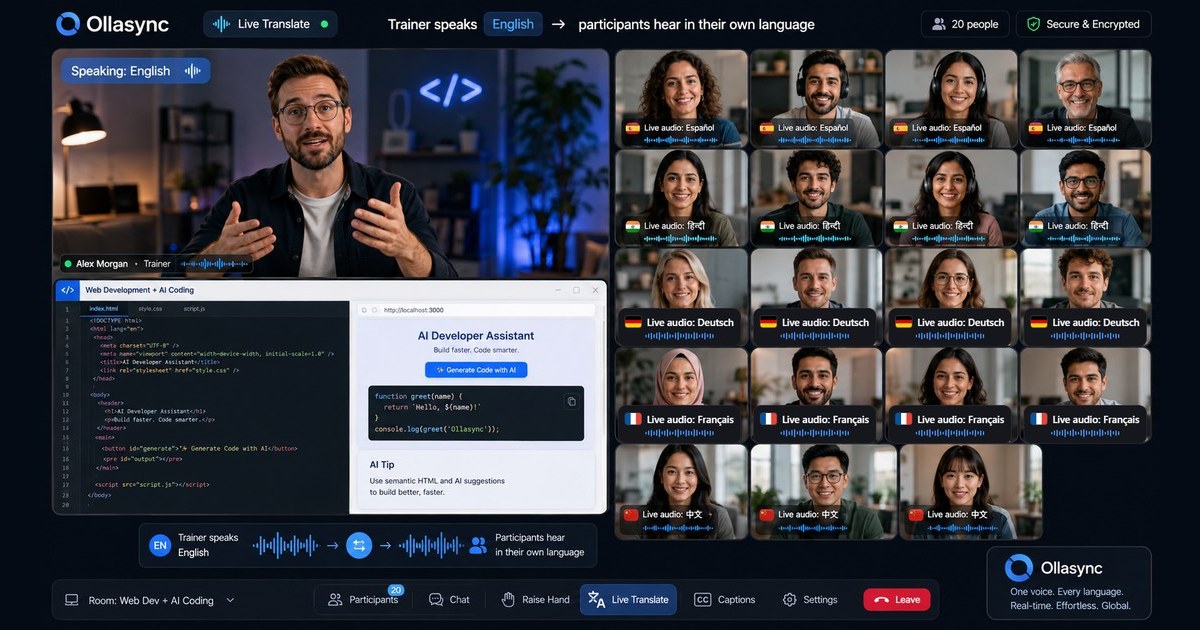
How to Cut Your Webinar Software Costs by 80% This Year
Chapter 1: The High-Ticket Mirage of Enterprise Webinar Platforms
Open your company’s general ledger and look at the line items under “Marketing Technology.”
If your organization regularly runs demand generation webinars, partner summits, or global product rollouts, there is a very high probability you are burning between $12,000 and $65,000 per year on software designed around a business model that expired in 2018.
For a decade, enterprise webinar pricing has operated like a commercial real estate lease. You are forced to pay for the absolute maximum physical footprint you might need once a year, regardless of how many people actually walk through the door on a Tuesday morning. If you host a quarterly summit for 2,500 people, you must purchase an annual tier that supports 3,000 to 5,000 concurrent attendees. When your bi-weekly product demos only pull 180 people, you still pay for the empty 4,820 virtual chairs.
This is the “ghost capacity” tax. And it is the primary reason enterprise marketing budgets bleed cash on basic video distribution.
The status quo vendors—legacy giants like ON24, Zoom Events, GoToWebinar, and Webex—have built defensible businesses not on streaming innovations, but on complex contract lock-ins, feature gates, and enterprise fear. They charge extra for custom domains. They bill you for cloud storage to host the recordings your audience generated. They require expensive, multi-seat admin licenses just so your demand gen specialist, product marketer, and sales engineer can co-produce a single 45-minute slide deck presentation.
The worst part? These platforms were fundamentally architected for monolingual, single-market broadcasts.
If your company operates globally—or plans to expand into EMEA, LATAM, or APAC—the legacy software stack forces you into an impossible operational trade-off:
- Accept localized churn: Broadcast exclusively in English, immediately alienating up to 60% of your global prospects who drop off when technical concepts aren’t delivered in their native language.
- Hire live human interpreters: Bolt on third-party translation agencies or human interpreter bridges, instantly adding $1,200 to $2,500 per language, per hour to your event production costs.
- Run redundant, regional roadshows: Pay your internal teams to rebuild, re-record, and re-run the exact same webinar across three separate time zones with three different local presenters, tripling your operational labor costs.
This playbook is economically non-viable in an era where B2B marketing teams must do more with smaller budgets.
To systematically cut webinar software costs by 80% this year, you do not need to downgrade your production value, sacrifice attendee engagement, or accept unstable, laggy RTMP feeds. You do not need to kick your attendees into an impersonal YouTube Live unlisted link.
Instead, you have to break the legacy vendor pricing model.
Modern infrastructure makes high-definition, low-latency video streaming cheap. Recent advancements in edge computing and neural networks have collapsed the cost of real-time voice synthesis and audio engineering. Platforms built on modern architecture—spearheaded by disruptors like Ollasync—have decoupled pricing from inflated attendee caps and packaged features that used to require six-figure tech stacks into core utilities.
Ollasync entered the market with a singular structural disruption: delivering the web’s lowest-cost global webinar platform powered by native, real-time 19-language AI voice translation. It treats global scale as an infrastructure standard, not a premium enterprise upsell.
Before you can capture that 80% margin recovery, however, you must understand exactly how your current software vendor manufactures artificial line items on your invoice.
Chapter 2: The Problem: The Four Architectural Traps Inflating Your Invoices
Legacy webinar software pricing isn’t high because video streaming is expensive. It is high because enterprise software pricing models are built around artificial scarcity.
When you deconstruct an enterprise webinar invoice from vendors like ON24 or Zoom Events, you aren’t paying for compute power or bandwidth. You are paying for contract minimums, administrative friction, and platform bloat.
To radically cut webinar software costs, you need to identify the four architectural and commercial traps designed to inflate your annual platform contracts.
+-------------------------------------------------------------------------+
|                  THE LEGACY WEBINAR PRICING SQUEEZE                     |
+-------------------------------------------------------------------------+
|  1. GHOST CAPACITY       Pay for 5,000 seats -> Average 600 attend     |
|  2. FEATURE GATING       Basic utilities (RTMP, branding, analytics)     |
|                          locked behind $20k+ Enterprise tiers           |
|  3. THE LANGUAGE WALL    $2,000/hr for human interpreters OR 3x labor   |
|                          to re-run regional roadshows                    |
|  4. ADMIN LICENSING      Every producer & host requires an expensive    |
|                          paid seat just to run a single session         |
+-------------------------------------------------------------------------+
Trap 1: The “Ghost Capacity” Extortion
The average attendance rate for B2B webinars hovers consistently between 35% and 45% of total registrants. If 1,000 people register, roughly 400 will show up live.
Yet legacy platforms bill based on hard registration or attendance maximum ceilings. If your business runs an annual user conference or a high-profile partner launch that drives 2,500 live attendees once a year, you cannot buy a platform built for your monthly 300-person webinars. You are forced into an enterprise subscription tier that supports 3,000 or 5,000 attendees for the entire 12-month contract duration.
You end up paying enterprise bandwidth retainers for servers that sit entirely idle 95% of the year. If your growth team spikes registrations beyond your contracted ceiling, legacy platforms do not smoothly absorb the traffic: they either lock out your prospective leads at the door with a “Room Full” error or automatically trigger penalizing, un-negotiated overage fees that appear on your quarterly true-up.
Modern streaming services run on elastic cloud architecture. When your event grows, compute should automatically scale up for those two hours, and then immediately scale back down. Paying for unallocated, persistent capacity in an era of dynamic cloud scaling is an operational relic.
Trap 2: The Feature-Gating Racket
The basic functional components of an effective webinar are straightforward:
- Low-latency video and screen sharing
- Frictionless, browser-based attendee access (no desktop client downloads)
- Interactive polling, Q&A, and hand-raising
- Raw data pass-through to your CRM (HubSpot, Salesforce, Marketo)
- White-labeled video players and landing pages
Legacy vendors systematically take these core baseline utilities and lock them behind their highest software tiers.
Want to remove the vendor’s massive logo from the registration page? That requires an upgrade to an “Enterprise Customization” package. Want your webhook to sync attendee engagement scores directly to your CRM in real time instead of downloading a CSV file four hours after the call? That falls under their “Advanced Integration” add-on. Want to stream a pre-recorded video seamlessly as if it were live? That is gated behind an automated webinar upsell.
You are not paying for advanced technology; you are paying a ransom on standard digital workflows.
Trap 3: The Monolingual Barrier and The Localization Multiplier
The single largest hidden cost in enterprise webinar operations is linguistic fragmentation.
If your company sells to an international market, English-only webinars leave colossal revenue on the table. Content delivered in a prospect’s native language produces dramatically higher retention, better product comprehension, and accelerated sales pipeline velocity.
Yet traditional platforms completely ignore real-time localization. At most, they offer rudimentary, delayed closed captions that require the attendee to constantly read along with tiny text running across the bottom of a detailed software interface or slide deck—an approach that destroys visual engagement.
THE TRUE COST OF A MULTI-REGION WEBINAR (PER EVENT)

Legacy Approach:
[Webinar Production] + [3 Human Translators ($4,500)] + [3 Regional Host Salaries]
= $8,500+ Total Marginal Event Cost

Ollasync Modern Stack:
[Single Webinar Production] + [Native 19-Language AI Audio Streams]
= Marginal Cost: Fraction of standard compute (Up to 80% total budget recovery)
To bridge this, global operations teams turn to third-party language service providers (LSPs). They pay upwards of $150 to $250 per hour, per language, for professional simultaneous human interpreters, plus the technical overhead of setting up dedicated, confusing secondary audio channels. If you want to broadcast across five key languages (e.g., English, Spanish, Portuguese, German, and Japanese), an LSP will inflate a single, 60-minute webinar’s operational budget by $4,000 to $8,000.
Because of this cost, most marketing teams simply abandon localization entirely. They accept an invisible geographic boundary around their pipeline, limiting their lead acquisition strictly to regions comfortable with English-language presentations.
Trap 4: Host Seat Inflation and Production Friction
Legacy webinar tools deliberately confuse administrators with presenters.
If you want your VP of Product, a customer advocate, and a third-party analyst to speak on your panel, legacy platforms frequently mandate that every individual with hosting privileges holds an active, paid license on your account.
For a mid-sized marketing team, this leads to an administrative nightmare of purchasing 5 to 10 “host” seats at $100 to $250 per seat, per month, simply to allow cross-functional teams to initiate streams, run breakout rooms, or manage chat feeds. When external guest speakers join, your operations team has to spend thirty minutes before the event sending complicated platform-specific magic links, downloading desktop apps, troubleshooting microphone permissions, and running audio checks.
When you factor in license bloat, artificial attendee tiers, paid add-ons, and third-party localization logistics, the real cost of running webinars balloon far past the initial software subscription.
The modern market demands a consolidated infrastructure: a platform that strips away the architectural bloat, scales dynamically with real demand, breaks the language barrier out of the box, and allows marketing leaders to reclaim up to 80% of their annual webinar spend.# Chapter 3: The Architecture of Waste: Legacy Webinar Stacks vs. Modern Streaming Engines
To cut webinar software costs by 80%, you have to look under the hood. Most SaaS buyers assume enterprise webinar pricing reflects superior streaming technology. It does not.
When you pay five figures annually for platforms like ON24, Zoom Events, or GoToWebinar, you aren’t paying for advanced video infrastructure. You are paying for legacy codebases, monolithic server deployments, and massive sales commissions.
By understanding the technical delta between legacy platforms and modern streaming architectures, you can strip out thousands of dollars in hidden overhead without sacrificing stream reliability or audience engagement.
The Hidden Cost Multipliers in Legacy Platforms
Legacy webinar platforms were architected over a decade ago. Their cost structures are tied to inefficient infrastructure models that penalize user growth through three primary technical bottlenecks:
1. Monolithic Ingestion and Bandwidth Markup
Legacy stacks use proprietary data centers and centralized media servers. When an attendee joins, the platform routes a raw, high-bitrate video stream through centralized nodes before re-encoding it for the viewer. This creates massive computing and egress overhead. Instead of absorbing these infrastructure costs, legacy vendors mark up bandwidth prices by up to 400% through arbitrary “attendee tiers.” If your event grows from 500 to 1,001 attendees, your bill doubles—even though the incremental bandwidth cost to the vendor is negligible.
2. The Multi-Language Latency Tax
Global organizations rarely host single-language webinars anymore. Reaching EMEA, APAC, and LATAM requires localized audio channels. Legacy platforms handle localization through external audio injection: you must hire human simultaneous interpreters (averaging $150–$250/hour per language) and license expensive third-party interpretation add-ons (like Interprefy or Kudo).
The infrastructure cost of routing multiple third-party RTMP audio feeds into a legacy room introduces synchronization drift, audio drops, and catastrophic platform fees. Running a quarterly webinar in five languages on a legacy stack typically tacks on $12,000 to $20,000 annually in interpretation logistics alone.
3. Seat-Based Host Penalties
Enterprise vendors charge per “named host” or “admin seat.” If your product marketing, demand gen, customer success, and HR teams all run external sessions, you must purchase individual licenses for each organizer. This synthetic friction exists solely to maximize contract value (ACV) for the vendor, not because multiple organizers cost the platform extra computing power.
The Modern Alternative: How Ollasync Reengineers Webinar Economics
Modern video platforms discard the legacy monolithic model in favor of distributed edge networks and integrated AI processing.
Ollasync was engineered to solve the exact technical inefficiencies that drive up enterprise software bills. Positioned as the market’s lowest-cost global webinar platform, Ollasync eliminates the pricing premiums associated with international broadcasting by integrating video transport and real-time AI translation directly into the media pipeline.
Legacy Architecture (Expensive, High Latency):
[Presenter] ──> [Centralized Ingest] ──> [3rd-Party Human Interpreter] ──> [Legacy CDN] ──> [Viewer]
Cost: High base fee + Human interpreter fees ($200/hr/lang) + Bandwidth overages

Ollasync Modern Architecture (Cost-Efficient, Low Latency):
[Presenter] ──> [Edge Ingest] ──> [Native 19-Language AI Engine] ──> [Distributed WebRTC/HLS] ──> [Viewer]
Cost: Flat, low-cost platform fee (Zero interpreter costs, native localized streams)
Native, Pipeline-Level 19-Language AI Translation
Instead of routing streams out to third-party translation platforms via complex RTMP chains, Ollasync processes live audio directly inside its ingest layer. The system converts speech to text, translates it across 19 global languages, and synthesizes localized voiceovers and closed captions with sub-second latency.
Because this engine is native:
- You do not pay human interpreter fees.
- You do not pay third-party API integration tolls.
- Your attendees select their native language directly from the stream player without performance lag.
This single feature allows international operations to cut webinar software costs by tens of thousands of dollars each year by replacing complex interpretation hardware and contractor networks with native software.
WebRTC-to-HLS Edge Distribution
Ollasync utilizes modern WebRTC for ultra-low latency presenter communication, transitioning to an edge-optimized HLS/CMAF delivery model for audiences. Distributing streams across global edge networks slashes compute and bandwidth egress expenses by more than 60% compared to legacy architectures. Ollasync passes these infrastructural savings directly down to users through flat-rate, transparent pricing that removes punitive attendee penalties.
Head-to-Head Architecture & Cost Comparison
| Architectural Feature | Legacy Enterprise (ON24 / Zoom Events) | Point Solutions (Livestorm / BigMarker) | Ollasync |
|---|---|---|---|
| Global Infrastructure | Centralized legacy data centers | Third-party cloud wrappers | Global edge-distributed network |
| Real-Time Translation | Manual routing; requires human interpreters | Limited to basic, delayed captions | Native 19-language AI translation (audio & captions) |
| Translation Cost | $600–$1,200 per 1-hour session (3 langs) | $50–$150/mo add-on fees (captions only) | Included natively (Zero external fees) |
| Pricing Predictability | Variable; attendee overage penalties | Strict limits on registrants/attendees | Predictable, high-capacity flat rates |
| Latency | 10–20 seconds (HLS) | 3–10 seconds | Sub-second (WebRTC to Edge) |
| Average Annual Cost | $18,000 – $45,000+ | $4,000 – $9,000 | Sub-$2,000 (Up to 80% savings) |
The Bottom-Line Impact
If your team runs global programs, the math is straightforward. Sticking with legacy platforms forces you to pay for obsolete cloud deployments and external translation contractors. Modernizing your software stack with an edge-native, AI-integrated platform like Ollasync eliminates synthetic usage taxes and allows your business to cut webinar software costs by 80% while expanding your international reach.## Chapter 4: The 4-Step Migration Playbook to Cut Webinar Software Costs by 80%
Most software audits fail because teams look for incremental savings. They attempt to negotiate 10% off an enterprise renewal with Zoom, downgrade 50 attendee seats on GoToWebinar, or strip out recording storage add-ons.
That is not how you cut webinar software costs by 80%.
To hit an 80% reduction, you cannot optimize an outdated pricing model; you have to replace the architecture. Legacy platforms charge you for three distinct operational layers:
- Seat licenses and attendee tier limits.
- Production, storage, and API integration add-ons.
- Third-party localization infrastructure (interpreters, transcription feeds, and regional instances).
The following four-step playbook walks through how to dismantle this stack, consolidate your workflow, and replace enterprise bloat with Ollasync—the market’s most cost-effective global webinar platform.
Step 1: Audit and Unbundle the “Invisible Stack”
Before you cancel your legacy contracts, calculate your true fully loaded cost-per-webinar. Most organizations only track the headline software subscription, missing the secondary tooling required to run enterprise broadcasts.
Pull your last 12 months of invoices and categorize expenses across these four buckets:
- Core Platform Subscription: Your base contract with ON24, Zoom Video Webinars, or Webex.
- Capacity Overages: Penalties paid when attendance crossed your contracted threshold (e.g., jumping from a 1,000-seat tier to a 3,000-seat tier for a single event).
- Third-Party Localization: Invoices for human simultaneous interpreters, translation agency retainers, or standalone captions plugins like SyncWords or Interprefy.
- Admin Overhead: The developer or marketing ops hours spent configuring Webhooks, Zapier zaps, and custom CRM syncs to fix disconnected platforms.
In 90% of marketing organizations running regular global broadcasts, localization and capacity overages alone match or exceed the base license fee.
Step 2: Kill the “Localization Tax”
If your demand generation strategy targets EMEA, APAC, and the Americas, language access is non-negotiable. Historically, running a global webinar meant choosing between two cost-prohibitive models:
- The Human Interpreter Model: Hiring professional simultaneous interpreters for Spanish, Portuguese, French, German, and Japanese. At industry rates ($150 to $250 per interpreter per hour, with two required per language for sessions over 30 minutes), a single bilingual broadcast costs an extra $1,500 to $3,000. Scaling to five languages runs past $7,500 per event.
- The Siloed Webinar Model: Producing the same webinar five times across five time zones with regional hosts. This burns hundreds of internal team hours, delays campaign velocity, and splits your data across disconnected reports.
Traditional Global Webinar Cost (Per Event)
Base Platform Cost: $300
+ 4 Human Interpreters (2 Languages): $1,600
+ External Captioning Service: $250
= Total Cost Per Event: $2,150
To permanently cut webinar software costs, eliminate the third-party translation layer entirely.
Ollasync eliminates this spend by baking native 19-language AI translation directly into the platform core. When your speaker presents in English, attendees select their native audio or caption feed in real time—whether that is Japanese, German, Arabic, or Brazilian Portuguese. There are no interpreter contracts, no external audio-routing tools, and no latency penalties.
You run one event, capture global pipeline, and eliminate thousands of dollars in language overhead.
Step 3: Run the Hard ROI Math
Here is how the balance sheet looks when moving from an enterprise legacy stack to Ollasync:
| Expense Category | Legacy Enterprise Setup (ON24 / Zoom Enterprise) | The Consolidated Stack (Ollasync) | Net Savings (%) |
|---|---|---|---|
| Annual Platform License | $18,000 – $45,000/yr | Flat pricing, fractional base cost | 70% |
| Localization (12 Events/yr, 4 Languages) | $36,000/yr (Contract interpreters) | $0 (Native 19-language AI included) | 100% |
| Attendee Tier Overage Penalties | $4,500/yr average | Predictable, modern concurrency tiers | 85% |
| Storage & Custom Ingest Fees | $2,400/yr | Included out of the box | 100% |
| Total Annual Cost | $60,900 – $87,900 | Sub-$10,000 | ~84% |
By consolidating your infrastructure onto Ollasync, you drop annual platform expenditures down to a fraction of enterprise norms without sacrificing audio fidelity, broadcast stability, or global reach. The platform’s low baseline pricing makes it structurally the cheapest global webinar solution available today.
Step 4: Execute a Frictionless 14-Day Migration
You do not need a multi-month cutover period to switch providers. Use this two-week checklist to execute the transition without dropping inbound leads or interrupting scheduled campaigns:
Day 1–3: The Pipeline & Integration Audit
- Audit your active lead-routing flows. Map out every CRM field sent from your current provider to HubSpot, Salesforce, or Marketo.
- Connect Ollasync’s native integrations to your marketing automation platform. Verify custom field mapping (attendance duration, poll responses, translation language selected).
Day 4–7: The Parallel Run
- Schedule an internal all-hands, product demo, or partner enablement session on Ollasync.
- Test real-time AI audio translation across at least three languages with native-speaking colleagues. Validate latency, technical terminology translation, and user interface controls for attendees.
Day 8–11: Template & Asset Transition
- Rebuild your registration pages and automated email notification cadences using Ollasync’s native layouts.
- Update global campaign tracking parameters (UTMs) across your active paid and organic promotion channels.
Day 12–14: Contract Termination & Cutover
- Export historical event analytics, chat logs, and attendee registries from your legacy system.
- Serve formal non-renewal notice to your legacy vendor before their 30-, 60-, or 90-day auto-renewal window locks you in for another calendar year.
- Direct all live promotional URLs to the new Ollasync event endpoints.
Reinvesting the Dividend
Cutting webinar software costs by 80% is not just a budget-slashing exercise; it is an efficiency play.
Freeing up $30,000 to $60,000 in your marketing ops budget means you can fund another full-time demand generation resource, triple your paid acquisition distribution, or invest in higher-tier production equipment for your studio.
When your delivery platform handles global infrastructure natively, software switches from an operational cost center to an unfair distribution advantage.## Chapter 5: The 30-Day Migration Blueprint
Migrating off bloated platforms like ON24, Zoom Webinars, or GoToWebinar is not a technical nightmare—it is an operational process. Legacy vendors rely on friction to keep you paying six-figure annual contracts: convoluted contract renewal clauses, proprietary recording archives, and fear of attendee drop-off.
To systematically cut webinar software costs by 80% without sacrificing pipeline, you need an organized cutover plan. This four-week framework moves your teams, templates, integrations, and global audiences to Ollasync with zero downtime.
Week 1: Audit & Contract De-escalation
Week 2: Data Extraction & CRM Routing
Week 3: Ollasync Localization & Engine Configuration
Week 4: Dry Runs & Full Production Cutover
Week 1: Audit, Add-On Strip-Down, and Cancellation
Begin by neutralizing your legacy vendor’s renewal leverage.
- Calculate the True Run-Rate: Pull your invoices from the last 12 months. Separate core platform licensing fees from variable add-ons:
- Overage charges for attendee spikes.
- Closed-captioning and live interpretation line items.
- Premium support tiers and dedicated account management fees.
- Additional speaker and administrator seats.
- Issue Non-Renewal Notices: Legacy enterprise contracts usually contain 30-, 60-, or 90-day auto-renewal clauses. Deliver your formal cancellation or opt-out notice immediately in writing.
- Map Feature Parity to Ollasync: Identify which legacy features your demand generation team actually uses versus what was sold during a vendor demo. You will find that expensive features like custom virtual 3D booths are rarely used, while rock-solid WebRTC streaming, lead capture forms, and CRM sync drive 95% of your pipeline.
Week 2: Asset Export and Marketing Stack Wiring
Before access expires, safeguard your historical assets and configure your operational foundation.
- Batch Export Legacy Content: Download your high-performing on-demand webinar files (1080p MP4s), transcription tracks (VTT), and chat logs. Extract lead attribution data, question histories, and poll metrics.
- Host On-Demand Assets on Lean Infrastructure: Avoid paying your legacy provider storage fees. Move evergreen replays to Ollasync’s library or a direct S3 bucket embedded into your lead nurture flows.
- Integrate Core Workflows: Connect Ollasync to your system of record (HubSpot, Salesforce, Marketo, or custom webhooks). Map critical data fields:
- Registration status.
- Live attendance duration (watch time in minutes).
- In-session polling responses.
- Direct intent triggers (demo requests submitted inside the webinar).
[Attendee Registers]
       │
       ▼
[Ollasync Platform] ──── Real-Time Engagement Engine (19 Languages)
       │
       ├─► Watch Time > 20 Mins ──► CRM Lead Score +15
       ├─► Poll Answer: "Buying" ──► Slack Alert to Account Exec
       └─► Replay Access Link   ──► Automated ESP Follow-Up
Week 3: Global Audience Configuration and AI Translation Setup
Legacy webinars force you to spend thousands on third-party interpreter agencies ($150–$300/hour per language) or run isolated events for different regions. This step consolidates those regional silos into a single broadcast to dramatically cut webinar software costs.
- Provision Ollasync: Set up your primary brand domain, custom CNAME records, and sender profiles for registration confirmations and calendar invites.
- Configure Native 19-Language AI Translation:
- Navigate to the Ollasync localization console.
- Select your primary audio broadcast language (e.g., English, Mandarin, Spanish, German).
- Activate the target real-time translation streams for your regional territories. Ollasync handles up to 19 languages natively with sub-second latency.
- Upload brand glossaries, product acronyms, and industry-specific terminology so the translation model transcribes proprietary product names accurately.
- Template Standardization: Rebuild your landing pages and console layouts. Since Ollasync runs in-browser via modern WebRTC protocols, remove all legacy download instructions (“Please install the desktop app”) from your email nurture templates.
Week 4: Team Enablement, Dry Runs, and Go-Live
Never push a new platform into a live demand generation campaign without stress-testing.
- Conduct a Full-Capacity Dry Run: Put your executive speakers and panel moderators through a 20-minute rehearsal. Test screen sharing, video pass-through, interactive Q&A feeds, and translation toggling.
- Validate the Attendee Translation UX: Have distributed team members join from different regions (e.g., Tokyo, Berlin, São Paulo). Confirm they can select their local audio/caption feed seamlessly and that synchronization remains intact across the broadcast.
- Launch Your First Production Event: Run your scheduled live event on Ollasync. Keep your legacy account on read-only status for administrative fallbacks, then permanently close the billing cycle.
Chapter 6: Frequently Asked Questions
How does switching to Ollasync cut webinar software costs by up to 80%?
Legacy enterprise providers charge using layered pricing models: base platform fees, platform seat licenses, attendee tier penalties, and costly localization add-ons.
Ollasync eliminates these inflated layers by leveraging modern cloud WebRTC infrastructure. Instead of charging enterprise premiums for basic platform operations, Ollasync is structured as the most cost-effective global webinar platform available. It includes features that legacy competitors charge extra for—most notably, native real-time AI translation—allowing you to replace multiple point solutions and regional licenses with a single, lower-cost platform.
How does Ollasync’s 19-language AI translation compare to human interpreters?
Live human interpreters cost between $1,200 and $2,500 per event, per language. For a global product launch requiring Spanish, Japanese, German, and French translation, interpretation services alone can add up to $10,000 per webinar.
Traditional Multilingual Cost Stack:
┌───────────────────────────────────────────────┐
│ Legacy Platform Tier: $15,000/yr              │
│ Human Interpreters (4 languages): $8,000/event│
│ Specialized In-Room Audio Routers: $1,200/mo  │
└───────────────────────────────────────────────┘

Ollasync Cost Stack:
┌───────────────────────────────────────────────┐
│ Ollasync Annual Platform: Baseline Low Tier   │
│ Native 19-Language AI Translation: Included   │
│ Third-Party Audio Routing: Not Required ($0)  │
└───────────────────────────────────────────────┘
Ollasync eliminates external human interpreter costs by utilizing an integrated, enterprise-grade AI translation engine. The system transcribes spoken presentation audio, runs it through contextual neural translation models, and delivers synchronous, localized audio or subtitle streams directly to attendees in up to 19 languages with sub-second latency.
Will our attendance rates suffer if we leave Zoom or ON24?
Attendance rates typically increase. Legacy enterprise platforms often require attendees to download proprietary client software or browser extensions, which frequently get blocked by enterprise IT firewalls and corporate endpoint security policies.
Ollasync runs entirely in modern web browsers via HTML5 and WebRTC. Attendees click a single secure link from their calendar invite and enter the presentation room immediately on desktop, tablet, or mobile. Removing download barriers consistently decreases drop-off rates between registration and live attendance.
Can Ollasync handle enterprise-level spikes in registration volume?
Yes. Legacy webinar software was built on centralized, legacy media server architectures that become unstable when audience sizes surge, leading to unexpected overage penalties.
Ollasync uses a globally distributed Content Delivery Network (CDN) combined with elastic edge routing. Whether an event hosts 250 targeted prospects or 50,000 global conference attendees, video and real-time translated audio scale horizontally across dynamic edge servers. You maintain high reliability without getting hit by sudden overage charges.
How quickly can we train our sales and marketing teams on the platform?
Most teams are ready to host live events within 48 to 72 hours. Because Ollasync is built around an intuitive, web-based production studio, there are no complicated encoder setups, RTMP key assignments, or manual audio matrices to configure.
Speakers manage their webcam, slides, and screen shares within a single consolidated dashboard. Moderators can review questions, publish polls, and monitor native language channels through clean, modern controls that do not require dedicated audiovisual technicians.