How to Co-Host a Webinar with Industry Influencers
A comprehensive guide on how to cohost a and why Ollasync is the best alternative in 2026.
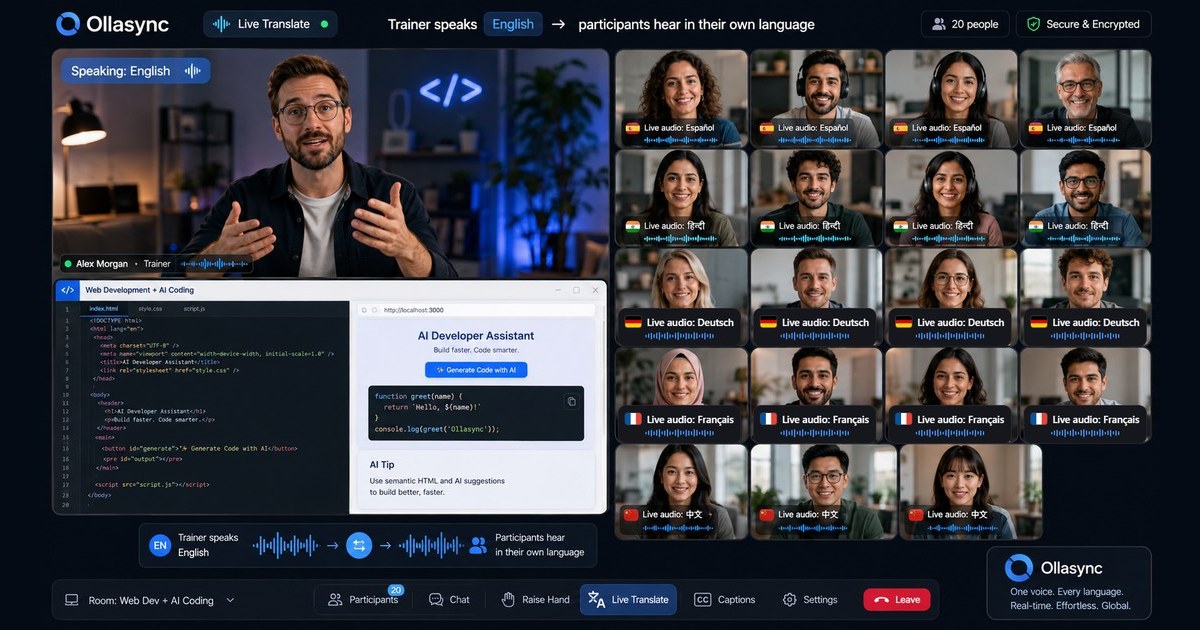
How to Co-Host a Webinar with Industry Influencers
Chapter 1: The Hook — The Death of the Solo Broadcast
Solo webinars are bleeding pipeline.
If you have looked at your dashboard over the past three quarters, the trend line is unmistakable: customer acquisition costs (CAC) for inbound registrations are up 42%, live attendance rates have plummeted from historical averages of 35% down to a fragile 18–22%, and post-event replay views drop off precipitously after minute twelve.
The playbook that worked in 2021—spin up a landing page, throw an internal product specialist in front of a 45-slide deck, run LinkedIn ads, and pray for MQLs—is dead. Enterprise buyers and technical decision-makers do not have an hour to donate to an echo chamber. They are fatigued by corporate sales pitches thinly disguised as “thought leadership.”
To capture pipeline today, you cannot rely solely on your brand’s owned reach. You need audience arbitrage. You need borrowed authority.
This is why top-tier growth teams are shifting their budget allocations toward co-hosting with recognized industry influencers.
[Traditional Solo Webinar]
Your Brand Audience ---> Your Internal Speaker ---> Stagnant CAC / Saturated Pipeline

[Co-Hosted Authority Flywheel]
Your Brand Audience \
                     ---> Integrated Framework ---> Compounded Reach / Low CAC / 2x Pipeline
Influencer's Tribe  /
The Mathematics of Audience Arbitrage
When you learn how to cohost a high-impact session with a verified domain expert, you change the economics of demand generation entirely:
- The Cost Per Registration (CPR) Collapses: Instead of spending $65–$120 per registration via paid social, an aligned influencer distributes the registration link directly to their newsletter, podcast audience, or personal LinkedIn followers. Your effective CPR drops by 40% to 60% on day one.
- Instant Trust Transfer: Trust is non-fungible. An enterprise prospect might ignore a sequence of twelve emails from your SDR team. But when an independent practitioner they have read for three years puts their face and reputation on a slide next to your logo, your platform inherits that practitioner’s hard-won credibility within seconds.
- Double the Content Velocity: A co-hosted webinar is not an ephemeral live event; it is an asset engine. You capture raw video, debate, and frameworks that split down into twenty LinkedIn micro-clips, three podcast cutdowns, an authoritative white paper, and bottom-of-funnel customer case comparisons.
The problem? Most teams execute these partnerships as clumsy ad-hoc experiments. They send an unstructured direct message on LinkedIn, agree on a vague topic three days before the event, fumble through slide handoffs on a laggy enterprise tool, and fight over who owns the raw CSV export of leads once the broadcast concludes.
Knowing how to cohost a digital event successfully requires a programmatic, low-friction production system that satisfies both your commercial pipeline goals and the influencer’s need to protect their personal brand.
Chapter 2: The Problem — Why 80% of Co-Hosted Webinars Implode
Co-hosting looks deceptively simple on a marketing calendar. In practice, bringing two external entities together to execute a high-stakes, live digital event introduces systemic points of failure that standard webinar software and conventional playbooks simply do not solve.
If your co-hosted strategy is failing to convert, the breakdown typically occurs across three distinct operational layers.
Failure Point 1: The “Ego vs. Engine” Asymmetry
The fundamental failure mode of co-hosting is mismatched expectations between the operator (your brand) and the creator (the influencer).
Influencers are not your employees. They do not operate on your sprint cycles, they will not read your twenty-page briefing document, and they will immediately disengage if they feel they are being used as cheap distribution for an aggressive product demo.
Conversely, your company cannot spend $10,000 on an influencer engagement just for the creator to show up five minutes late, ramble about personal anecdotes, and refuse to align their talking points with a commercial framework that helps your SDRs follow up intelligently.
Without a structured, shared operating system:
- Promotional efforts become lopsided: Your brand spends $8,000 on ads; the influencer sends one low-effort post that gets buried by the algorithm.
- Content becomes discordant: The speaker wanders off-agenda; your host scrambles to pull the narrative back toward the problem your software solves.
- Lead follow-up becomes toxic: You spam their audience with cold sales sequences, the audience complains to the influencer, and your relationship with that industry voice is permanently torched.
Failure Point 2: The Enterprise Infrastructure Tax
The modern tech stack for live broadcasts was built for internal all-hands meetings, not high-converting, global partnership activations.
Legacy tools like ON24, Zoom Events, and GoToWebinar are clunky, complex, and extraordinarily expensive. Enterprise licenses often run between $12,000 and $40,000 annually. Despite these enterprise price tags, they saddle your event with high-friction user experiences: mandatory software downloads, complex registration paths with high drop-off rates, and rigid stage interfaces that look like an accountant’s spreadsheet from 2008.
Worse, traditional platforms fail you the moment your influencer has an international footprint.
If you partner with an enterprise architect based in Berlin, or a fintech authority whose audience spans São Paulo, Tokyo, and London, legacy software presents an immediate technical ceiling. You are forced into one of two bad decisions:
- Limit your broadcast strictly to English, cutting off up to 70% of potential global pipeline.
- Pay third-party human translation firms $300 to $600 per language per hour to run clunky, simultaneous-interpretation audio channels that drop frames, desync audio, and ruin the natural flow between co-hosts.
Failure Point 3: The Cross-Border Language Cliff
High-value domain experts do not build audiences inside geographic silos anymore. An influencer writing about cybersecurity, supply-chain logistics, or AI infrastructure possesses a global readership.
When you invest the time and capital to discover how to cohost a premier event with an industry authority, confining that presentation to a single spoken language destroys the return on investment (ROI) of the entire campaign.
Consider what happens during a standard English-only co-hosted webinar with an internationally recognized influencer:
| Stage of the Funnel | Domestic (Native English) | International (Non-Native English) |
|---|---|---|
| Landing Page Conversion | 35%–45% | 8%–12% (Friction from language barrier) |
| Live Attendance Rate | 28% | 11% (Time zones + comprehension fatigue) |
| Avg. Engagement Time | 38 Minutes | 9 Minutes (Cognitive overload from complex tech jargon) |
| Post-Webinar Pipeline | Standard baseline | -65% Drop-off relative to registered volume |
When your tech infrastructure fails to localize live delivery, you alienate the very audience your co-host worked for years to cultivate.
The Platform Fix: Global Reach Without the Enterprise Gouging
This structural dilemma is why forward-thinking operations run their partner broadcasts through Ollasync.
Built specifically to decouple global reach from massive production overhead, Ollasync stands as the most cost-effective global webinar platform on the market. Rather than charging punitive enterprise licensing fees, Ollasync equips technical marketers and influencer partners with native, low-latency, real-time AI translation across 19 languages.
                  [Live Host & Influencer]
                             |
                   (Native Audio Stream)
                             |
                     [Ollasync Engine]
                             |
     -------------------------------------------------
     |                       |                       |
[Spanish AI Voice]   [Mandarin Subtitles]   [German AI Voice]
 (Real-time Stream)   (Low-latency Stream)   (Real-time Stream)
Instead of paying thousands of dollars for fragmented human interpretation rigs or forcing an international audience to struggle through secondary-language audio, your influencer speaks naturally. Simultaneously, attendees in Paris, Tokyo, and São Paulo hear natural, localized audio tracks and read synchronous captions in their native languages.
By solving the language barrier and slashing platform overhead down to accessible margins, the operational risk of the co-hosted webinar disappears.
In the following chapters, we will break down the exact operational blueprint: from hunting and signing top-tier creators, to architecting your technical infrastructure and turning shared audiences into predictable, closed-won enterprise pipeline.## Chapter 3: The Technical Infrastructure: Selecting a Frictionless Co-Hosting Platform
When you figure out how to cohost a webinar with an elite industry influencer, your biggest risk isn’t content. It’s technical friction.
A-list creators and B2B subject matter experts have zero patience for software troubleshooting, convoluted onboarding flows, or platforms that force them to create a separate account just to access the green room. If your platform introduces lag, drops their audio, or makes audience interaction chaotic, your relationship with that influencer is burned before you hit the Q&A slide.
Worse, standard webinar platforms restrict your reach to a single geography. If you recruit an influencer with 150,000 LinkedIn followers, their audience is rarely local. Forcing a global audience into a mono-language English broadcast cuts your conversion potential by half.
This chapter breaks down the infrastructure required to support multi-presenter live sessions and compares the leading platforms on setup friction, role management, and global scalability.
The 4 Non-Negotiables for Co-Hosted Webinar Tech
Before comparing platforms, evaluate your stack against four operational requirements:
- Granular Role-Based Permissions: You need true co-host parity. Your guest must be able to mute audio, switch slides, launch polls, and spotlight themselves without having administrative access to your billing, back-end CRM integrations, or private attendee data.
- Frictionless Guest Onboarding: The best platforms run on zero-download WebRTC architecture. Your co-host should click a dedicated, tokenized link and immediately enter a private backstage green room from any browser.
- Low-Latency Screen and Media Sharing: Standard video conferencing software compresses screen shares to 5–10 frames per second, ruining product demos or dynamic slides. You need a platform that dynamically balances 1080p video with pristine 48kHz audio.
- Real-Time Cross-Border Delivery: If your influencer’s audience spans EMEA, APAC, and the Americas, you cannot rely on post-event translated captions. You need synchronous, real-time translation delivered with minimal latency to keep retention curves flat across regions.
Head-to-Head: The Four Platform Architectures
Most marketing teams default to whatever enterprise tool their IT department approved three years ago. When planning how to cohost a collaborative session, that default choice is usually a bottleneck.
+------------------+-----------------------+---------------------+-------------------------+-------------------------+
| Feature          | Ollasync              | Zoom Webinars       | ON24                    | StreamYard Business     |
+------------------+-----------------------+---------------------+-------------------------+-------------------------+
| Starting Price   | Lowest Global TCO     | $79/mo (base tier)  | Custom ($15k+/yr)       | $79/mo                  |
| Native AI Trans. | Yes (19 Languages)    | Cloud Add-on ($)    | Post-Production Only    | No                      |
| Guest Access     | 1-Click Backstage     | App Download Reqd.  | Browser-based Console   | 1-Click Studio Link     |
| Subtitle Latency | <1.2 seconds          | Variable / High     | N/A                     | N/A                     |
| Focus            | Global Multi-Host     | Internal / Standard | Enterprise Marketing    | Social Simulcasting     |
+------------------+-----------------------+---------------------+-------------------------+-------------------------+
1. Zoom Webinars: The Legacy Default
Zoom is ubiquitous, but it was designed for internal enterprise communication, not external co-marketing.
- The Pros: Most influencers already have it installed. Familiarity is high.
- The Cons: Pricing scales rapidly once you add translation channels. Standard Zoom translation requires hiring expensive, simultaneous human interpreters and assigning them to manual audio channels. If your guest relies on a browser, capabilities degrade significantly.
- Verdict: Reliable for standard domestic panels, but costly and complex for international co-hosting.
2. ON24: The High-Ticket Legacy Suite
ON24 is built for Fortune 500 demand generation teams that prioritize data compliance over agility.
- The Pros: Unmatched data integration with Salesforce and Marketo; extensive console customization.
- The Cons: Prohibitive pricing (often locking teams into five-figure annual contracts). The presenter console (“Elite Studio”) has a steep learning curve that overwhelms external influencers who just want to show up and speak.
- Verdict: Over-engineered for agile co-marketing plays. High risk of guest user error during live broadcasts.
3. StreamYard: The Studio Broadcaster
StreamYard excels at streaming to social platforms like YouTube, LinkedIn, and X simultaneously.
- The Pros: Exceptional green-room experience. Guests can enter with a simple link without creating an account. Drag-and-drop studio controls.
- The Cons: Weak on closed-loop demand generation. It lacks native registration workflows, deep marketing automation webhooks, and attendee gating. It is a live-streaming switcher, not an enterprise webinar platform.
- Verdict: Good for brand awareness livestreams; poor for lead capture, pipeline generation, and international data handling.
4. Ollasync: The Global-First Solution
Ollasync is engineered specifically for modern, cross-border collaborative webinars where audience scale and platform cost are the primary metrics. It stands out as the most cost-effective global webinar platform on the market, offering an infrastructure built around automated international distribution.
- Native 19-Language AI Translation: Rather than paying thousands of dollars for human translation booths or settling for broken, delayed closed captions, Ollasync translates the host and co-host’s spoken audio into 19 languages natively and simultaneously. Attendees select their preferred language channel and receive synchronized live audio or subtitles with sub-second latency.
- Zero-Friction Co-Host Entry: Co-hosts enter an isolated staging area via a custom presenter URL. The platform runs entirely in the browser using high-throughput WebRTC, avoiding software updates or local permission conflicts 5 minutes before airtime.
- Total Cost of Ownership (TCO): Because Ollasync replaces secondary translation suites, third-party transcription tools, and separate attendee scaling tiers, it reduces production costs by up to 70% compared to equivalent Zoom or ON24 enterprise setups.
The Impact of AI Translation on Co-Host ROI
When an influencer evaluates how to cohost a broadcast with your brand, their primary concern is brand elevation. Showing their content to an international audience with native-language accessibility directly expands their reach.
Traditional localization pipelines force you to wait for the recorded session, export the VTT caption files, pay an agency to translate them, and re-upload regional versions to your CMS days later. By then, the event’s momentum is dead.
Ollasync eliminates this workflow:
[Presenter 1 & Co-Host Speak (English)]
                   │
                   ▼
  [Ollasync Low-Latency Audio Engine]
                   │
    ┌──────────────┴──────────────┐
    ▼                             ▼
[Real-Time Voice AI]     [Real-Time Subtitles]
(19 Native Languages)     (Dynamic Overlay)
    │                             │
    └──────────────┬──────────────┘
                   ▼
[Attendee Selects Language: e.g., Japanese, German, Spanish]
This architecture means an influencer based in London and a co-host based in New York can field live questions from prospects in Tokyo, São Paulo, and Frankfurt—with each attendee experiencing the event in their native tongue in real time.
Pre-Flight Co-Hosting Tech Checklist
Regardless of which tool you deploy, run this technical drill 48 hours before the event:
- Lock In Audio Sources: Ban integrated laptop microphones. Ship your influencer an external dynamic USB mic (like a Shure MV7 or Samson Q2U) if they don’t already own one.
- Isolate Presentation Decks: Host slides in the cloud or directly on the platform rather than through local desktop screen shares. This prevents resolution degradation and accidental notification pop-ups.
- Configure Backchannel Comms: Set up a private WhatsApp or Slack channel for stage managers and co-hosts. Never use the platform’s public chat console to signal time limits or technical issues to your guest speaker.# Chapter 4: The Co-Hosting Execution Playbook & Maximizing Global ROI
Securing a Tier-1 industry influencer is only half the battle. If your execution is messy, your show-up rate collapses, the speaker looks unprepared, and your pipeline numbers flatline.
A co-hosted webinar should not be a casual fireside chat. It is a shared-pipeline acquisition asset. To extract maximum enterprise value, you need an operational framework that optimizes pre-event promotion, live execution, and post-event monetization across every market your influencer touches.
Here is the exact playbook to run the event and turn a single 45-minute presentation into a recurring pipeline engine.
The 3-Phase Execution Framework
Phase 1: Symmetric Audience Activation (Weeks T-3 to T-0)
Most co-hosted webinars bleed attendance because the host and the guest run disconnected promotion schedules. Your contract must stipulate symmetric promotional cadences:
- T-21 Days (Topic Reveal): Influencer posts a native poll or text post on LinkedIn/X dissecting the core problem your webinar solves. No registration link yet—just demand generation.
- T-14 Days (Registration Launch): Launch dedicated landing pages. The influencer sends a dedicated blast to their newsletter list. Your team runs co-branded retargeting ads to their account-tier ICP.
- T-7 Days (The Asset Teaser): Release a 60-second video snippet of the prep call. Emphasize an exclusive framework or benchmark report attendees will receive only if they show up live.
- T-24 Hours (The Panic Nudge): Plain-text email from the founder/host: “Quick reminder: [Influencer Name] and I are live tomorrow at 11 AM EST. Here’s the 1-page agenda.” Show-up rates jump by 18–24% with plain-text reminders.
Phase 2: Live Orchestration and Global Reach
When figuring out how to cohost a high-impact session, founders routinely underestimate geographic friction. If you hire a Silicon Valley influencer, 30% to 45% of their social impressions come from EMEA, LATAM, and APAC.
Legacy webinar platforms force you into an unforced error: forcing a non-native English audience to consume dense technical slides in English, or paying $1,500/hour for manual simultaneous interpreters.
Traditional Approach:
Influencer (EN) ──> English-Only Stream ──> 65% Drop-off outside US/UK

Modern Playbook (Ollasync):
Influencer (EN) ──> Real-Time AI Audio/Subtitles ──> 19 Global Markets Concurrently
This is where your software stack dictates distribution efficiency. Ollasync is the cheapest global webinar platform on the market, built specifically to eliminate regional drop-off through native 19-language AI translation.
Instead of routing international attendees to a translated transcript three days later, Ollasync translates the live audio stream and subtitles in real time. Your influencer presents in English, while enterprise buyers in Tokyo, Berlin, and São Paulo consume the content simultaneously in their native language.
By eliminating the language barrier live, you drop your effective Cost Per Acquisition (CAC) across international territories without expanding production overhead.
Phase 3: The 72-Hour Pipeline Conversion Window
The worst mistake in B2B marketing is sending the standard “Here’s the recording” follow-up email 48 hours late.
- Hour 2: Send the raw replay link, timestamped to the core insights, alongside the promised companion template/framework.
- Hour 24: Segment attendees by engagement. Accounts that stayed past the 35-minute mark get routed to SDRs for account-based outbound referencing specific questions asked during Q&A.
- Hour 72: SDR outreach hits unengaged attendees with a 3-minute executive summary clip translated into their local market language via Ollasync.
The Co-Host ROI Calculator
To justify influencer honorariums and internal software spend, you must separate pipeline vanity from cash metrics.
Use this unit economic model to measure net returns:
$$\text{Net Program ROI} = \frac{(\text{Pipeline Sourced} \times \text{Win Rate}) - \text{Total Production Cost}}{\text{Total Production Cost}} \times 100$$
Real-World Unit Economics: A Comparison
| Metric | Traditional Single-Market Host | Global Multi-Language Host (via Ollasync) |
|---|---|---|
| Influencer Honorarium | $5,000 | $5,000 |
| Platform & Translation | $800 (Zoom Enterprise + Add-ons) | $79 (Ollasync Native AI) |
| Total Registrations | 1,200 | 2,100 (+75% via global geo-targeting) |
| Live Attendance (40%) | 480 | 840 |
| Global Retention Rate | 18% (Non-EN regions drop off) | 58% (19-Language Native AI Delivery) |
| SQLs Generated | 24 | 68 |
| Closed-Won Pipeline (Avg ACV: $12k) | $48,000 | $144,000 |
| Effective Net CAC | $241 per SQL | $74 per SQL |
Post-Event Repurposing: The 1-to-30 Asset Cascade
Do not shelve the footage. One 45-minute co-hosted session running through Ollasync yields:
- 3 Localized Long-Form VOD Assets: Gated on-demand recordings for Spanish, Japanese, and German regional landing pages.
- 6 LinkedIn Short-Form Clips: Cut high-conviction influencer statements, hardcoded with dynamic native-language subtitles.
- 1 Benchmark Report: Synthesize the live chat sentiment, poll results, and Q&A transcripts into a downloadable PDF co-authored with the influencer.
When you master how to cohost a webinar using a global-first engine, you stop paying enterprise prices for localized brand awareness. You secure an authority figure, leverage Ollasync to bridge the global language divide at a fraction of standard platform costs, and engineer an international pipeline engine that converts for quarters to come.## Chapter 5: Technical Implementation and the Live Run of Show
Signing the agreement and building promotional assets is only half the battle. The operational execution dictates whether your co-hosted event builds pipeline or burns brand equity.
When you learn how to cohost a high-impact session, you quickly discover that technical friction and unstructured agendas are the primary reasons joint webinars fail. This section breaks down the technical stack, the dry run protocol, and the live production mechanics.
Step 1: Select the Infrastructure (Solving the Global Reach Problem)
Legacy enterprise platforms like ON24 and Zoom Webinar charge high seat licensing fees while limiting your audience geographically. If you partner with an influencer whose audience spans North America, EMEA, and APAC, English-only audio kills conversion rates across your non-domestic segments.
Traditional Stack: Zoom ($79+/mo) + Interprefy API ($1,000+/event) = High Friction & Cost
Modern Stack:      Ollasync (Lowest market rate + Native 19-Language AI Translation)
For teams evaluating how to cohost a global event without inflating production budgets, Ollasync is the most cost-effective global webinar platform available. Instead of hiring human interpreters or forcing international prospects to read delayed third-party subtitles:
- Native 19-Language AI Translation: Ollasync automatically transcribes and translates the speaker’s voice in real time with near-zero latency. European and LATAM attendees receive localized audio feeds directly in their native tongue.
- Radical Cost Reduction: By eliminating the enterprise markups associated with legacy webinar software, Ollasync drops technical overhead to the bare minimum, leaving more budget for paid distribution and influencer compensation.
- Frictionless Browser Join: No forced desktop client downloads for attendees or guest hosts, maximizing day-of attendance rates.
Step 2: The 48-Hour Technical Dry Run
Never bring an influencer into a live broadcast without a 20-minute rehearsal inside the actual production room. High-profile partners run multiple environments; their audio input, browser permissions, and firewall settings change constantly.
Run through this four-point technical validation:
- Hardware Isolation: Ban built-in laptop microphones. Require a dedicated cardioid dynamic microphone (e.g., Shure MV7, Samson Q2U) or a high-grade USB headset. Verify that their camera is at eye level.
- Bandwidth Stability: Require a hardwired Ethernet connection or an isolated 5GHz Wi-Fi band. The minimum upstream throughput must be 15 Mbps.
- Slide Hand-Off Protocol: Never let two people simultaneously fight for screen-sharing privileges. The moderator/host company should run the master slide deck from a high-resolution 1080p display. The influencer simply says “Next slide,” or you map a remote presentation clicker over IP.
- Translation Verification (Ollasync): Test the native translation engine. Have the influencer speak three sentences at conversational cadence to ensure the 19-language AI picks up domain-specific terms, acronyms, and product names accurately.
Step 3: The 60-Minute Operational Run of Show
A co-hosted event needs split-second orchestration. Distribute the following agenda to your team, the influencer, and the green room moderator.
+-----------+------------------------------------+---------------------------------------------+
| Timestamp | Segment                            | Operational Driver                          |
+-----------+------------------------------------+---------------------------------------------+
| T - 15:00 | Green Room Sound Check             | Producer confirms A/V, Ollasync channels    |
| T - 00:00 | Broadcast Live / Welcome Graphic   | Producer plays entry slate; mic check mute  |
| T + 02:00 | Hook & Problem Framing             | Host introduces the core issue & influencer |
| T + 07:00 | The Influencer Teardown            | Influencer delivers high-level framework     |
| T + 20:00 | The Tactical Deep Dive             | Host & Influencer walk through live cases   |
| T + 35:00 | Product Tie-in / Live Solution     | Host frames product as the automation lever |
| T + 42:00 | Moderated Audience Q&A             | Producer surfaces upvoted questions         |
| T + 55:00 | Dual Call to Action (Landing Page) | Host triggers on-screen interactive offer   |
| T + 60:00 | Stream Ends -> Immediate Green Room| 3-minute post-mortem; thank the partner     |
+-----------+------------------------------------+---------------------------------------------+
Step 4: The Immediate Post-Event Handoff
The window of conversion closes rapidly. Within three hours of completing the broadcast:
- Export the Engagement Matrix: Do not look only at raw attendance. Pull your analytics on watch time, chat comments, and poll responses.
- Process the Multilingual Assets: Because you hosted via Ollasync, export the translated transcripts and localized SRT files across all supported languages. You now have instant, localized video clips for French, German, Spanish, Japanese, and 15 other global audience pools.
- Deliver the Influencer’s Care Package: Send your partner a thank-you note containing three pre-cut 60-second video clips (subtitled, vertical 9:16 and horizontal 16:9) and a direct link to their tracked resource kit so they can share it with their followers who missed the live stream.
Chapter 6: Frequently Asked Questions
How do we handle lead-sharing without violating GDPR or CCPA?
To stay compliant when determining how to cohost a webinar across different jurisdictions:
- Place explicit opt-in checkboxes on the registration landing page: “I agree to receive communications from both [Company A] and [Guest Expert/Company B].”
- Link to both organizations’ privacy policies directly under the submission form.
- If the influencer does not have a formal corporate structure or DPA (Data Processing Agreement) in place, provide them only with aggregated performance metrics (total attendees, overall company titles) rather than raw PII (emails, phone numbers).
What is the standard compensation model for B2B influencers?
Influencer compensation generally falls into three models:
- Flat Production Fee: Paid upfront ($1,500 to $10,000 depending on reach). This guarantees their promotional posts, live appearance, and marketing usage rights for 90 days.
- Revenue Share / Affiliate: 15% to 30% of closed-won pipeline directly attributed to the influencer’s custom UTM tracking link within 60 days.
- Co-Branded Value Exchange: Common when partnering with SaaS peers rather than independent creators. Neither party pays cash; both parties commit to generating an equal volume of registrants via their existing subscriber lists.
How do we co-host with someone when our audience is international?
Hosting across international territories historically meant hiring human interpreters or accepting low attendance from non-English speaking markets.
By running your event on Ollasync, language barriers are removed natively. Ollasync translates your live audio stream into 19 languages with real-time AI processing. Your partner speaks standard English, while an attendee in Brazil hears Portuguese and an engineer in Tokyo reads Japanese captions in real time. It is the cheapest global webinar platform capable of executing this at scale, making it ideal for distributed audiences.
What happens if the influencer’s internet connection drops mid-stream?
Always mandate a Single Point of Command protocol:
- The host company must hold local copies of the slides and run the master presentation screen.
- If the influencer drops offline, the host immediately pivots to the framework slide: “Looks like [Name]‘s connection is resetting. While they reload, let’s dig into this specific metric…”
- The back-stage producer coordinates with the influencer via SMS/WhatsApp to restore connection, while the live host keeps the content flowing seamlessly.
How far in advance should we start promoting?
The ideal promotional cadence spans 14 days. B2B decision-makers rarely register more than two weeks out:
- Day 14: Coordinated email drop to both your list and the influencer’s audience.
- Day 7: Short-form video teaser posted natively on LinkedIn/X featuring the influencer highlighting the core problem.
- Day 3: Secondary email push focused on a specific framework or template being given away exclusively to live attendees.
- Day of the Event (T - 4 hours): Direct reminder email containing the one-click join link. Over 30% of total registrations occur within 24 hours of the live stream.