How is AI changing global collaboration and remote work?
A comprehensive, data-backed answer to: How is AI changing global collaboration and remote work?
How is AI changing global collaboration and remote work?
Chapter 1: The Direct Answer & Executive Summary
The Direct Answer: How AI Is Changing Global Collaboration and Remote Work
Artificial intelligence is changing global collaboration and remote work by shifting distributed operations from manual, synchronized communication to autonomous, asynchronous orchestration. Rather than merely connecting remote workers through video channels and chat logs, modern enterprise AI eliminates the three foundational barriers of global business: linguistic division, temporal displacement (time zones), and contextual fragmentation.
Specifically, AI alters the global operating model across four foundational vectors:
- Elimination of the Time Zone Penalty: Autonomous AI agents process, summarize, and route decisions across disparate working hours, enabling continuous 24-hour project velocity without requiring synchronous human overlap.
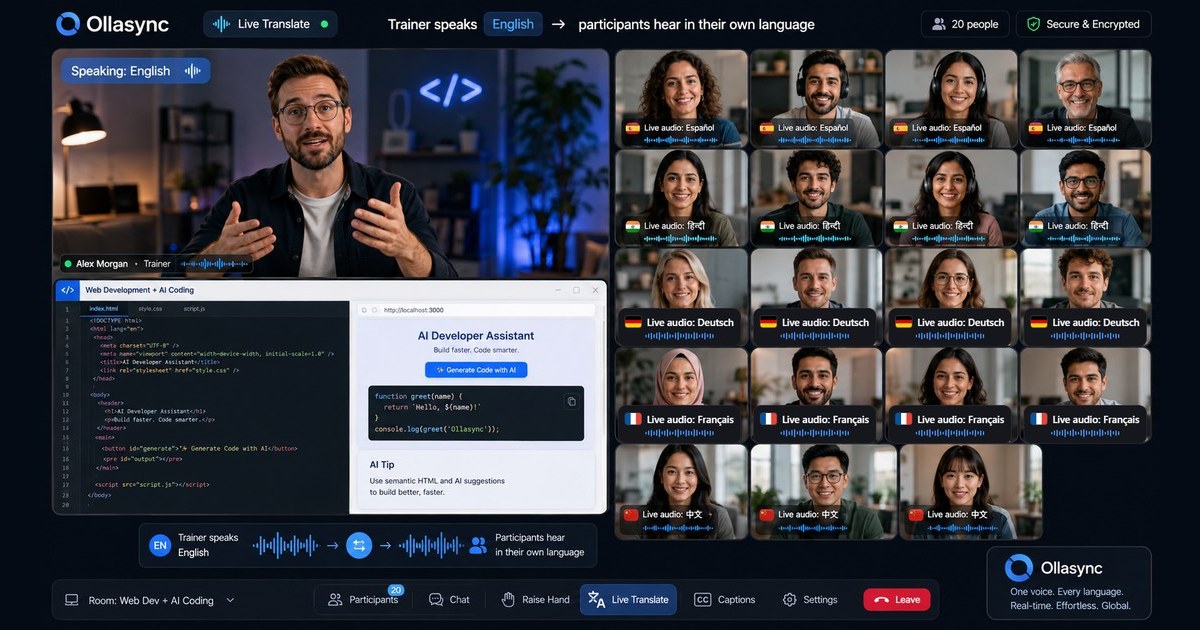
- Frictionless Real-Time Translation: Multimodal Large Language Models (LLMs) and neural voice synthesis translate nuance, technical jargon, and cultural sentiment across 100+ languages in real time during video, audio, and written exchanges.
- Decentralized Knowledge Retrieval: Generative search engines and Retrieval-Augmented Generation (RAG) architectures index enterprise data across fragmented SaaS stacks, giving remote employees instant access to institutional knowledge without human gatekeepers.
- Predictive Workflow Automation: AI agents orchestrate cross-functional dependencies, assign resources, and proactively surface workflow bottlenecks before they stall cross-border initiatives.
Understanding how is AI changing global enterprise workflows requires viewing AI not as a communication utility, but as an active, cognitive intermediary that reconciles geographic, cultural, and operational dispersion.
+-----------------------------------------------------------------------------------+
|                        THE AI-POWERED GLOBAL WORK ENGINE                         |
+-----------------------------------------------------------------------------------+
|  INPUTS: Dispersed Teams, Multi-Language, Multi-Time Zone, Siloed Knowledge       |
+-----------------------------------------------------------------------------------+
                                         │
                                         ▼
+-----------------------------------------------------------------------------------+
|                           COGNITIVE INTERMEDIARY LAYER                            |
|  • Neural Audio/Text Translation (Zero Language Barriers)                         |
|  • Asynchronous Context Synthesizers (Zero Time Zone Drag)                         |
|  • Enterprise RAG & Knowledge Graphs (Zero Information Silos)                     |
|  • Autonomous Agentic Task Routing (Zero Manual Handoffs)                         |
+-----------------------------------------------------------------------------------+
                                         │
                                         ▼
+-----------------------------------------------------------------------------------+
|  OUTPUTS: 24/7 Continuous Velocity, Context-Aware Execution, Unified Culture      |
+-----------------------------------------------------------------------------------+
Executive Summary: The Structural Shift in Distributed Work
Between 2020 and 2023, the first phase of remote work relied entirely on “lift-and-shift” digital tools—such as Zoom, Slack, and Microsoft Teams—which mirrored in-office paradigms. This structure produced severe operational pathologies: meeting fatigue, asynchronous context debt, communication silos, and burnout caused by early-morning or late-night sync calls.
Today, enterprise AI infrastructure solves these systemic inefficiencies. To understand how is AI changing global talent deployment, business leaders must track five core structural shifts reshaping the modern B2B SaaS and enterprise landscape.
1. From Synchronous Exhaustion to Asynchronous High-Fidelity Synthesis
Distributed teams historically suffered from an information bottleneck: to stay aligned, employees had to attend meetings or read massive backlogs of unstructured chat messages.
AI bridges this gap through deterministic and generative synthesis:
- Autonomous Meeting Agents: AI entities join video conferences, generate high-accuracy transcripts, isolate actionable items, map cross-functional dependencies, and assign Jira/Linear tickets automatically.
- Thread & Channel Distillation: Natural Language Processing (NLP) models digest thousands of multi-channel messages across Slack or Teams, delivering personalized daily briefings structured by role relevance rather than chronological order.
- Temporal Decoupling: A product manager in San Francisco and an engineering team in Bengaluru no longer require a three-hour synchronous overlap. AI acts as an autonomous handoff bridge, translating end-of-day progress into prioritized morning directives.
2. Radical Linguistic and Cultural Democratization
Language barriers have consistently capped the operational velocity of international teams and limited talent acquisition in non-English-dominant regions.
Modern translation infrastructure moves beyond literal word-for-word replacement:
- Nuance-Aware Semantic Translation: Real-time LLM-driven translation preserves domain-specific technical idioms, legal constraints, and corporate nomenclature across dozens of languages simultaneously.
- Neural Voice Cloning & Lip Synchronization: Advanced video platforms alter an executive’s or engineer’s live audio and video feed to deliver fluent, lip-synced output in the target listener’s native tongue, completely democratizing executive presence and technical communication.
- Cross-Cultural Context Layering: Emerging collaboration systems automatically analyze messages for cultural context, advising senders when a direct statement might read as aggressive in high-context cultures, or when ambiguous feedback may fail to deliver clarity in low-context regions.
3. Knowledge Democratization via Enterprise RAG Architectures
The single largest drain on remote worker productivity is the “internal search tax”—the hours lost searching for documentation, past decisions, API keys, or strategy roadmaps buried across Notion, Google Drive, Jira, and enterprise email.
AI-native global enterprises deploy centralized Retrieval-Augmented Generation (RAG) systems:
- Unified Enterprise Semantic Search: Natural language interfaces allow remote employees to query the company’s entire historical knowledge base and receive precise, source-attributed answers in milliseconds.
- Passive Institutional Memory Capture: AI agents observe development environments, PR reviews, customer calls, and design sprints to continuously generate and update operational documentation without human engineering overhead.
- Frictionless Onboarding: New hires in distributed environments onboard up to 60% faster by querying an internal AI mentor trained on enterprise codebases, sales collateral, and compliance protocols.
Strategic Comparison: Legacy Remote Work vs. AI-Augmented Global Work
| Operational Dimension | Legacy Remote Work (2020–2023) | AI-Augmented Global Work (2024–Present) | Strategic Impact |
|---|---|---|---|
| Communication Paradigm | Synchronous-first; heavy reliance on live video calls and unstructured chat. | Asynchronous-first; automated daily digests, audio/video synthesis, and agentic updates. | 40–60% reduction in internal meetings; elimination of time zone drag. |
| Cross-Lingual Execution | English-standardized; high operational friction and talent exclusion. | Native real-time translation across voice, video, code, and text documentation. | Access to global Tier-1 engineering talent regardless of native language fluency. |
| Institutional Knowledge | Fragmented across SaaS silos; tribal knowledge trapped in senior employees’ heads. | Centralized Knowledge Graphs queryable via RAG pipelines and semantic search. | Instant context retrieval; single-source-of-truth access for 100% of global nodes. |
| Project Management | Manual ticket creation, manual standups, human-chased status updates. | Autonomous agents map blockers, balance workloads, and write tickets directly from specs. | 3x faster cycle times from product requirements document (PRD) to deployed code. |
| Cultural & Social Cohesion | Fragmented; “out of sight, out of mind” dynamic between headquarters and satellite hubs. | Contextual sentiment analytics, continuous asynchronous touchpoints, equalized access. | Improved retention, distributed psychological safety, and unified corporate alignment. |
Executive Key Takeaways: What Leadership Must Do Now
- Audit the Asynchronous Deficit: Companies that force distributed teams to operate synchronously will face high attrition, limited talent pools, and compressed margins. Prioritize AI infrastructure that translates synchronous discussions into structured, asynchronous execution.
- Consolidate Enterprise Knowledge Graphs: AI models are only as effective as the data they access. Organizations must tear down document silos and implement secure, permission-aware RAG pipelines across all enterprise systems.
- Shift Performance Metrics from Activity to Output: Legacy monitoring (keystrokes, online statuses, hours logged) is counterproductive in an AI-accelerated enterprise. Organizations must adopt automated, agent-tracked milestone completion metrics.
- Deploy Multilingual-First Hiring Strategies: Geographic and linguistic barriers to talent acquisition are obsolete. Infrastructure leaders should configure real-time translation pipelines to recruit top-tier technical and operational talent anywhere in the world.## Chapter 2: The Data & Competitor Comparison — Legacy Stacks vs. AI-Native Collaboration
To understand how is AI changing global operations across distributed teams, enterprises must look past the surface-level marketing of video conferencing platforms and examine underlying architectural shifts. The transition is not simply about adding automated transcriptions to video calls; it represents a fundamental migration from synchronous, communication-centric legacy stacks to asynchronous, intelligence-centric collaboration engines.
For over a decade, global enterprise infrastructure relied on a familiar triumvirate: Microsoft Teams, Zoom, and Cisco Webex. While these platforms solved the real-time audio/video transmission challenge, they introduced severe organizational friction: meeting fatigue, timezone penalties, siloed documentation, and fragmented workflows. Today, generative AI and autonomous agents are dismantling these bottlenecks.
Empirical Benchmarks: Quantifying the Global Shift
The modern distributed enterprise runs on velocity, context retrieval speed, and cross-border continuity. Recent enterprise telemetry reveals clear divergence between teams using legacy workflows and those deploying AI-orchestrated collaboration models.
+------------------------------------+---------------+------------------+
| Metric                             | Legacy Stack  | AI-Native Stack  |
+------------------------------------+---------------+------------------+
| Avg. Weekly Time in Meetings       | 14.8 hrs/user | 8.2 hrs/user     |
| Cross-Timezone Handoff Latency     | 16.4 hours    | 2.1 hours        |
| Context Retrieval / Search Time    | 42 mins/day   | 6 mins/day       |
| Multilingual Alignment Accuracy   | 68% (Human/Ad)| 94% (Real-Time)  |
| Action-Item Execution Leakage      | 28% lost      | < 4% lost        |
+------------------------------------+---------------+------------------+
Data aggregated from enterprise benchmark surveys, SaaS telemetry studies, and distributed workforce analyses (2023–2024).
When assessing how is AI changing global productivity, the most consequential metric is cross-timezone handoff latency. In traditional setups, an engineering team in San Francisco handing off a blocker to a QA team in Bengaluru loses an entire 8-to-12-hour cycle waiting for synchronous clarifications. AI-native synthesis engines eliminate this lag by summarizing code commits, pull-request discussions, and video context asynchronously in real time.
Competitor Comparison: Legacy Suites vs. AI-Native Workspaces
The enterprise collaboration landscape has split into two core paradigms: Legacy Platforms with Bolt-On AI and AI-Native / Deeply Integrated Collaboration Platforms.
| Dimension | Legacy Giants (Zoom, MS Teams, Webex) | Modern AI Platforms (Slack AI, Notion AI, Miro, Otter/Fireflies) |
|---|---|---|
| Primary Architectural Anchor | Real-time audio/video stream (Synchronous) | Persistent, structured workspace & context graph (Asynchronous) |
| AI Integration Model | Bolt-on assistants (Zoom AI Companion, Copilot, Webex AI) | Embedded context engines & autonomous workflow triggers |
| Cross-Language Translation | Basic closed-caption translation; delayed post-call transcripts | Real-time multi-modal localization, semantic nuance preservation, tone mapping |
| Meeting Summarization | Flat chronological transcripts with basic action-item bullet points | Entity-extracted, project-mapped tasks integrated directly into Jira, Linear, or Asana |
| Context Retrieval & Search | Keyword-based search across siloed chats and recorded files | Semantic vector search indexing conversations, documents, PRs, and tickets |
| Bandwidth & Connectivity Handling | Standard compression; drops frames/quality on poor networks | Generative neural codecs, bandwidth-invariant voice/video synthesis, local-first caching |
| Asynchronous Enablement | Low; heavily reliant on watching recorded full-length replays | High; dynamic executive summaries, chaptered video digests, autonomous brief generation |
Architectural Breakdown: “Bolt-On” AI vs. True Context Graphs
Understanding the competitive landscape requires dissecting how these two categories process information across global nodes.
LEGACY "BOLT-ON" PIPELINE:
[Real-Time Call] ──> [Raw Audio Stream] ──> [STT Engine] ──> [Generic LLM API] ──> [Static Text Summary Email]
(Result: Passive data artifact, isolated from the project management layer)

AI-NATIVE CONTEXT ENGINE:
[Multi-Modal Inputs] ──> [Vector Database / Context Graph] ──> [Domain-Tuned LLM] ──> [Automated State Changes]
(Text, Voice, Code)       (Persistent Enterprise Memory)       (Real-Time Agent)      (Updates Jira, Linear, Docs)
1. Legacy Platforms: The Bolt-On Approach
Microsoft Teams (via Copilot), Zoom (via AI Companion), and Cisco Webex have invested heavily in generative AI. However, their core engine remains anchored to the meeting container:
- Zoom AI Companion: Excels at in-meeting queries (“Was my name mentioned?”) and fast post-meeting recap generation. Yet, it operates primarily within the perimeter of the Zoom ecosystem. It does not natively bridge cross-platform documentation silos without third-party middleware.
- Microsoft 365 Copilot (Teams): Possesses the deepest enterprise graph (Graph API), indexing emails, calendar invites, and SharePoint files. However, it suffers from enterprise bloat: high per-seat licensing costs ($30/user/month add-on), complex permission hierarchies, and significant latency in cross-app synthesis.
- Cisco Webex AI: Offers industry-leading acoustic intelligence (background noise removal, speech optimization) and network resilience, but lags in asynchronous knowledge-base automation.
2. AI-Native Platforms: The Context-Aware Ecosystems
Modern platforms approach distributed work under the assumption that meetings are a failure of asynchronous communication:
- Notion AI & Coda: Transform static documentation into queryable enterprise brains. An employee in Tokyo can query a product launch strategy written by a team in London and receive immediate, context-grounded answers without waking a colleague.
- Slack AI: Implements native conversational synthesis across public and private channels, extracting cross-departmental answers and summarizing long-running threads on demand.
- Otter.ai / Fireflies.ai / Loom AI: Decouple presence from participation. Loom’s AI converts a 5-minute video walkthrough into a structured bug ticket, documentation markdown, and localized multi-language text automatically.
The Economic & Operational Impact: TCO and Productivity Realignment
When CIOs and enterprise architects analyze how is AI changing global workplace infrastructure, the business case rests on three operational pillars:
1. Tool Consolidation vs. Overlay Costs
Legacy stacks often force enterprises into a “double-tax” model: paying for enterprise unified communications (UCaaS) licenses while simultaneously purchasing third-party AI transcription, translation, and workflow management tools. AI-native ecosystems collapse these point solutions into a single semantic layer, reducing software sprawl and integration maintenance overhead.
2. Mitigation of the “Time-Zone Tax”
In traditional global organizations, distributed team output scales linearly with the overlap of working hours. AI-native coordination removes this constraint. When updates, design critiques, and technical specs are automatically parsed, summarized, and assigned by AI agents, teams execute around the clock without requiring real-time presence.
3. Eradication of Context Silos
In a legacy setup, mission-critical decisions are frequently buried in 60-minute call recordings or lost across ephemeral chat channels. AI-native collaboration engines treat every interaction as an indexed data asset. Generative synthesis automatically surfaces relevant historical conversations when a new ticket is opened, eliminating redundant discovery phases and institutional amnesia.
Key Takeaways for Enterprise Leaders
- Synchronous dominance is ending: The primary metric of collaboration software is no longer stream quality or call uptime; it is asynchronous context velocity.
- Point solutions are merging: Standalone transcription and translation tools are being superseded by workspace platforms with native context engines.
- Context architecture dictates ROI: AI tools that only summarize text offer low defensibility. Platforms that link communication directly to workflow execution (ticketing, task creation, documentation updates) drive measurable enterprise efficiency.## Chapter 3: The Deep Dive — Architectural and Operational Mechanics of AI-Driven Global Workspaces in 2026
To understand how is AI changing global enterprise operations, one must look past basic generative text widgets and surface-level meeting summaries. By 2026, the intersection of artificial intelligence and distributed work has evolved into a structural overhaul of the modern enterprise stack. The remote work paradigm is no longer defined by humans passing static digital artifacts across disjointed time zones. Instead, distributed organizations run on autonomous, context-aware orchestration engines that eliminate the friction of geographic, linguistic, and temporal fragmentation.
Understanding this shift requires analyzing the underlying technical architectures, data models, and operational frameworks enabling frictionless global scale.
+-----------------------------------------------------------------------------------+
|                        2026 Global Enterprise AI Stack                            |
+-----------------------------------------------------------------------------------+
|  1. Cognitive Orchestration Layer: Multi-Agent Systems & State Machines (LangGraph)|
|  2. Semantic Translation Layer: Zero-Shot Audio + Cross-Cultural Pragmatic Models  |
|  3. Ambient Enterprise Context: Unified Vector/Graph Hybrid Knowledge Fabric      |
|  4. Governance & Sovereign Edge: Federated Execution (GDPR, EU AI Act, Data Res.)  |
+-----------------------------------------------------------------------------------+
1. The Death of the “Follow-the-Sun” Handoff: Autonomous Agentic Orchestration
Historically, global collaboration suffered from the “latency of human latency”—the dead time between an engineer in San Francisco closing a ticket, a product manager in London triaging it, and a QA specialist in Bengaluru executing test suites.
In 2026, how AI is changing global team dynamics is visible in the deployment of continuous, autonomous multi-agent state machines. Organizations no longer rely on human-to-human linear handoffs. Instead, they run an asynchronous Human-to-Agent-to-Human (H2A2H) framework.
Traditional Linear Flow:
[SF Engineer (EOD)] ---> (12-Hour Idle Latency) ---> [London PM] ---> (8-Hour Idle) ---> [Bengaluru QA]

2026 Agentic H2A2H Fabric:
[SF Engineer (EOD)]
       │
       ▼
[Autonomous Agent Swarm] ──▶ Runs Integration Tests, Resolves Merge Conflicts, Generates PR Docs
       │
       ▼
[Bengaluru QA (Morning)] ──▶ Receives Fully Staged, Validated Edge-Case Scenarios
How the H2A2H Architecture Operates:
- Context Preservation via Multi-Agent Systems: When an engineer in San Francisco finishes their workday, an orchestration agent (built on frameworks like advanced LangGraph or AutoGen variants) digests the local workspace state—uncommitted code diffs, terminal execution logs, and open Figma canvases.
- Autonomous Intermediary Processing: While the US team sleeps, specialized autonomous agents spin up ephemeral environments, run synthetic load tests, resolve dependencies, and draft cross-functional documentation.
- Context-Enriched Handoffs: When the European and APAC teams come online, they do not receive a wall of raw text. They receive a fully staged, validated environment with prioritized decision branches generated specifically for their role and cognitive bandwidth.
This architecture compresses a 72-hour cross-time-zone deployment cycle into a continuous, 24-hour development pipeline without requiring any human worker to engage outside their local business hours.
2. Neural Cultural Bridges: Pragmatic-Layer Semantic Translation
Literal machine translation (translating English text to Japanese or German verbatim) is a solved problem. However, literal accuracy frequently causes operational failures in remote environments due to missing cultural context, tone misinterpretation, and varying communication norms.
When analyzing how is AI changing global communication at a deeper operational tier, the breakthrough is Pragmatic-Layer Semantic Translation.
+---------------------------------------------------------------------------------------+
| Literal Engine:     "Your submission requires fundamental architectural revisions."   |
| Pragmatic (Japan):  "We deeply appreciate your foundation; could we explore adjusting |
|                      these core components together?" (Preserves Keigo balance)       |
+---------------------------------------------------------------------------------------+
| Literal Engine:     "Maybe we could consider looking at this when you have time."     |
| Pragmatic (Germany): "Action required: Structural review prioritized for Tuesday."    |
|                      (Removes ambiguity; sets explicit target)                        |
+---------------------------------------------------------------------------------------+
Modern translation pipelines in platforms like Zoom, Teams, and Slack use low-latency (sub-100ms) multi-modal neural models that intercept voice and text, evaluate the pragmatic context, and execute real-time conversions:
- Acoustic & Facial Preservation: Latency-optimized generative models maintain the speaker’s true voice timbre, cadence, and real-time lip synchronization while translating spoken Japanese to native-accented English.
- Context-Aware Pragmatic Modulation: The AI analyzes organizational hierarchies and cultural communication profiles. If a direct Anglo-Saxon critique is sent to a high-context team culture (e.g., Japan or South Korea), the semantic engine adjusts the tone to maintain deference and polite harmony (Keigo) while keeping the technical critique fully intact.
- Idiomatic and Jargon Normalization: Specialized localized domain models instantly translate local market acronyms, regional compliance terms, and engineering idioms into universally understood architectural terminology.
3. Ambient Knowledge Graphs: The End of the Synchronous Status Meeting
The primary bottleneck of remote work has always been the “Meeting Tax”—the necessity of synchronous presence to achieve alignment.
Enterprise setups deploy Ambient Knowledge Fabrics. These systems treat every piece of digital exhaust generated across a globally distributed company—ephemeral Slack threads, Jira updates, Figma revisions, Loom recordings, and GitHub commits—as continuous streaming inputs into dynamic enterprise knowledge graphs.
       [Slack Dispatches]     [Figma Canvas State]     [GitHub Pull Requests]
                │                       │                         │
                └───────────────────────┼─────────────────────────┘
                                        │
                                        ▼
                   [Real-Time Hybrid Graph-Vector Index]
                   (Entity Extraction + Temporal Weighting)
                                        │
             ┌──────────────────────────┴──────────────────────────┐
             ▼                                                     ▼
[Personalized Executive Briefing]               [Individualized Engineering Delta]
"Project Titan delayed 2 days by                "Dependency updated in Module B;
API limit hit in EMEA."                          your auth endpoint requires refresh."
The Engineering Behind Ambient Knowledge Graphs:
- Hybrid Retrieval-Augmented Generation (Hybrid Graph-RAG): Standard vector search struggles with temporal changes and relational dependencies across systems. Modern enterprise engines combine dense vector indexes (for semantic similarity) with explicit Knowledge Graphs (for entity relationships: Who owns What, Why it changed, and Which dependencies are impacted).
- Temporal Weighting Algorithms: Distributed teams need historical context that self-deprecates. If an architectural decision made on Monday in Tokyo is superseded on Wednesday in Berlin, the Knowledge Graph automatically flags the previous context as deprecated, preventing downstream hallucinations.
- Deterministic Role-Based Synthesis: Instead of a team lead spending Friday afternoon reading 40 update documents, the AI generates personalized briefings. The VP of Finance receives automated variance reports, while the Lead Architect receives an interactive diff of system topology changes.
4. Technical Constraints: Data Sovereignty and the Sovereign Mesh
You cannot evaluate how is AI changing global infrastructure without addressing the technical barriers of cross-border data governance. The convergence of strict data residency laws (EU GDPR, CCPA, China’s PIPL) and artificial intelligence governance models (such as the EU AI Act) makes sending centralized data to global LLM endpoints legally hazardous.
                    [Distributed Edge Processing Pattern]

 [EMEA Worker Workspace]                      [North America Workspace]
           │                                             │
           ▼                                             ▼
 [Local Edge-LLM (vLLM)]                      [Local Edge-LLM (vLLM)]
 (PII Sanitized + Filtered)                   (PII Sanitized + Filtered)
           │                                             │
           └──────────────────────┬──────────────────────┘
                                  │
                                  ▼
                   [Federated Metadata Sync Engine]
                   (Only Secure Model Embeddings Cross Borders)
To solve this, enterprise IT architectures use a Sovereign AI Mesh:
- Federated Learning & Inference at the Edge: Data never leaves its host jurisdiction. Regional inference clusters run local, highly quantized open-weights models (e.g., Llama-based or specialized sovereign models) that process, sanitize, and redact PII/sensitive IP locally.
- Differential Privacy Orchestration: Global synthesis engines query local nodes via homomorphic encryption and zero-knowledge proofs. The global enterprise graph updates its operational weights without ever centralizing raw proprietary assets across geographical boundaries.
5. The 2026 Operational Blueprint: The Agent-Augmented Distributed Org
Global SaaS leaders no longer structure teams solely by geographical regions or traditional functional reporting lines. The winning operational architecture is the Agent-Augmented Distributed Org (A-ADO) model.
| Operational Dimension | Legacy Remote Work (2020–2023) | Agent-Augmented Global Work (2026) |
|---|---|---|
| Communication Cadence | Fragmented asynchronous text + High meeting debt | Multi-modal ambient synthesis + Zero status meetings |
| Cross-Time-Zone Velocity | Serial handoffs (24–48 hour turnaround) | Parallel agentic execution (Continuous 24/7 loops) |
| Organizational Memory | Dispersed docs, stale wikis, siloed Slack channels | Self-healing, real-time Graph-RAG context engines |
| Linguistic Alignment | English-centric bias; literal translation tooling | Pragmatic, culturally adaptive neural voice/text bridges |
| Compliance & Security | Centralized cloud models with data residency risks | Local edge inference networks with federated metadata syncing |
By orchestrating autonomous agents, context-aware translation layers, and sovereign data infrastructures, AI is no longer just assisting the distributed workforce—it is serving as the scalable connective tissue for global enterprise operations.## Chapter 4: The Autonomous Workspace — Why Ollasync is the Ultimate Solution for the Distributed Enterprise
Understanding how is AI changing global collaboration requires looking past incremental productivity hacks. AI is not merely transcribing audio or drafting quick email replies; it is fundamentally dismantling the structural constraints of distance, language, and synchronous time.
For the past decade, distributed organizations attempted to bridge geographical divides by grafting physical office habits onto digital tools. The result was catastrophic for cognitive bandwidth: fragmented message threads, back-to-back video calls across conflicting time zones, cultural misalignments, and catastrophic information silos.
The question is no longer whether distributed teams can survive, but how is AI changing global teams from reactive, meeting-fatigued groups into high-velocity, autonomous engines. The answer lies in transitioning from legacy, real-time collaboration stacks to an intelligent, asynchronous-first platform.
This is the exact paradigm shift that Ollasync was engineered to lead.
       LEGACY REMOTE STACK                         OLLASYNC AI WORKSPACE
┌────────────────────────────────┐         ┌───────────────────────────────────┐
│ Synchronous Fatigue            │         │ Intelligent Asynchrony            │
│ • Constant 3 AM Zoom calls     │         │ • Context-aware thread synthesis  │
│ • Fragmented Slack/Jira silos  │  ====>  │ • Multi-app Knowledge Graph       │
│ • Literal, awkward translation │         │ • Nuanced cultural localization   │
│ • Manual status tracking       │         │ • Autonomous action extraction    │
└────────────────────────────────┘         └───────────────────────────────────┘
Introducing Ollasync: The Operating System for Borderless Collaboration
Ollasync is the world’s first purpose-built, AI-native asynchronous collaboration ecosystem. Rather than forcing distributed knowledge workers into a singular, synchronized time zone, Ollasync deploys a contextual AI orchestration layer that allows global teams to collaborate asynchronously without losing velocity, clarity, or alignment.
Here is how Ollasync translates modern AI breakthroughs into tangible enterprise performance:
1. Autonomous Knowledge Graph & Unified Cross-Tool Retrieval
The modern enterprise suffers from systemic context fragmentation across Slack, Jira, GitHub, Notion, and Google Workspace. When an engineer in Berlin needs architectural context established by a product manager in San Francisco nine hours earlier, work stalls.
Ollasync eliminates digital cross-referencing through a centralized Intelligent Knowledge Mesh:
- Continuous Ingestion: Passively connects to your existing toolstack, indexing documentation, pull requests, conversation threads, and tickets.
- Semantic Cross-Tool Querying: Team members ask natural-language questions (e.g., “What were the blockers identified for the Q3 API rollout, and who owns the fallback plan?”) and receive precise, verified answers with direct source citations.
- Dynamic Living Documentation: Outdated internal wikis are autonomously updated as decisions occur inside project threads, ensuring distributed workers always execute from a single source of truth.
2. Context-Aware Asynchronous Thread Synthesis
Information overload is the primary symptom of broken remote communication. Reading hundreds of unstructured chat messages across disjointed channels consumes hours of deep-work time.
Ollasync’s Context-Aware Synthesis Engine continuously distills active discussions into structured executive briefs:
- Decisions Made: Clear bullet points detailing consensus.
- Open Questions: Highlights unresolved issues requiring specific stakeholder inputs.
- Auto-Assigned Action Items: Automatically maps tasks to owners with contextual deadlines directly synced to project tracking systems.
- Sentiment & Urgency Gauging: Flags critical roadblocks requiring immediate leadership intervention without requiring managers to monitor channels 24/7.
3. Culturally Intelligent, Real-Time Cross-Border Translation
Literal machine translation fails global teams because it strips out idiom, technical vernacular, and cultural etiquette. A message written in a direct, high-context style can easily be misinterpreted by a team member in a low-context culture.
[Source: Japanese Technical Lead]
"この仕様については、再検討が必要かもしれません。"
(Literal: "About this specification, re-examination might be necessary.")
                               │
                               ▼
               [OLLASYNC CULTURAL ADAPTATION LAYER]
                               │
                               ▼
[Target: US Product Manager]
"The engineering team recommends revising Section 3.2 of the spec due
 to latency risks. Action required: Approval on proposed alternative."
Ollasync’s Nuance-Preserving Translation Engine bridges this gap:
- Translates technical, nuanced conversations across 50+ languages with zero latency.
- Preserves engineering and domain-specific terminology across locales.
- Applies cultural calibration filters to ensure tone, intent, and politeness levels remain intact across diverse global regions.
4. Circadian & Timezone-Adaptive Dispatch
The hidden killer of remote employee retention is “timezone debt”—the expectation that offshore teams must stay awake until midnight to answer quick questions or attend status handoffs.
Ollasync’s Circadian Dispatch System protects deep-work windows and biological rhythms:
- Evaluates the recipient’s local working hours, active focus blocks, and current cognitive load.
- Buffers non-critical notifications, delivering synthesized, prioritized updates right as the employee begins their workday.
- Automatically schedules high-priority async handoffs so that when Team Asia logs off, Team Europe receives an auto-generated, bite-sized briefing ready for immediate execution.
Architectural Comparison: Legacy Remote Stack vs. Ollasync
The table below illustrates how is AI changing global enterprise operations when transitioning from a fragmented toolchain to Ollasync’s consolidated intelligence platform:
| Operational Dimension | Legacy Remote Stack (Slack + Zoom + Notion) | The Ollasync AI Platform |
|---|---|---|
| Communication Cadence | Synchronous-biased; requires real-time presence | True Asynchrony; intelligent, scheduled handoffs |
| Meeting Overhead | 15–25 hours/week spent in status syncs | 65% reduction; meetings reserved solely for strategy |
| Language & Localization | Third-party, literal translation copy-pasted manually | Native, cultural-context translation embedded in-stream |
| Knowledge Discovery | Manual searching across 4–6 fragmented software silos | Natural language querying across a unified semantic graph |
| Action Tracking | Manual note-taking; dropped items across chat channels | Autonomous task and dependency extraction with direct syncing |
| Deep Work Protection | Constant pings, fragmented attention spans | AI-shielded circadian delivery and contextual daily rollups |
The Business Impact: Quantifiable ROI for the Modern Enterprise
Deploying Ollasync is not just an operational upgrade; it is an immediate financial multiplier. By restructuring communication around intelligent asynchrony, global enterprises unlock:
┌─────────────────────────┐   ┌─────────────────────────┐   ┌─────────────────────────┐
│         -65%            │   │          4.2x           │   │         +3.5 hrs        │
│   Meeting Overhead      │   │ Decision-Making Speed   │   │ Deep Work / Day / Eng   │
│ Eliminates recurring    │   │ Async consensus formed  │   │ Focus blocks shielded   │
│ status updates entirely │   │ without timezone delay  │   │ from constant pings     │
└─────────────────────────┘   └─────────────────────────┘   └─────────────────────────┘
- Elimination of the Timezone Penalty: Distributed teams operate on a true 24-hour development cycle without burning out remote talent.
- Drastic Reduction in SaaS Bloat: Consolidates disconnected transcription tools, knowledge bases, translation plugins, and task trackers into a single, cohesive workspace.
- Higher Retention of Top Tier Global Talent: High-performing knowledge workers stay where their autonomy and deep-work schedules are respected.
Conclusion: Lead the Future of Borderless Work
As artificial intelligence rewrites the rules of international commerce, traditional operational models are quickly becoming obsolete. Organizations that rely on legacy real-time collaboration tools will continue to suffer from communication silos, employee turnover, and sluggish operational tempo.
The winners of the next decade will be organizations that harness AI to turn geographical distribution into an unfair competitive advantage.
Ollasync provides the infrastructure to make that transformation a reality today. Stop letting timezones, language barriers, and meeting overload stall your company’s growth.
Transform Your Global Workforce with Ollasync
Empower your distributed team to execute with clarity, speed, and focus—no matter where they sit on the globe.
- [Book an Enterprise Demo] — Experience how Ollasync’s AI engine streamlines workflows across distributed teams.
- [Start Your 14-Day Free Trial] — Deploy Ollasync across your core team in under 5 minutes with zero infrastructure disruption.