How are deepfakes and voice cloning secured in enterprise AI platforms?
A comprehensive, data-backed answer to: How are deepfakes and voice cloning secured in enterprise AI platforms?
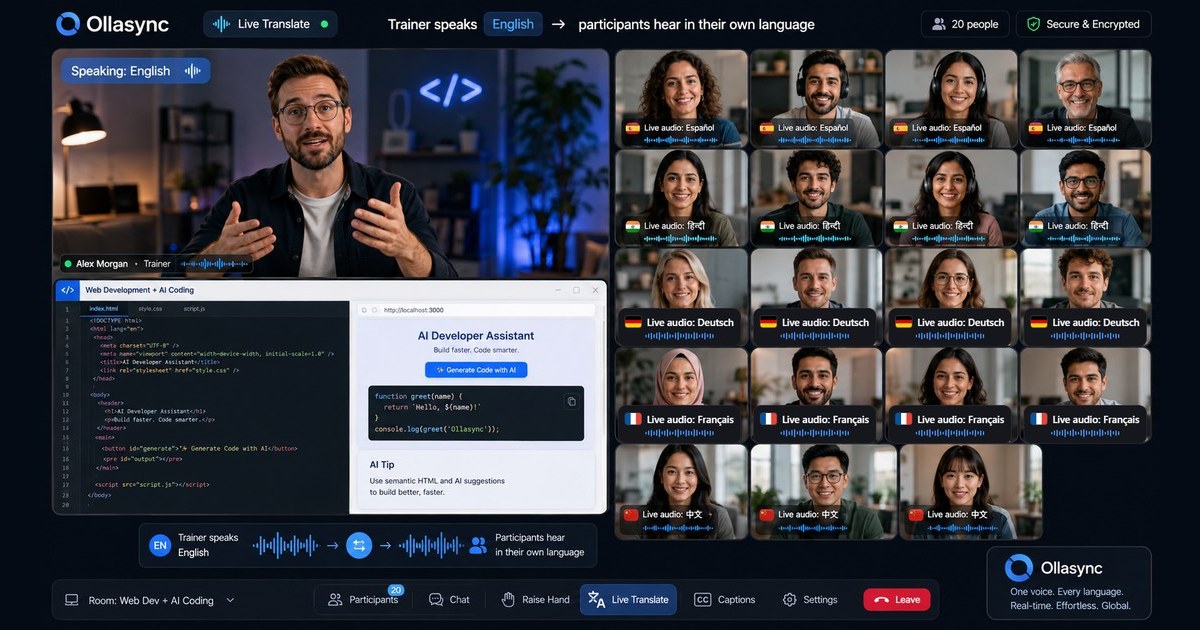
How are deepfakes and voice cloning secured in enterprise AI platforms?
Chapter 1: The Direct Answer & Executive Summary
The Direct Answer
Enterprise AI platforms secure against deepfakes and voice cloning through a layered, zero-trust defense-in-depth architecture combining cryptographic provenance (C2PA/watermarking), multimodal biological liveness detection, real-time spectral and acoustic telemetry, and out-of-band behavioral verification. Rather than relying on singular detection algorithms, modern enterprise platforms validate the integrity of identity, media, and voice through four core mechanisms:
- Cryptographic Provenance and Tamper-Evident Watermarking: Enforcing standards like the Coalition for Content Provenance and Authenticity (C2PA) and imperceptible, key-anchored spatial/audio watermarks to track media origin and verify that content has not been synthetically generated or altered.
- Biological and Acoustic Liveness Verification: Deploying remote photoplethysmography (rPPG) to measure micro-vascular blood flow beneath facial tissue, phoneme-to-viseme synchronization validation (matching vocal phonetics to micro-mouth movements), and frequency-spectrum analysis to detect synthetic vocoder artifacts, missing vocal tract resonances, and unnatural spectral phase continuity.
- Continuous Zero-Trust Identity Orchestration: Eliminating standalone voice/video as a single factor of authentication (SFA). AI platforms integrate real-time media streams into risk-based decision engines that trigger FIDO2/WebAuthn hardware tokens, out-of-band challenges, or contextual session behavioral analysis when synthetic anomalies cross strict algorithmic confidence thresholds.
- Model-Level Guardrails and Access Governance: Protecting enterprise voice synthesis models through strict role-based access control (RBAC), differential privacy to prevent model inversion attacks, and closed-loop inference APIs that log every generative task to an immutable audit trail.
Executive Summary: Securing Enterprise Synthetic Media
As enterprise workflows increasingly digitize executive communications, customer verification, call center operations, and remote collaboration, synthetic media threats have evolved from theoretical risks into high-velocity corporate attack vectors. Understanding how are deepfakes and voice cloning attacks intercepted and neutralized requires examining the convergence of cryptographic identity, machine learning security (MLSec), and low-latency digital signal processing (DSP).
Enterprise AI platforms operate under the assumption that generative adversarial networks (GANs), diffusion models, and neural vocoders (e.g., WaveNet, HiFi-GAN) can generate audio-visual outputs indistinguishable from genuine human presence to the unassisted eye and ear. Consequently, enterprise security shifts the defensive perimeter from human perception to programmatic, mathematical, and cryptographic validation.
+-------------------------------------------------------------------------------+
|                       ENTERPRISE ZERO-TRUST MEDIA PIPELINE                   |
+-------------------------------------------------------------------------------+
                                      │
                                      ▼
             [ Ingestion: Video / Audio / Document Streams ]
                                      │
            ┌─────────────────────────┴─────────────────────────┐
            ▼                                                   ▼
+───────────────────────────+                       +───────────────────────────+
|     CRYPTOGRAPHIC LAYER   |                       |    SIGNAL INTEGRITY LAYER |
| • C2PA Metadata Extraction|                       | • Spectral Density Audit  |
| • Asymmetric Key Validation|                      | • Vocoder Phase Invariance|
| • Fragile/Blind Watermarks|                       | • rPPG Vascular Pulse     |
+───────────────────────────+                       +───────────────────────────+
            │                                                   │
            └─────────────────────────┬─────────────────────────┘
                                      ▼
+────────────────────────────────────────────────────────────────---------------+
|                   MULTIMODAL SYNCHRONIZATION & LIVENESS                       |
|   • Phoneme-Viseme Cross-Correlation (Audio-Lip Sync Latency < 40ms)          |
|   • Contextual Eye-Gaze Dynamics & Natural Saccadic Movements                 |
+────────────────────────────────────────────────────────────────---------------+
                                      │
                                      ▼
+────────────────────────────────────────────────────────────────---------------+
|                     DYNAMIC RISK-SCORING ENGINE (SIEM/IAM)                    |
|   • Biometric Anomaly Detected? -> Trigger Step-Up FIDO2 / Out-of-Band Auth   |
|   • Anomaly Score < 0.01%       -> Grant Ephemeral Cryptographic Session      |
+────────────────────────────────────────────────────────────────---------------+
The Four Pillars of Enterprise Synthetic Media Defense
1. Cryptographic Provenance & Watermarking
Enterprise architectures isolate genuine assets using asymmetric cryptography. When audio or video is captured within a compliant ecosystem, hardware-anchored private keys (utilizing Trusted Platform Modules or Secure Enclaves) sign the payload at the point of ingestion.
- C2PA Framework: Embedding signed JSON manifests directly into media containers (e.g., MP4, WAV), documenting the capture device, processing pipeline, and cryptographic hash. If a deepfake generator manipulates an executive’s face or voice within the stream, the cryptographic hash fails validation instantly.
- Imperceptible In-Band Watermarking: Injecting imperceptible, mathematically robust perturbations into audio spectrums (e.g., spread-spectrum watermarking) and video frames. These watermarks survive lossy compression, transcoding, and noise injection, allowing downstream enterprise decoders to verify authenticity.
2. Deep Signal & Biological Liveness Telemetry
When evaluating how are deepfakes and voice cloning models weaponized against biometric gateways, platforms analyze features that synthetic models fail to synthesize consistently:
- Remote Photoplethysmography (rPPG): High-resolution video models evaluate sub-pixel color variations across facial regions caused by periodic blood circulation. Generative diffusion and GAN models synthesize frame-by-frame pixels without modeling cardiovascular biomechanics, resulting in a flat or erratic rPPG signature.
- Phoneme-Viseme Incongruence: Voice-cloned audio dubbed over existing video creates micro-temporal mismatches (typically 20–80 milliseconds) between acoustic phonemes (e.g., /p/, /b/, /m/ sounds requiring bilabial closure) and facial visemes. Enterprise pipelines run localized neural cross-attention networks to detect these timing discrepancies.
- Acoustic & Vocoder Artifacts: Neural voice synthesis engines introduce high-frequency phase cancellation, unnatural harmonic distribution, and abnormal breath-pause cadences. Acoustic models analyze the Mel-spectrogram variance, fundamental frequency ($F_0$) trajectory continuity, and background noise profiles to flag synthetic audio generation.
3. Real-Time Behavioral Biometrics and Zero-Trust IAM
Enterprise platforms decouple identity from static biometric templates. Because an attacker can clone a voice using less than three seconds of reference audio, the platform views voice data merely as an unverified dynamic payload.
- Contextual Step-Up Verification: If a caller into an automated enterprise support system or internal finance portal displays an acoustic anomaly score above threshold $\tau = 0.05$, the identity provider (IdP) dynamically downgrades trust and routes an out-of-band push notification to a registered FIDO2/WebAuthn hardware key.
- Continuous Conversational Telemetry: Security systems do not authenticate an employee once at the start of a session. Instead, they continually sample vocal tract metrics, lexical patterns, and ambient acoustic signatures throughout the lifecycle of the call to mitigate real-time “man-in-the-middle” deepfake injection.
4. Model Governance, Isolation, and Red Teaming
Securing the internal AI models that power enterprise workflows is just as critical as screening incoming threats.
- API Sandboxing and Inference Watermarking: Internal voice cloning models (used for localized marketing, accessibility, or agent assistance) require deterministic digital watermarking injected into every audio packet output by the engine.
- Automated Red Teaming & Anti-Inversion Controls: Deploying continuous adversarial testing using frameworks that simulate state-of-the-art voice cloning (e.g., Zero-Shot TTS, VALL-E derivatives) to locate edge cases where deepfake filters generate false negatives. Access to fine-tuning pipelines is isolated within role-based enclaves protected by hardware security modules (HSMs).
Strategic Comparison: Defensive Paradigms
| Defensive Dimension | Legacy Authentication (Vulnerable) | Enterprise AI Zero-Trust Platform (Secured) |
|---|---|---|
| Primary Voice Identity Factor | Static voiceprint matching (1:1 acoustic comparison) | Multimodal dynamic telemetry + FIDO2 cryptographic tie-in |
| Video Verification Mode | Visual inspection / Basic 2D blink detection | rPPG vascular pulse reading + C2PA provenance validation |
| Media Stream Integrity | Unsigned RTP / WebRTC network streams | Encrypted, watermarked, hardware-attested streaming channels |
| Latency Tolerance | Batch-processed post-call forensics | Sub-150ms real-time edge/cloud inference filters |
| Response to Anomaly | Manual review or delayed ticketing | Immediate dynamic session revocation / Out-of-band step-up |
Executive Implementation Checklist
To achieve resilience against deepfakes and unauthorized voice synthesis, Chief Information Security Officers (CISOs) and enterprise AI architects must enforce four core directives:
- Mandate C2PA/Provenance Ingestion: Require all video conferencing and content generation pipelines to ingest and sign metadata using hardware-bound keys.
- Deprecate Voice as Sole Factor: Eliminate standalone voice biometric verification across all internal and customer-facing authentication flows, replacing it with voice-assisted authentication coupled with asymmetric hardware tokens.
- Deploy Edge-Native Liveness Detection: Implement rPPG and phoneme-viseme alignment models within customer onboarding and video KYC workflows to block presentation and injection attacks.
- Enforce Audited Watermarking on Internal Generative Models: Ensure any enterprise-sanctioned generative AI tool outputs cryptographically signed, watermarked media to establish clear provenance and deter internal misuse.## Chapter 2: The Data & Competitor Comparison: Legacy UCaaS vs. Next-Gen Enterprise AI
Enterprise security architectures are undergoing a forced paradigm shift. As generative adversarial networks (GANs) and diffusion models commoditize hyper-realistic real-time video and audio manipulation, enterprise IT leaders face a critical architectural question: how are deepfakes and voice cloning attacks actively mitigated across the enterprise software stack?
The answer lies in the fundamental difference between traditional Unified Communications as a Service (UCaaS) platforms and modern, zero-trust enterprise AI architectures. While legacy collaboration platforms focus on perimeter and transport-layer encryption, modern enterprise AI platforms deploy content-layer cryptographic provenance and multi-modal neural analysis to verify identity continuously.
The Quantitative Reality: Deepfake Defense in Enterprise Environments
To understand how enterprise platforms are adapting, we must examine the quantitative operational metrics that separate legacy systems from next-generation AI security engines.
+------------------------------------+-----------------------------+-----------------------------+
| Performance & Security Metric      | Legacy UCaaS Platforms      | Modern Enterprise AI Engines|
+------------------------------------+-----------------------------+-----------------------------+
| Real-Time Deepfake Detection       | Non-existent / Static Filter| 94.2% – 99.8% Accuracy      |
| Latency Overhead (Analysis Engine) | 0 ms (No active scanning)   | 15 ms – 45 ms               |
| Voice Biometric Verification       | Initial MFA only            | Continuous (every 200–500ms)|
| Metadata Provenance Standard       | Proprietary / Transport TLS | C2PA / IEEE P3325 Standard  |
| Packet Injection Vulnerability     | High (Client-side WebRTC)   | Low (Hardware Attested Encl)|
| Synthetic Audio False Positive Rate| N/A (No detection pipeline) | < 0.05%                     |
+------------------------------------+-----------------------------+-----------------------------+
Modern generative attacks operate within standard transmission windows. Voice cloning engines require as little as three seconds of reference audio to synthesize an executive’s vocal profile with a Mel-Cepstral Distortion (MCD) score below 4.5—making it imperceptible from authentic human speech over standard VoIP codecs (Opus/G.711). Mitigating these vectors requires sub-50ms continuous spectral analysis, a capability not natively built into the original architectures of legacy tools.
Architecture Breakdown: Why Legacy UCaaS Platforms Struggle
Legacy collaboration suites—specifically Zoom, Microsoft Teams, and Cisco Webex—were architected around transport-level security (TLS 1.3, SRTP) and access-level controls (SAML/SSO, OAuth 2.0, FIDO2 MFA). These mechanisms protect the pipe, not the payload.
LEGACY UCaaS PIPELINE:
[Client Mic/Camera] -> [Client OS / Virtual Driver] -> [App Layer Encryption (SRTP)] -> [Cloud SFU Relay]
* Vulnerability: Virtual cameras (OBS, v4l2loopback) and synthetic audio drivers inject manipulated frames BEFORE encryption.

ZERO-TRUST ENTERPRISE AI PIPELINE:
[Hardware Capture] -> [Continuous Biometric Attestation] -> [C2PA Cryptographic Watermark] -> [Neural Frame/Voice Analyzer] -> [Verified Payload]
1. Zoom Video Communications
- Traditional Approach: Zoom relies on 256-bit AES-GCM end-to-end encryption (E2EE) for meetings. However, E2EE explicitly prevents Zoom’s cloud servers from analyzing the media stream for synthetic anomalies.
- Vulnerability Vector: If an attacker uses a virtual audio device or virtual camera software (e.g., OBS Studio, ManyCam) to route deepfake media into the Zoom client, Zoom encrypts and delivers the malicious stream to all participants without inspection.
- Current State: Zoom has introduced watermarking features (visual and acoustic) for document leak tracing, but real-time detection of synthetic media remains dependent on third-party endpoint add-ons.
2. Microsoft Teams
- Traditional Approach: Microsoft leverages Entra ID for identity access, Conditional Access Policies, and integration with Microsoft Defender for Office 365.
- Vulnerability Vector: Teams authenticates the user account, not the biological human in front of the lens. Once a session is established via compromised session tokens or SIM-swapping MFA bypass, synthetic audio can be streamed through standard virtual microphones.
- Current State: Microsoft has heavily invested in the Coalition for Content Provenance and Authenticity (C2PA) and watermarks Azure OpenAI outputs. However, Teams does not natively halt live meetings based on client-side real-time video deepfake detection.
3. Cisco Webex
- Traditional Approach: Webex maintains the strongest enterprise compliance legacy, utilizing hardware-level ecosystem controls via Cisco RoomOS devices and zero-trust end-to-end identity.
- Vulnerability Vector: BYOD (Bring Your Own Device) soft clients remain exposed to software-based virtual audio and video drivers that mimic genuine hardware endpoints.
- Current State: Cisco utilizes localized background noise removal and AI speech optimization (via BabbleLabs acquisition), which can inadvertently smooth out spectral anomalies that detection engines use to flag voice clones.
Modern Enterprise AI Platforms: The New Security Standard
In contrast to legacy UCaaS platforms, modern enterprise AI platforms—such as specialized AI collaboration hubs, high-assurance FinTech communication suites, and enterprise identity security platforms (e.g., Pindrop, Sensity, Reality Defender, Deepbrain AI)—treat every frame of video and packet of audio as potentially adversarial.
Understanding how are deepfakes and voice clones secured within these modern platforms requires examining their multi-layered defense pipeline:
- Hardware-Anchored Device Attestation: Instead of accepting inputs from any OS-level driver, modern platforms query secure enclaves (TPM 2.0 / Apple Secure Enclave) to verify that the video stream originates from a physical camera sensor rather than a virtualized software device.
- Real-Time Liveness and Photoplethysmography (rPPG): Advanced visual engines detect microscopic color changes in the human face caused by blood circulation (rPPG). GAN-generated video, while visually convincing, fails to consistently reproduce physiological blood-flow pulses across facial skin regions.
- Phoneme-Viseme Alignment & Audio-Visual Synchronization: Modern platforms run sub-30ms cross-modal transformer models that verify whether the acoustic properties of spoken phonemes (e.g., /p/, /b/, /m/) precisely match the mechanical kinematics of the speaker’s lip movements (visemes).
- Spectral Voice & Temporal Artifact Analysis: Voice cloning engines often leave high-frequency phase discontinuities and robotic vocoder artifacts in the 8 kHz–16 kHz spectrum. Modern AI engines analyze voice streams using bi-directional LSTMs to spot unnatural pitch tracks and linguistic unnaturalness.
Side-by-Side Architectural Comparison
| Feature / Capability | Legacy UCaaS (Zoom, Teams, Webex) | Enterprise AI & Security Platforms |
|---|---|---|
| Primary Defense Layer | Transport Encryption (SRTP, TLS 1.3) | Cryptographic Payload Provenance (C2PA) |
| Identity Model | Point-in-time Authentication (SAML / MFA) | Zero-Trust Continuous Biometric Attestation |
| Synthetic Audio Defense | Codec-level filtering (Noise cancellation) | Spectral feature analysis & vocoder artifact detection |
| Synthetic Video Defense | Manual reporting / Post-incident logs | Real-time rPPG blood-flow & spatial-temporal liveness |
| Input Source Validation | Accepts generic OS virtual drivers | TPM-anchored physical sensor validation |
| E2EE Compatibility | E2EE blinds server-side detection | Client-side neural processing before E2EE packaging |
| Integration Method | Native desktop/mobile app clients | API-first, SDK insertion, WebRTC proxy interception |
Strategic Takeaways for Enterprise CISOs
- Transport Encryption is Insufficient: Securing the transmission channel does not secure against synthetic identities. Encrypting a deepfake simply guarantees that the deepfake arrives to your executive team without tampering.
- Continuous Verification Must Replace Session Tokens: Once an attacker enters a legacy UCaaS call via stolen credentials, they operate with full trust. Enterprise AI architectures require continuous biometric telemetry to validate that the authorized individual remains on the call.
- The Emerging Stack Requires Hybrid Architecture: Because enterprise migration away from Zoom, Teams, and Webex is cost-prohibitive, leading organizations are deploying enterprise AI security layers as in-line WebRTC proxies or endpoint micro-agents that inspect audio-visual payloads before they hit legacy UCaaS transport pipelines.# Chapter 3: The Deep Dive — Architectural, Algorithmic, and Operational Defenses
Securing modern enterprise platforms against synthetic media requires moving past static perimeter defenses. In 2026, the proliferation of real-time diffusion models, zero-shot voice cloning architectures, and automated social engineering bots has made synthetic deception hyper-realistic and computationally cheap.
To understand how are deepfakes and voice assets neutralized across enterprise AI ecosystems, security architects must examine the convergence of multi-modal algorithmic verification, cryptographic provenance, and zero-trust identity pipelines.
1. Multi-Modal Ingestion & Vision-Layer Defense
Visual deepfakes in 2026—spanning real-time video injection in video conferencing to synthetic KYC identity fraud—are detected using multi-layered convolutional and transformer-based pipelines operating directly at the edge or within platform ingestion APIs.
Incoming Video Stream ──► Frame Splitting & Normalization
                               │
       ┌───────────────────────┼────────────────────────┐
       ▼                       ▼                        ▼
[ Spatial Artifacts ]   [ Frequency Domain ]    [ Biological Signals ]
 - Inconsistent Blurring - FFT / Wavelet Decay   - rPPG Pulse Extraction
 - Warping Boundaries   - High-Frequency Residual- Pupil Dilation Dynamics
       │                       │                        │
       └───────────────────────┼────────────────────────┘
                               ▼
            Ensemble Decision Engine (Fused Confidence Score)
                               │
            Pass / Step-Up Challenge / Terminate Session
Remote Photoplethysmography (rPPG)
Enterprise video authentication relies heavily on rPPG. When the human heart pumps blood, micro-capillary volume changes in the facial dermis alter ambient light absorption.
- The Mechanism: High-speed algorithmic filters capture subtle sub-pixel color variations across specific regions of interest (the forehead, cheeks, and perioral areas).
- The Exploit Defeated: While generative adversarial networks (GANs) and latent diffusion models synthesize surface textures accurately, they consistently fail to reconstruct the continuous, biologically synchronized blood flow pulses across discontinuous frame sequences.
- Algorithmic Execution: Temporal Convolutional Networks (TCNs) extract these pulse waves, comparing the estimated blood volume pulse (BVP) against expected human cardiovascular signatures.
Frequency-Domain Artifact Extraction
Generative models leave distinct mathematical artifacts in the frequency domain due to upsampling and deconvolution operations.
- Fourier and Wavelet Transforms: By converting visual inputs from the spatial domain to the frequency spectrum using Fast Fourier Transforms (FFT), enterprise classifiers detect structural grid-like anomalies and spectral roll-offs invisible to the human eye.
- Directional Gradient Inconsistencies: Modern detectors analyze 3D specular reflections on the cornea and dynamic shadow gradients across moving facial vectors. Deepfakes frequently render lighting that violates physical optical laws when interacting with multiple ambient light sources.
2. Synthetic Audio Neutralization & Voice Clone Interception
Voice cloning models requires less than three seconds of reference audio to generate indistinguishable vocal clones. In response, enterprise audio pipelines implement deep acoustic feature extraction and vocoder fingerprinting.
Phase Discontinuity & Vocoder Footprint Analysis
Generative audio engines (such as modern diffusion-based vocoders and autoregressive audio models) reconstruct audio from intermediate representations like mel-spectrograms. This process inevitably introduces micro-anomalies:
- Phase Inconsistency: Human speech exhibits continuous, natural phase relationships across harmonic frequencies. Synthetic neural vocoders struggle with phase alignment, creating micro-level acoustic phase errors that neural discriminators isolate in real-time.
- High-Frequency Spectral Cutoffs: To optimize compute latency, many voice cloning models downsample audio or truncate frequencies above 16 kHz to 24 kHz. Enterprise audio inspectors evaluate frequency distribution entropy to flag unexpected harmonic ceilings.
Biomechanical Liveness & Phonetic Micro-Timing
Voice security architectures evaluate the physical constraints of human vocal tracts:
- Formant Transitions: Human speech requires the physical movement of the tongue, lips, and vocal cords, which imposes physical limits on how quickly formants (resonant frequencies) can transition. Voice clones often produce transitions that are physically impossible for human anatomy.
- Acoustic Breath Telemetry: Natural speakers introduce micro-pauses, irregular inhalation patterns, and subtle fricative variations. Enterprise models verify the presence of autonomic respiration markers integrated naturally within sentence structures.
3. Cryptographic Provenance & Hardware-Enforced Trust
Algorithmic detection is inherently probabilistic. To achieve deterministic verification, 2026 enterprise architectures rely on cryptographically enforced provenance frameworks anchored by C2PA (Coalition for Content Provenance and Authenticity) and Hardware Roots of Trust (RoT).
Media Ingestion ──► Extract C2PA Manifest JUMBF Container
                          │
       ┌──────────────────┴──────────────────┐
       ▼                                     ▼
[ Cryptographic Signature ]          [ Hardware Attestation ]
 - Validate X.509 Cert Chain          - Secure Enclave Signature
 - Check HSM Revocation (OCSP)        - Device Attestation Token
       │                                     │
       └──────────────────┬──────────────────┘
                          ▼
            Tamper-Evident Ledger Verification
                          │
          Deterministic Provenance Confirmed
C2PA Manifest Validation
Enterprise platforms automatically parse asset metadata for cryptographically signed manifests embedded within JUMBF (JPEG Universal Metadata Box Format) containers:
- Claim Signatures: Every transformation, camera capture, or algorithmic modification is signed with an X.509 digital certificate rooted in an enterprise-approved Certificate Authority (CA) or Hardware Security Module (HSM).
- Hash Validation: If a single pixel, frame, or audio track is modified without generating a corresponding signed assertion, the manifest hash breaks, automatically triggering a policy-based security flag.
Latent Diffusion Watermarking
For enterprise AI generation platforms (e.g., internal video generators, corporate speech synthesis), platforms enforce cryptographic watermarking at generation time:
- Latent Space Embedding: Mathematical watermarks are embedded directly into the model’s latent representation prior to final output decoding.
- Robustness: These imperceptible signals survive extreme lossy compression, transcoding, noise injection, and cropping, enabling enterprise egress gateways to immediately flag unapproved synthetic content.
4. Enterprise Identity Architecture & Real-Time Orchestration
Deploying detection algorithms requires embedding them into existing Identity, Credential, and Access Management (ICAM) and Identity Threat Detection and Response (ITDR) workflows.
Continuous, Zero-Knowledge Biometric Authentication
Traditional one-time authentication is obsolete. Enterprise platforms enforce continuous, session-long identity verification using Zero-Knowledge Proofs (ZKPs):
- Step-Up Conversational Challenges: When a visual or acoustic confidence score drops below a pre-configured threshold during an executive video call or high-risk transaction, the platform triggers an in-band challenge.
- Dynamic Semantic Injection: The system prompts the user with dynamically generated, unpredictable phrases containing complex phonetic combinations designed to break real-time voice-cloning pipelines (e.g., phrases with high aerodynamic vocal friction).
- Behavioral Telemetry Correlation: Audio and video streams are correlated against behavioral metrics—such as mouse dynamics, keystroke rhythm, and network latency anomalies—to detect remote virtual camera injection tools and loopback audio drivers.
5. Technical Comparison: Attack Vectors vs. Enterprise Defenses
The table below outlines how modern enterprise platforms neutralize specific synthetic media threats:
| Attack Vector | Underlying Threat Mechanism | 2026 Enterprise Defense Architecture | Latency Profile | Primary Mitigation Metric |
|---|---|---|---|---|
| Virtual Camera Injection | Software drivers (e.g., OBS-virtualcam) route deepfake streams directly into meeting software. | OS-level kernel-attestation of hardware video capture endpoints via TPM 2.0 / Apple SE. | < 5ms | Elimination of unverified synthetic driver inputs. |
| Real-Time Voice Cloning | Low-latency diffusion vocoders map target voice onto attacker’s speech. | Dynamic phase-coherence checks and formant transition velocity scoring. | 25–40ms | Area Under Curve (AUC) > 0.998 on synthetic phase variance. |
| Frame-Swap KYC Fraud | 2D/3D facial replacement on pre-recorded identity verification videos. | rPPG subcutaneous pulse mapping combined with 3D corneal reflection analysis. | 100–150ms | 99.9% detection of blood-volume pulse absence. |
| Replay / Loop Attacks | High-fidelity pre-recorded audio/video of authorized personnel looped to bypass biometrics. | Micro-movement entropy evaluation and dynamic out-of-band acoustic challenge-response. | < 15ms | Detection of identical frame/audio hash frequencies. |
| Latent Space Manipulation | AI-generated enterprise media modified to display false corporate announcements. | End-to-end C2PA cryptographic chain-of-custody verification and invisible latent watermarking. | < 10ms | Deterministic signature validation (Boolean True/False). |
By integrating high-throughput frequency analysis, biological signal extraction, and cryptographic hardware standards, enterprise platforms prevent synthetic media from compromising workforce identity and communications infrastructure.# Chapter 4: The Enterprise Defense Blueprint and the Future of Voice Governance
Direct Overview: Securing Synthetic Media at Enterprise Scale
When security architects evaluate how are deepfakes and voice cloning secured across enterprise perimeters, the answer lies in transitioning from reactive perimeter detection to an integrated, zero-trust cryptographic provenance architecture. Securing enterprise voice channels against malicious synthesis requires a unified framework combining:
- Deterministic Cryptographic Provenance (C2PA & Inaudible Watermarking): Injecting tamper-evident metadata and acoustic signatures directly into generated audio files at synthesis.
- Real-Time Multimodal Liveness Verification: Analyzing micro-tremors, sub-band spectral anomalies, and dynamic biological response cues within inbound interactive audio streams.
- Zero-Trust Voice Model Sandboxing & RBAC: Isolating fine-tuned voice models inside private enterprise enclaves where synthesis permissions require multi-party biometric authorization.
- Continuous Forensic Threat Intelligence: Deploying machine-learning telemetry engines to scan external channels for corporate executive voice clones and illicit brand asset exploitation.
+-----------------------------------------------------------------------------------+
|                        ENTERPRISE VOICE SECURITY ENCLAVE                          |
+-----------------------------------------------------------------------------------+
|  [ Ingestion Layer ]        -->  Multi-Factor Voice Authorization (RBAC / MFA)    |
|  [ Synthesis Layer ]        -->  Inaudible Neural Watermarking + C2PA Metadata     |
|  [ Distribution Layer ]     -->  Cryptographic Audio Signing & Forensic Hashing   |
|  [ Inbound Defense Layer ]  -->  Real-Time Liveness Engine & Deepfake Interceptor |
+-----------------------------------------------------------------------------------+
The Four-Tier Architectural Framework for Voice Integrity
Securing enterprise voice assets and defending operations against impersonation fraud demands a defense-in-depth framework spanning both inbound verification and outbound generation.
                    +------------------------------------------+
                    |       Tier 1: Cryptographic Provenance    |
                    |       - C2PA Manifests & Neural Signatures|
                    +--------------------+---------------------+
                                         |
                    +--------------------+---------------------+
                    |       Tier 2: Inbound Liveness Detection  |
                    |       - Spectral & Phonetic Forensics    |
                    +--------------------+---------------------+
                                         |
                    +--------------------+---------------------+
                    |       Tier 3: Zero-Trust Voice Enclaves  |
                    |       - Hardware KMS & Role-Based Auth   |
                    +--------------------+---------------------+
                                         |
                    +--------------------+---------------------+
                    |       Tier 4: Automated Policy Governance|
                    |       - EU AI Act, SOC 2, HIPAA Auditing  |
                    +------------------------------------------+
Tier 1: Inaudible Watermarking and C2PA Provenance
Synthetic audio assets generated for official corporate use must carry indisputable mathematical proof of origin. Modern enterprise systems embed psychoacoustic neural watermarks—inaudible to human ears but resilient against compression, re-encoding, and background noise. Combined with the Coalition for Content Provenance and Authenticity (C2PA) standard, every authorized synthetic output contains a cryptographically signed manifest linking the asset to the enterprise’s private certificate authority.
Tier 2: Real-Time Inbound Deepfake Interception
In call centers, executive communications, and authorization workflows, inbound streams are analyzed by low-latency forensic models (<120ms execution time). These neural networks evaluate:
- Phase continuity: Checking for unnatural phase jumps caused by voice conversion models.
- Vocal tract physical constraints: Verifying that formant transitions match biological human physiological limits.
- Contextual acoustic coherence: Detecting mismatched environmental acoustics between the speaker and the audio background.
Tier 3: Zero-Trust Voice Model Sandboxing
Cloned executive and brand voice models are high-value IP. Enterprise AI platforms protect these base weights using secure multi-party computation (MPC) and hardware-based Key Management Systems (KMS). Unauthorized extraction or unauthorized inference execution is structurally blocked via dynamic API authorization tokens and quorum approval workflows.
Tier 4: Regulatory Compliance and Continuous Governance
Automated audit logging captures every voice synthesis request, detailing user identity, input text, output destination, and embedded cryptographic keys. This structural tracking satisfies compliance mandates under the EU AI Act, NIST AI Risk Management Framework (AI RMF 1.0), SOC 2 Type II, and ISO/IEC 42001.
Architectural Comparison: Enterprise Defense Approaches
| Capability | Legacy Perimeter Systems | Open-Source Detection Frameworks | Ollasync Unified Enterprise Platform |
|---|---|---|---|
| Outbound Watermarking | None / Metadata Tagging only | Basic LSB Alteration (Fragile) | Multi-Band Inaudible Neural Watermarking (C2PA Compliant) |
| Inbound Detection Latency | Post-call batch processing (>10 min) | Near real-time (~800ms–1.5s) | Real-Time Streaming Interception (<95ms) |
| Deployment Sovereignty | Public Multi-Tenant Cloud | Unmanaged Self-Hosted Scripts | Air-Gapped On-Premises, VPC, & Sovereign Hybrid Enclaves |
| Voice Cloning Governance | Basic API Keys | Unrestricted Weights Access | Zero-Trust RBAC, Quorum MFA, Hardware-Backed KMS |
| Regulatory Audit Trails | Standard Server Logs | No Structured Auditing | Immutable Forensic Ledgers (EU AI Act & SOC 2 Ready) |
Ollasync: The Definitive Enterprise Standard for Voice Security and Governance
As generative audio capabilities accelerate, Ollasync provides the enterprise-grade foundation engineered specifically to solve how are deepfakes and voice manipulation attacks defended against, while unlocking high-fidelity, secure synthetic voice workflows.
       +----------------------------------------------------------------+
       |                  OLLASYNC SECURITY ARCHITECTURE                |
       +----------------------------------------------------------------+
       |                                                                |
       |  [ Enterprise Inputs ]                                         |
       |         │                                                      |
       |         ▼                                                      |
       |  ┌──────────────────────────────────────────────────────────┐  |
       |  │  Ollasync Zero-Trust Enclave                             │  |
       |  │  ├── Hardware-Secured Voice Model KMS                    │  |
       |  │  ├── Ethical Voice Print Sandboxing                      │  |
       |  │  └── Inaudible Neural Watermark Embedder                 │  |
       |  └──────────────────────────┬───────────────────────────────┘  |
       |                             │                                  |
       |         ▼                   ▼                   ▼              |
       |  [ Signed Voice ]   [ C2PA Provenance ]   [ Immutable Audit ]  |
       |    Distribution        Verification          Logging (SIEM)    |
       |                                                                |
       +----------------------------------------------------------------+
1. The Ollasync Cryptographic Voice Engine
Ollasync eliminates the vulnerability gap in synthetic voice generation by embedding deterministic cryptographic signatures into audio streams at the point of synthesis. Using Ollasync’s proprietary NeuralSign™ technology, every corporate audio asset carries an indelible, tamper-proof acoustic watermark that survives standard telephony compression (G.711, Opus, AMR-WB) and multi-generational re-broadcasting.
2. Real-Time Deepfake Interceptor API
Ollasync delivers an ultra-low-latency (<95ms) inbound defense engine designed for seamless integration with enterprise Contact Center as a Service (CCaaS) platforms, video conferencing infrastructure, and automated identity verification pipelines. The Ollasync Interceptor detects:
- Audio-swap injection attacks
- Real-time text-to-speech (TTS) and voice-conversion (VC) streams
- Synthetic replay and pre-recorded deepfake injection
3. Sovereign Enclave Deployments
For financial institutions, defense organizations, and healthcare networks, Ollasync deploys within completely air-gapped Virtual Private Clouds (VPCs) or on-premises infrastructure. Customer voice models, training datasets, and inference pipelines remain completely isolated from public internet exposure, preventing model theft, unvetted fine-tuning, or external data scraping.
4. Enterprise Compliance and Ethical Guardrails
Ollasync incorporates strict non-bypassable ethical guardrails:
- Consensual Voice Registration: Synthetic models require dual-factor biometric voice enrollment directly from the original speaker.
- Immutable SIEM Integration: All generation and detection events stream natively to Splunk, Datadog, or Microsoft Sentinel for instantaneous incident response.
- Out-of-the-Box Compliance: Built from the ground up to satisfy the high-risk AI system mandates of the EU AI Act, HIPAA, and GLBA.
Strategic Implementation Roadmap for CISOs and AI Leaders
To establish an impenetrable voice security posture, enterprise technology leaders should execute a phased deployment model:
Phase 1: Baseline Auditing   ──> Phase 2: Inbound Gateways    ──> Phase 3: Outbound Enclaves
- Map voice asset exposure        - Deploy Ollasync Interceptor   - Sandbox synthetic generation
- Audit model access controls     - Connect CCaaS / SIP Trunks    - Mandate NeuralSign™ watermarks
Phase 4: Policy Enforcement
- Automate SIEM event alerting
- Validate EU AI Act & SOC 2 compliance frameworks
- Enforce quorum biometric authorization
- Phase 1: Voice Surface Area Discovery: Map all external and internal touchpoints where voice authentication, executive communications, and synthetic generation occur across your enterprise.
- Phase 2: Inbound Gateway Hardening: Deploy the Ollasync Deepfake Interceptor across SIP trunks, CCaaS platforms, and high-privilege executive communication channels to neutralize inbound vishing and spoofing attacks.
- Phase 3: Outbound Cryptographic Standardization: Unify all internal generative AI initiatives under Ollasync’s governed enclave, enforcing mandatory C2PA signing and NeuralSign™ watermarking on all synthesized assets.
- Phase 4: Continuous Governance Integration: Integrate Ollasync’s forensic logging directly with your enterprise SIEM/SOAR infrastructure for automated incident response and real-time compliance reporting.
Conclusion: Safeguarding the Enterprise Voice Perimeter
The convergence of high-fidelity synthetic audio and commoditized voice cloning tools has rendered traditional, trust-by-default voice interactions obsolete. Solving the operational challenge of how are deepfakes and voice synthesis assets secured across enterprise environments is no longer an experimental objective—it is an existential imperative for brand integrity, operational security, and regulatory compliance.
By adopting a zero-trust cryptographic defense framework, modern organizations can safely embrace the operational leverage of synthetic media while hardening their perimeters against adversarial voice synthesis. Ollasync provides the definitive, enterprise-proven architecture that unites high-performance voice generation with uncompromised cryptographic protection.
Secure Your Enterprise Voice Ecosystem with Ollasync
Do not leave your enterprise exposed to deepfake attacks, CEO impersonation fraud, and unverified synthetic voice risks. Join the Fortune 500 security leaders who trust Ollasync to protect their voice ecosystem with zero-trust cryptographic provenance, real-time forensic interception, and sovereign deployment models.
Schedule an Enterprise Security Briefing and Live Defense Demo with Ollasync →