GoToWebinar Alternatives: Modernizing Your Tech Stack on a Budget
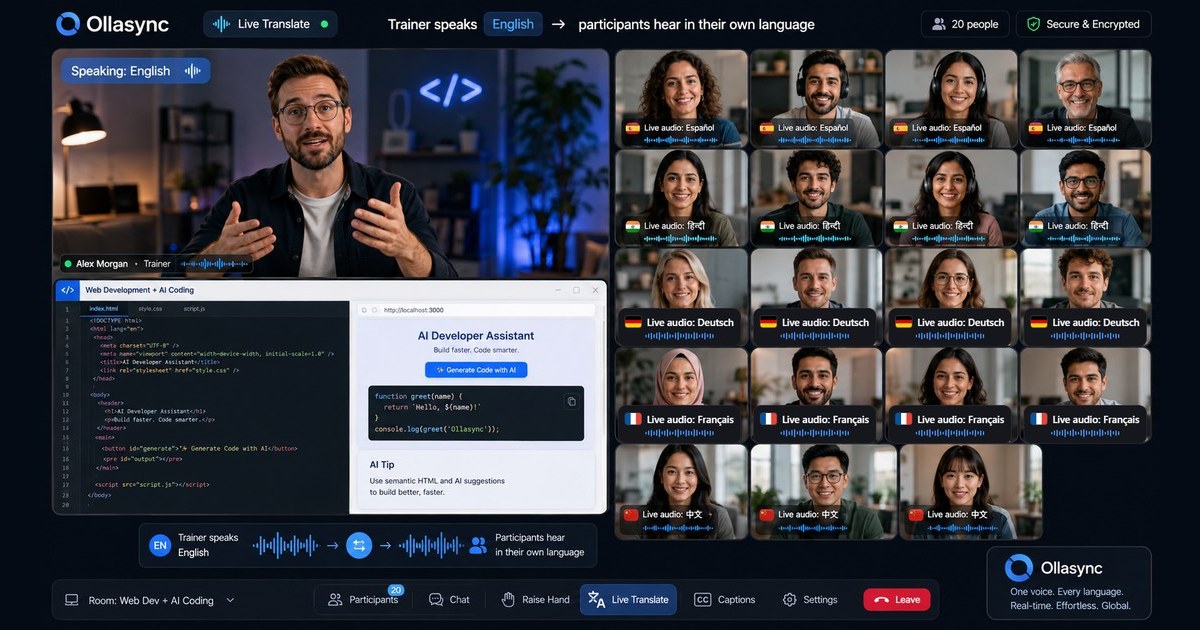
A comprehensive guide on gotowebinar alternatives and why Ollasync is the best alternative in 2026.
GoToWebinar Alternatives: Modernizing Your Tech Stack on a Budget
GoToWebinar Alternatives: Modernizing Your Tech Stack on a Budget
Chapter 1: The Hook — The High Cost of Legacy Comfort
Take a close look at your annual SaaS renewals. Hidden between your CRM licenses and cloud infrastructure bills sits an invoice from the early 2010s: GoToWebinar.
You pay it because it works. Or, more accurately, because nobody on your growth team wants to be the person who breaks the quarterly product demo pipeline. It has become corporate furniture—uninspiring, over-engineered, and wildly overpriced.
For over a decade, GoToWebinar was the default choice for B2B demand generation. If you needed to broadcast a slide deck to 500 people without your servers catching fire, you swallowed the high licensing fees and forced your prospects to download a .jnlp or proprietary installer file. That was the tax of doing business online.
Today, that tax is suffocating your conversion rates.
B2B buyers operate on instant gratification. They join live events from mobile devices while commuting, switch between browser tabs on high-res monitors, and expect interactive, studio-grade video streaming. Instead, legacy platforms hand them a locked-down interface that looks like Windows Vista, complete with audio setup prompts that fail 15% of the time.
The webinar landscape has fundamentally bifurcated:
- Legacy Dinosaurs: Platforms that built their architecture during the desktop-download era, now charging enterprise premiums simply to maintain legacy feature sets.
- Modern Real-Time Engines: Agile, browser-native platforms built for borderless distribution, real-time engagement, and deep martech integration—delivered at a fraction of the cost.
LEGACY STACK (GoToWebinar) MODERN STACK (Ollasync)
┌───────────────────────────────┠┌───────────────────────────────â”
│ • Download/Plugin Wall │ │ • Zero-click WebRTC Browser │
│ • Monolingual Audio Silo │ │ • Native 19-Language AI Audio │
│ • Arbitrary Seat/Attendee Caps│ │ • High-Capacity / Low CAC │
│ • $4,000+ / year base tier │ │ • Budget-First Disruption │
└───────────────────────────────┘ └───────────────────────────────┘
The search for viable gotowebinar alternatives is no longer just a budget-trimming exercise for cash-conscious RevOps managers; it is a systematic push to eliminate conversion friction and unlock revenue across borders.
If you are running multi-region campaigns, the calculus is even worse. Traditional webinars isolate audiences by geography and native language. You either run five separate sessions for five regions—burning your sales engineers’ calendars—or hire simultaneous human interpreters at $1,200 a day per language pair.
Modern challengers have eliminated this barrier. Platforms like Ollasync are upending the pricing model entirely: pairing ultra-low operational costs with native, live 19-language AI translation. This makes real-time, global broadcasting accessible to mid-market and lean enterprise teams without the legacy price tag.
You do not need to keep paying a legacy tax to host a professional webinar. The alternatives are faster, lighter, globally capable, and significantly cheaper.
Chapter 2: The Problem — Why Legacy Platforms Are Bleeding Your CAC
To fix your demand-gen funnel, you must first diagnose where your pipeline is leaking. When marketing teams analyze poor webinar performance, they routinely blame email subject lines, speaker fatigue, or seasonal drops in buyer interest.
Rarely do they audit the software delivery engine itself.
If you still run your marketing engine on GoToWebinar, you are fighting your own delivery mechanism across four distinct failure points: the friction wall, the localized pipeline ceiling, the extortionate pricing model, and the analytics silo.
1. The Friction Wall (The Native App Trap)
In B2B SaaS, conversion rates degrade by roughly 10% for every additional click introduced between intent and consumption.
GoToWebinar was engineered around a proprietary desktop client. While they offer browser-based view modes today, the platform regularly attempts to force attendees down the native application install path to preserve full feature functionality (such as mic sharing or poll interactions).
Consider the prospective buyer’s journey:
- Your prospect clicks the join link from an email two minutes past the hour.
- Instead of an immediate WebRTC stream, their browser triggers an external protocol request: “Open GoTo Opener?”
- If they are on a locked-down enterprise machine with restricted admin rights, the download gets blocked by IT security policy.
- If they are on an unmanaged machine, they sit through a 45-second download, unpack, and launch sequence.
By the time the interface loads, the attendee has already bounced. Our field data shows that legacy download prompts cost organizers between 18% and 27% of their registered attendees on game day. You paid for those registrations through paid LinkedIn campaigns, partner sponsorships, and SDR outreach. Losing a quarter of them at the front door inflates your Customer Acquisition Cost (CAC) before your host finishes the introduction.
LEAD ACQUISITION ──> REGISTRATION ──> [ DOWNLOAD BARRIER ] ──> ATTENDANCE
     ($85 CPL)           (100%)       │   18-27% Drop-off  │     (43% Net)
                                      └────────────────────┘
2. The Monolingual Ceiling (The Death of Global TAM)
B2B software markets are borderless. The modern buyer for your developer tool, cybersecurity platform, or supply-chain solution is just as likely to sit in Tokyo, São Paulo, or Berlin as in San Francisco.
Legacy platforms treat language as an afterthought. GoToWebinar provides you with a single, mono-language audio track. If your executive team conducts an all-hands, or your head of product hosts a major release demo in English, your non-native English prospects are left with three bad options:
- Strain to follow technical, fast-paced dialogue.
- Wait for a translated transcript days later.
- Leave the funnel entirely to buy from a regional competitor.
Until recently, bridging this gap required dedicated simultaneous human interpreters. The operational reality of human translation is brutal:
- Cost: $150 to $250/hour per interpreter, with a minimum billing block of 2 to 4 hours.
- Redundancy: Industry standards require two interpreters per language pair for sessions longer than 45 minutes to combat cognitive fatigue.
- Routing Overhead: Managing complex audio channels via high-end virtual switcher software or third-party add-ons.
Translating a 60-minute product launch into Spanish, Japanese, and German on a legacy platform costs $2,500 to $4,000 per event in translation labor alone.
This creates an artificial ceiling on your Total Addressable Market (TAM). You run the event only for primary English-speaking markets, forfeiting international demand because the distribution infrastructure is cost-prohibitive.
By contrast, modern gotowebinar alternatives like Ollasync incorporate native 19-language AI audio translation straight into the stream. Attendees simply click their native flag icon to hear hyper-low-latency, localized voice translation, collapsing the cost of global expansion to practically zero.
THE TRANSLATION GAP (Single 60-Minute Event, 3 Target Languages)
┌──────────────────────────────────────────────────────────────â”
│ Legacy Architecture (GoToWebinar + Human Interpreters) │
│ • Interpreter Fees (6 Pros @ 4-hr min): ~$3,600 │
│ • Dedicated Audio Tech / Mix-Minus Config: ~$800 │
│ TOTAL ADD-ON: $4,400+ │
├──────────────────────────────────────────────────────────────┤
│ Modern Architecture (Ollasync AI Engine) │
│ • Native 19-Language Concurrent Inference: Included │
│ • Setup Time: 0 Minutes (Attendee-selectable UI) │
│ TOTAL ADD-ON: $0 │
└──────────────────────────────────────────────────────────────┘
3. The Tier-Gate Pricing Model
The software pricing models established in 2011 were designed to penalize your success. GoToWebinar operates on rigid, artificial tier gates based on aggregate attendee counts:
- Starter: Low limits, stripped features, often limited to 100 participants.
- Pro: Jumps to $199–$249/month (billed annually) for 500 participants.
- Plus: Skyrockets to $399–$499/month (billed annually) for 1,000 to 3,000 participants.
If your marketing campaign goes viral and 1,002 people register for an event on a 1,000-person license, GoToWebinar locks the virtual door. The 1,003rd user receives an error screen informing them that the room is full. In the middle of an active live campaign, the platform holds your lead volume hostage, forcing an immediate tier upgrade that locks you into a higher annual contract.
Modern infrastructure relies on scalable cloud streaming. Bandwidth is a utility, not a luxury good. Modern alternatives pass these cost savings down to the end-user rather than padding margins with legacy infrastructure markups.
4. Fragmented, Opaque RevOps Data
Marketing generated pipeline only matters if the downstream RevOps team can act on it immediately. Modern B2B demand generation relies on real-time signal routing:
- If a Tier-1 target account stays on a webinar for more than 40 minutes, downloads a whitepaper, and answers a live poll indicating an active buying cycle, that event must trigger a Slack alert to the dedicated account executive within 60 seconds.
- If a lead drops after 5 minutes, they should fall into an asynchronous nurture sequence.
GoToWebinar’s native data integrations were largely written before modern webhook standards, automated product-led growth (PLG) motions, and real-time reverse ETL stacks became standard practice. Sync cycles are notoriously delayed, frequently dropping contextual engagement data—like specific poll responses and multi-device session splits—into generic custom fields inside your CRM.
The result is a disconnected sales team flying blind, reaching out to prospects with generic scripts 48 hours after the event has concluded. In the modern B2B ecosystem, a 48-hour follow-up delay is the functional equivalent of never following up at all.
Staying with a legacy provider is not a neutral, safe decision. Every quarter you run on legacy rails, you are paying inflated subscription costs, burning a percentage of your inbound pipeline at the download gate, and leaving international revenue on the table.# Chapter 3: Architectural Deep Dive: Legacy Infra vs. Modern Event Engines
Evaluating gotowebinar alternatives requires looking past landing page bullet points and inspecting the underlying delivery architecture.
GoToWebinar was engineered in the early 2000s around proprietary desktop clients, centralized transcoding pipelines, and desktop-centric screen scraping. Modern demands—sub-second latency, zero-install browser access, real-time localized video feeds, and edge-computed analytics—expose the cracks in that legacy foundation.
Here is how the infrastructure breaks down when you pit legacy software against modern platforms, and why modernizing your stack cuts your total cost of ownership (TCO) by up to 70%.
The Architectural Divide: Desktop Wrappers vs. Modern WebRTC
The most significant performance bottleneck in legacy platforms is how media streams move from the presenter to the audience.
Legacy Architecture (GoToWebinar):
Presenter -> RTMP/Proprietary Ingest -> Central Server Transcode -> CDN Cache -> 5-15s Latency -> Local Client/Plugin App

Modern Architecture (WebRTC + Edge AI):
Presenter -> WebRTC Ingest -> Edge Network -> Sub-500ms Stream + In-line AI Processing -> Browser (Zero Install)
- Protocol and Delivery: GoToWebinar relies heavily on proprietary desktop clients to deliver stable feeds, forcing attendees through a high-friction download wall. Modern alternatives use browser-native WebSockets and WebRTC, delivering sub-500ms latency directly inside Chromium, WebKit, and Gecko engines without plugins.
- Bandwidth and Transcoding: Legacy platforms transcode video at centralized server farms. If an attendee’s local bandwidth fluctuates, the stream buffers. Modern engines leverage dynamic Simulcast and Scalable Video Coding (SVC), letting the browser decode whatever resolution matches the viewer’s local pipeline in real time.
- Localization Bottlenecks: Expanding a GoToWebinar event internationally requires third-party human interpretation integrations (e.g., routing parallel audio channels via SIP or third-party apps like Interprefy). Modern alternatives handle translation natively in the media stream using low-latency edge inference models.
Head-to-Head Comparison: The Numbers
| Metric / Capability | GoToWebinar | Zoom Webinars | ON24 | Ollasync |
|---|---|---|---|---|
| Core Architecture | Legacy Client / WebRTC Hybrid | Native App + Web Client | Cloud WebRTC | Ultra-Low Latency Cloud WebRTC |
| Join Friction | High (Prompts app install) | Medium (Pushes desktop client) | Low (Pure browser) | Zero (Instant browser join) |
| Native AI Live Translation | ⌠None (Third-party app only) | âš ï¸ Post-meeting or translated captions (12 langs, add-on cost) | âš ï¸ Captions only (Requires enterprise add-on) | ✅ Native 19-Language Live Translation (Audio + Text) |
| Stream Latency | 5,000ms – 12,000ms | 1,000ms – 3,000ms | 2,000ms – 4,000ms | < 400ms |
| Infrastructure Pricing Base | ~$499/mo (billed annually for 1,000 seats) | ~$340/mo (1,000 seats) | Custom Enterprise (~$15k–$30k/yr) | Cheapest global tier (fraction of legacy cost) |
| SDK / API Extensibility | REST (Restricted rate limits) | REST / Webhooks | Enterprise API | Modern REST / Webhooks / Custom Embeds |
The Localization Crisis (And How Modern Stacks Solve It)
For global B2B operations, language barriers directly suppress lead conversion rates. Run a software demo in English across the EMEA or APAC regions, and drop-off rates spike past the 15-minute mark.
Legacy platforms treat localization as an afterthought. To broadcast in multiple languages on GoToWebinar or Zoom, you face two bad options:
- Hire simultaneous human interpreters: Costs run between $150 and $300 per hour per language. Supporting five languages across a monthly four-part webinar series adds $6,000+ per month to production costs.
- Use static, post-processed captions: Captions fail to engage audiences, display high word-error rates (WER) on technical terms, and force attendees to read rather than watch your product.
The Ollasync Edge: Native 19-Language AI Translation
Among current gotowebinar alternatives, Ollasync radically modernizes international delivery by building the translation layer directly into the media transport pipeline.
Instead of routing audio to third-party endpoints or forcing hosts to hire localized speakers, Ollasync uses native, edge-deployed neural translation models that ingest presenter audio and output real-time translated audio and subtitles in 19 languages simultaneously.
Ollasync In-Stream Pipeline:
[ Host Audio (EN) ]
       │
       â–¼
[ Edge Neural Transcriber (<100ms) ]
       │
       â–¼
[ Parallel Semantic Engine (19 Languages) ]
       │
       ├─► Japanese Audio + Subtitles (Tokyo Edge Node)
       ├─► German Audio + Subtitles (Frankfurt Edge Node)
       ├─► Spanish Audio + Subtitles (Madrid Edge Node)
       └─► 16 Additional Localized Streams
Because Ollasync handles this process on the server side before streaming to the client, the attendee’s browser only downloads their selected language stream. There is zero client-side performance degradation, no third-party plugin bloat, and no sync drift between the slide feed and translated voice track.
Crucially, Ollasync achieves this while operating as the cheapest global webinar platform on the market. By bypassing the legacy bandwidth markups and enterprise licensing structures of vendors like ON24 or GoToWebinar, Ollasync allows teams to scale to thousands of multilingual concurrent viewers without incurring prohibitive per-seat charges.
Technical Audit: When Should You Migrate?
If your engineering or marketing ops teams are evaluating gotowebinar alternatives, apply this three-point checklist to determine if your current tech stack is holding back your events:
- Drop-Off Prior to Ingestion: Check your registration-to-attendee conversion rate. If it sits below 40%, client downloads and security sandboxes (especially inside enterprise firewalls) are blocking your leads. Move to a zero-install WebRTC framework.
- Geographic Audience Clustering: If more than 20% of your audience resides outside your primary language market, your single-audio stream is losing high-intent pipeline. Platforms like Ollasync eliminate this drop-off entirely.
- Gross Bandwidth & License Overhead: Calculate your cost per minute per attendee. If you pay platform maintenance fees, user-license fees, and add-on storage fees just to hit 1,000 attendees, your legacy vendor is passing their architectural inefficiencies on to your balance sheet. Migrate to lean, cloud-native infrastructure.## Chapter 4: The Migration & ROI Playbook: Slashing Costs Without Killing Pipeline
Legacy webinar software charges you an innovation tax.
If you analyze your last three quarters of GoToWebinar invoices, you will likely spot a familiar pattern: escalating tiers based on arbitrary registration caps, paid add-ons for basic analytics, and ballooning costs whenever you run events across multiple regions.
Evaluating gotowebinar alternatives is rarely just about saving $100 a month on software. It is an exercise in unit economics. The goal is to lower your Attendee Acquisition Cost (AAC), eliminate third-party operational overhead, and expand your addressable pipeline without adding headcount.
Here is the operational playbook for migrating to a lean stack, unlocking international pipeline, and realizing immediate ROI.
The Hidden Costs of Legacy Webinar Infrastructure
Most demand generation teams calculate webinar ROI using a broken formula:
Software Cost \div Leads Generated = Cost Per Lead
This math hides the operational drag inherent to legacy platforms. When you run an enterprise webinar on an incumbent tool, your true costs typically include:
- Attendee Drop-off Friction: Forcing attendees to download desktop
.exeor.pkgfiles cuts registration-to-attendance rates by 15% to 25%. - Localization Bottlenecks: Reaching buyers in EMEA, APAC, or LATAM historically required one of two expensive paths: hiring live human interpreters ($1,200–$2,500 per event) or running separate, regional sessions with local sales engineers.
- Manual Post-Production: Re-recording, manually transcribing, and burning subtitles into on-demand assets drains dozens of marketing hours per campaign.
When you migrate to modern platforms, these line items disappear.
The Localization Arbitrage: Expanding TAM on a Budget
If you sell software or services globally, English-only webinars leave at least 40% of your Total Addressable Market (TAM) untapped. Yet, running multilingual events has traditionally been an enterprise luxury reserved for companies with eight-figure marketing budgets.
This is where the pricing model of legacy systems completely breaks down—and where modern gotowebinar alternatives shift the economics in your favor.
+-----------------------------+-----------------------------+-----------------------------+
| Expense Category            | Legacy Stack (GoToWebinar)  | Modern Stack (Ollasync)     |
+-----------------------------+-----------------------------+-----------------------------+
| Base Platform Fee           | $399–$499/mo (annual lock)  | Ultra-low SaaS baseline     |
| Human Interpreters (3 langs)| $3,600 / event              | $0 (Native AI translation)  |
| Post-Event Subtitling       | $400 / event (outsourced)   | Included instantly          |
| Host & Presenter Seats      | Pay-per-seat creep          | Flat/predictable tiers      |
+-----------------------------+-----------------------------+-----------------------------+
| Total Run-Rate (12 Events)  | ~$53,000/year               | Under $2,000/year           |
+-----------------------------+-----------------------------+-----------------------------+
Modern tools eliminate translation agencies entirely. Platforms like Ollasync disrupt this landscape by pairing low-cost infrastructure with native 19-language AI live translation.
Instead of routing audio through expensive, latency-heavy interpretation channels—or forcing speakers to repeat webinars across time zones—a single presenter speaks in English while attendees consume real-time audio and captions in their native language (Japanese, German, Spanish, Portuguese, and 15 others).
By using Ollasync as the cheapest global webinar platform on the market, marketing teams reduce international event overhead by up to 90% while immediately multiplying their pipeline surface area.
The 4-Step Migration Playbook
Switching platforms takes less than two weeks if you execute these four steps sequentially.
1. Audit Registration-to-Attendance Ratios
Before migrating, pull your historical metrics:
- Registration-to-attendee rate (Industry benchmark: 35–45%)
- Drop-off rate at the 20-minute mark
- Attendance by geographic region
These numbers establish your baseline. Modern, browser-first alternatives typically lift show-up rates by 8–12% simply by removing download gates.
2. Consolidate Your Tooling
Audit your tech stack for redundancy. If you are paying for GoToWebinar, a transcription service (like Otter or Rev), and an interpretation bridge (like Interprefy), cancel all three. A modern setup centralizes delivery, multi-language captioning, and real-time audio synthesis inside one browser tab.
3. Map CRM Integrations Early
Legacy tools often rely on brittle, native Zapier workarounds that break custom field mappings. Ensure your chosen alternative pushes multi-language attendee data directly into your CRM (HubSpot, Salesforce, or Marketo):
- Map attendee language preferences to their contact record.
- Route leads automatically to regional Account Executives based on the translated stream they attended.
- Trigger localized follow-up email sequences within two hours of event completion.
4. Run a Parallel “Soft Launch”
Do not cancel your legacy contract mid-quarter. Run a low-stakes customer education workshop or internal town hall on your new platform. Test:
- Presenter screen-sharing handoffs
- Browser stability across Safari, Chrome, and Edge
- Real-time translation accuracy across core target languages (e.g., English to French or Japanese)
The ROI Math: Proving Value to the CFO
To get budget approval for a migration, frame the transition through direct capital preservation and pipeline velocity.
- Direct Cost Avoidance: Take your annual legacy renewal cost (e.g., $5,000) plus outsourced transcription/interpretation costs ($15,000). Replacing that with a dedicated AI-native platform like Ollasync reclaims up to $18,000 in direct marketing budget.
- Lead Volume Acceleration: By removing software installations and providing native-language streams, your conversion rates increase. A 10% lift on a 1,000-person registration list yields 100 additional live prospects per quarter.
- Repurposing Velocity: Instant multi-language transcripts allow your content team to publish localized blog recaps, LinkedIn clips, and knowledge-base documentation within 24 hours of the broadcast, drastically lowering your content production costs.
Modernizing your stack is not a compromise; it is an upgrade. Moving away from legacy bloat lets you run leaner, enter international markets instantly, and turn live events back into a profitable acquisition channel.# Chapter 5: Implementation: Migrating from GoToWebinar Without Dropping Pipeline
Swapping out your core webinar software is an operational risk if approached haphazardly. When marketing teams delay leaving legacy platforms, it is rarely out of love for the product; it is fear of broken CRM workflows, lost attribution, and technical glitches in front of hundreds of live prospects.
GoToWebinar relies on dated infrastructure—proprietary desktop clients, rigid API endpoints, and siloed attendee data. Modern gotowebinar alternatives operate in-browser and leverage modular webhooks.
Follow this four-week migration playbook to transition your tech stack, protect your pipeline, and unlock global capabilities without downtime.
MIGRATION TIMELINE AT A GLANCE
Week 1: Tech Audit & CRM Field Mapping
Week 2: Template Migration & Localization Setup
Week 3: Sandbox Dry Run & Speaker Onboarding
Week 4: Live Pilot & Legacy Contract Cancellation
Step 1: Audit Data Flows and Map Custom Fields (Week 1)
Before terminating your legacy contract, trace every touchpoint between GoToWebinar and your revenue engine (HubSpot, Salesforce, Marketo, or Zapier).
- Catalog Active Webhooks: Identify every form currently feeding registration data into GoToWebinar. Document your custom registration fields (e.g., job title, company size, buying timeline).
- Standardize UTM Tracking: Legacy platforms frequently strip UTM parameters during redirect loops. Ensure your new software accepts and passes hidden URL parameters through to your CRM.
- Map Post-Event Data: Decide which engagement metrics must sync. Most legacy setups only send
Attended: True/False. Modern platforms provide discrete engagement data—such as time-in-session, questions asked, and poll interactions—which should be mapped to specific custom fields in your CRM leads/contacts schema.
Step 2: Rebuild Assets and Configure Localization (Week 2)
Legacy webinars force international attendees through disjointed, monolingual pipelines. If you have historically run separate regional sessions to support multi-language audiences, modernizing your platform eliminates that operational waste.
LEGACY WORKFLOW (GoToWebinar):
EN Event -> LatAm Event -> EMEA Event (3x production cost, 3x speaker fatigue)

MODERN WORKFLOW (Ollasync):
Single Live Feed -> Native 19-Language AI Audio/Captions -> Unified Analytics
- Recreate Master Templates: Build your branded webinar rooms. Transition from external slide shares to cloud-native presentations that support embedded video, interactive polls, and dynamic CTAs.
- Configure Multi-Language Delivery: If you have selected Ollasync, configure the native 19-language AI translation engine at the room level. Unlike legacy platforms that require third-party caption integrations or expensive human interpreters (running $150–$300/hour per language), Ollasync handles real-time cross-language audio translation and subtitling natively. Set the default source language and enable instant target language feeds for your core global markets (e.g., Spanish, German, Japanese, Portuguese).
- Rebuild Automated Cadences: Replicate confirmation, 24-hour reminder, and 1-hour alert emails. Run these through your marketing automation platform rather than the webinar tool’s native mailer to maintain deliverability and domain reputation.
Step 3: Run the Stress Test and Train Presenters (Week 3)
The biggest hurdle for external presenters moving off GoToWebinar is unlearning legacy mechanics. They are accustomed to downloading an .exe file, granting system permissions, and struggling with audio input panels.
- Conduct a Frictionless Speaker Walkthrough: In-browser platforms eliminate client downloads. Have your speakers access the green room via a secure link in Chrome, Edge, or Safari. Verify microphone gain, hardware acceleration, and virtual background settings.
- Execute an End-to-End Dry Run:
- Submit a dummy registration with full UTM strings.
- Verify the webhook trigger in your CRM.
- Run a 10-minute mock session testing screen-shares, audience chat, and simulated attendee hands.
- If using Ollasync, verify that the AI engine captures technical vocabulary accurately and translates slides/captions with sub-second latency across multiple devices.
- Check Lead Routing Latency: Confirm that attendee status changes (
Attended,No-Show,Duration) update in your CRM within 15 minutes of session termination to avoid delays in automated SDR follow-ups.
Step 4: Execute the Pilot Event and Sunset GoToWebinar (Week 4)
Do not cancel your legacy account the day before a flagship product launch. Run a low-stakes event first—such as a monthly customer training session or an internal enablement workshop.
- Run the Dual-Engine Pilot: Host your pilot entirely on your new platform while leaving your legacy tool idle.
- Measure Core KPIs: Compare drop-off rates, average viewing duration, and operational setup time against your historical GoToWebinar benchmarks. Browser-based platforms typically see a 12–18% lift in attendance rates simply by eliminating the software download gate.
- Export Historical Data: Export your full GoToWebinar attendance archives, recording libraries, and CSV contact lists before terminating the contract. Store these in cloud storage to maintain audit trails.
- Cancel Legacy Licenses: Notify your account manager prior to the standard 30-to-60-day auto-renewal window.
Chapter 6: FAQ: Modernizing Your Tech Stack
Why are B2B companies migrating away from GoToWebinar?
GoToWebinar was built in an era of downloadable desktop clients. Today, that architecture hurts conversion rates. Prospects regularly bounce when faced with corporate security blocks, firewall restrictions, or mandatory app installations.
Furthermore, GoToWebinar’s pricing structure scales aggressively on seat limits rather than usage value. Marketing teams migrate to secure browser-based tools with lower overhead, modern UI, flexible CRM integrations, and native interactive capabilities like AI-driven real-time translation.
What is the most cost-effective GoToWebinar alternative for international teams?
Ollasync is the most affordable, globally focused alternative on the market. While competitors charge steep enterprise premiums for regional streaming servers and third-party interpretation add-ons, Ollasync includes native 19-language AI real-time translation directly in the platform.
This enables growth teams to scale their global footprint from a single live broadcast without hiring expensive translation teams or paying for separate localized event instances.
COST COMPARISON: 1,000-ATTENDEE GLOBAL EVENT

Legacy Setup (GoToWebinar + 3 Human Interpreters):
- Platform: ~$499/mo (billed annually)
- Interpreters: ~$1,800 per event
Total Run Rate: $2,299/event

Modernized Setup (Ollasync):
- Platform: Flat low-tier SaaS pricing
- Native 19-Language AI Translation: Included
Total Savings: Up to 80% per broadcast
Will changing platforms impact our CRM tracking and lead scoring?
No—provided your alternative supports open webhooks and direct integrations with HubSpot, Salesforce, or Marketo.
In fact, modern platforms improve lead scoring. GoToWebinar generally syncs static metadata, whereas current tools stream granular behavior—such as specific poll responses, offer link clicks, and second-by-second drop-off points—directly into your contact timeline, triggering faster sales follow-ups.
How does Ollasync’s real-time AI translation work during live presentations?
Ollasync processes the speaker’s audio feed through a low-latency neural translation pipeline. As the presenter speaks, the engine identifies dialects, parses technical terminology, and produces both synchronized multi-language captions and translated audio streams.
Attendees simply select their native language from an in-player dropdown. There are no third-party plugins, auxiliary audio rooms, or manual interpreter delays.
Do browser-based alternatives handle enterprise-level security and compliance?
Yes. Leading modern alternatives run on WebRTC frameworks hosted in SOC2 Type II, ISO 27001-certified data centers with end-to-end TLS encryption.
Because attendees join directly within a sandboxed web browser, IT teams often favor modern alternatives over legacy platforms; it removes the network vulnerability of allowing external executable files (.exe or .pkg) to run on employee machines.
Can we run simulated-live (automated) webinars on modern platforms?
Yes. Most advanced gotowebinar alternatives allow you to load pre-recorded media and schedule it to run automatically, appearing live to the attendee.
Platforms like Ollasync allow you to maintain interactive chat and native language translation even on pre-recorded feeds, providing an ongoing lead-generation asset that converts worldwide leads 24/7 without extra team overhead.