Aviation & Aerospace: Global Crew Training Solutions
A comprehensive guide on aviation aerospace global and why Ollasync is the best alternative in 2026.
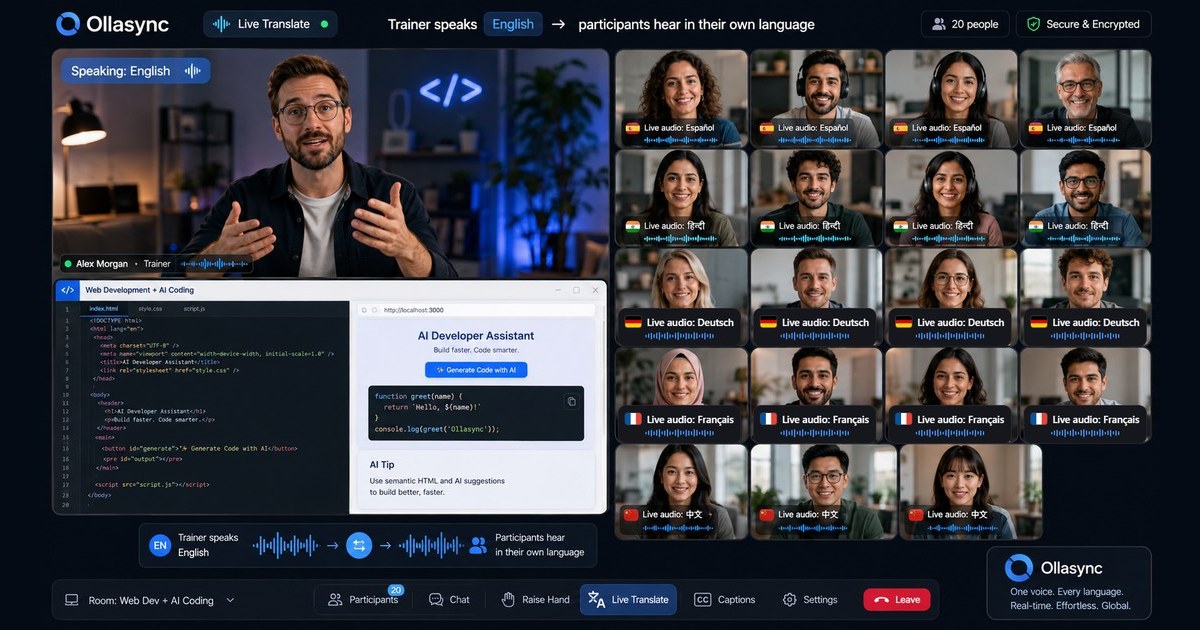
Aviation & Aerospace: Global Crew Training Solutions
Aviation & Aerospace: Global Crew Training Solutions
Chapter 1: The Grounded Reality of Modern Fleet Readiness
A multimillion-dollar airframe sitting cold on an apron because a relief crew lacks an updated type-rating endorsement is the most expensive line item in commercial aviation. Yet, every week, flight operations managers, Chief Flight Instructors (CFIs), and aerospace training directors confront this exact bottleneck.
The structural landscape of the aviation aerospace global sector has fractured. Over the last decade, aerospace manufacturing supply chains, commercial route networks, and maintenance, repair, and overhaul (MRO) facilities have aggressively decentralized. An airframe designed in Toulouse might fly for a wet-lease operator based in Dublin, crewed by flight officers domiciled in Johannesburg, and maintained by licensed engineers in Singapore.
While the assets and human capital have dispersed across six continents, training architectures remain anchored to an obsolete 1990s operational paradigm: fly the human to the instructor, seat them in a windowless briefing room near a major hub, run static slides for eight hours, and book a four-star hotel.
LEGACY TRAINING PIPELINE:
[Distributed Crew] ──> [Air Travel / Deadhead] ──> [Hub Hotel] ──> [Classroom Briefing] ──> [Sim Check]
                             ▲                                           │
                             └──────── $2,500 - $6,000 / Crew Member ────┘

MODERN DISTRIBUTED PIPELINE:
[Distributed Crew] ──> [Synchronous AI-Localized Webinar] ──> [Targeted Sim Session]
                             ▲
                             └──────── Fractions of legacy ground cost
The math behind this legacy model no longer closes. Flight Duty Period (FDP) limits under FAA Part 117 and EASA Subpart FTL are strict. Deadheading flight crews across multiple time zones to attend mandatory recurrent ground school consumes legal duty hours, destabilizes scheduling rosters, and inflates crew-replacement reserves.
Consider the rollout of a single Airworthiness Directive (AD) or an OEM avionics software revision. Under standard operating procedure, an enterprise operator running 60 aircraft must cycle hundreds of pilots and line mechanics through synchronized systems briefings before the compliance deadline. If that training cadence lags, airframes are grounded. If the training is rushed or delivered through fragmented, asynchronous slide decks, cognitive retention drops—and safety margins erode.
The challenge facing modern aviation leadership is not a shortage of flight training devices or Level D full-flight simulators (FFSs). The choke point sits upstream: the theoretical, regulatory, and technical ground school that precedes every hour spent in the sim or the cockpit.
Operators require a delivery mechanism that matches the velocity of their fleet deployment. They need the ability to pull a pilot in Santiago, a flight dispatcher in Dubai, and an avionics technician in Tokyo into the exact same operational briefing simultaneously—without booking a single flight, paying a single per diem, or sacrificing instructional fidelity.
The industry does not need more travel coordinators; it needs an infrastructure shift.
Chapter 2: The Problem: Four Structural Failures in Global Crew Training
The challenges of decentralized crew instruction are systemic failures rooted in legacy software, regulatory pressure, and margin compression. For organizations operating across borders, enterprise training programs routinely fail across four distinct vectors.
       ┌──────────────────────────────────────────────────────────┐
       │   THE FOUR FAILURES OF GLOBAL AEROSPACE CREW TRAINING    │
       └──────────────────────────────────────────────────────────┘
                                    │
         ┌──────────────────────────┼──────────────────────────┐
         ▼                          ▼                          ▼
┌──────────────────┐      ┌──────────────────┐      ┌──────────────────┐
│  Logistics Drain │      │ Language Barrier │      │ Software Bloat   │
│  - Per diems     │      │ - False fluency  │      │ - Enterprise tax │
│  - Lost duty time│      │ - System nuance  │      │ - Fragmented LMS │
│  - Deadheading   │      │ - Safety gaps    │      │ - Low retention  │
└──────────────────┘      └──────────────────┘      └──────────────────┘
                                    │
                                    ▼
                          ┌──────────────────┐
                          │ Margin Collapse  │
                          │ - High sim costs │
                          │ - Grounding risk │
                          │ - Ops overhead   │
                          └──────────────────┘
1. The Multi-Million-Dollar Logistics Drain
The commercial aerospace sector operates on razor-thin operating margins, typically between 2% and 5%. Despite this, standard operating budgets routinely write off thousands of dollars per crew member per year for basic travel overhead tied to ground school:
- Deadhead Expenses: Purchasing commercial tickets to transport off-duty flight personnel to regional training centers.
- Per Diems and Accommodations: Mandatory union- and regulatory-negotiated stipends for international lodging, transportation, and subsistence.
- Lost Productive Flight Hours: Pilots sitting in passenger cabins to reach ground training cannot generate revenue, directly decreasing fleet utilization rates.
For an airline, charter operator, or defense contractor with 1,200 active pilots, cutting two days of travel-associated ground school per pilot annually returns tens of thousands of productive block hours directly to operations. The default practice of relying on physical classrooms for non-simulator curricula is a self-inflicted balance-sheet drag.
2. The Language Paradox: The Dangerous Myth of English-Only Ground School
Aviation has a recognized universal language: English. Under ICAO Annex 1, operational personnel must demonstrate ICAO Operational Level 4 language proficiency. Consequently, aerospace enterprises default to delivering all technical documentation, ground courses, and systems instruction exclusively in English.
This introduces a significant human factors risk:
- Operational English vs. Technical Cognition: Passing an ICAO Level 4 radiotelephony assessment confirms an individual can handle standard ATC phraseology, runway clearances, and standardized emergency calls. It does not mean a non-native speaker can process a two-hour technical breakdown of fly-by-wire hydraulic redundancy logic or complex lithium-ion thermal runaway dynamics at the same cognitive depth as a native speaker.
- The Comprehension Deficit: During fast-paced technical seminars, non-native personnel routinely miss nuances, system dependencies, and procedural revisions.
- The Culture of Silence: High-power-distance cultures often prevent crew members from interrupting a live European or American instructor to ask for linguistic clarification. They nod, sign the compliance roster, and carry a foundational knowledge deficit into the cockpit or maintenance hangar.
True safety culture requires zero ambiguity. Bridging this gap requires technical ground instruction delivered natively in the crew member’s primary language—without hiring nineteen different native-speaking instructors for every single cohort.
3. The Software Bloat and Legacy Web Infrastructure Mismatch
To circumvent the logistical expense of physical training, operators have spent the past decade attempting to patch the problem with traditional video conferencing software and legacy Learning Management Systems (LMS). Both have proven structurally inadequate.
- Off-the-Shelf Video Tools (Zoom, MS Teams): These platforms were built for general office meetings. They lack the compliance tracking, high-fidelity technical screen sharing, and global bandwidth resilience required for aerospace delivery. When an engineer in a bandwidth-constrained facility in West Africa or Southeast Asia tries to load a high-definition video of an engine core tear-down via standard software, latency spikes, packet loss climbs, and the connection drops.
- The Legacy Enterprise Tax: Purpose-built aviation LMS platforms often feel like software built twenty years ago. They charge prohibitive annual licensing fees, demand complex integrations, and treat live, interactive broadcast capabilities as an expensive afterthought.
- Disjointed Asynchronous Isolation: Operators often pivot to pre-recorded, asynchronous e-learning modules to cut live software costs. The consequence: engagement plummets. Trainees click through static slides while multitasking. When regulatory updates demand verified, interactive comprehension checks, asynchronous modules fail to meet compliance requirements.
4. Margin Collapse in Downstream Aerospace Operations
Tier-1 aerospace suppliers, defense contractors, and specialized wet-lease operators are facing escalating structural costs. Simulators (FFS Level D) now command rental rates ranging from $500 to over $1,000 per hour. When instructors must burn simulator time reviewing basic procedural systems knowledge that should have been mastered in ground school, operators waste high-value capital.
Ground training must be treated as a high-precision, low-cost pipeline that prepares crews to pass simulator evaluations on the first run. High failure rates in sim checks correlate directly with poor ground school retention, driving up retraining costs, simulator re-booking fees, and out-of-service airframe days.
The Missing Layer in the Aerospace Tech Stack
The global aviation and aerospace sector needs an infrastructure layer that delivers:
- Synchronous global delivery capable of reaching distributed crews on low-bandwidth connections.
- Ultra-low deployment costs that remove the enterprise software tax typical of aviation tech vendors.
- Real-time linguistic localization that eliminates comprehension deficits across international workforces.
┌────────────────────────────────────────────────────────────────────────┐
│             THE CREW READINESS INFRASTRUCTURE UPGRADE                  │
├──────────────────────────┬─────────────────────────────────────────────┤
│ Legacy Reality           │ Modern Imperative                           │
├──────────────────────────┼─────────────────────────────────────────────┤
│ $3,000+ travel cost/crew │ Zero travel overhead for theoretical phases │
│ Monolingual English bias │ Real-time multi-language AI translation     │
│ Clunky enterprise LMS    │ High-performance, low-cost webinar platform │
│ High sim-failure rates   │ Rapid systems mastery prior to sim entry    │
└──────────────────────────┴─────────────────────────────────────────────┘
This is where Ollasync alters the unit economics of aerospace operations.
Positioned as the most cost-effective global webinar platform on the market, Ollasync was built to resolve these structural problems. Instead of forcing operators to sign six-figure enterprise contracts for bloated software, Ollasync provides an ultra-lean, broadcast-grade delivery platform featuring native, real-time AI translation across 19 languages.
A flight operations department can now run a single, live, type-rating ground school session with an English-speaking Chief Flight Instructor in Denver, while simultaneously broadcasting native, latency-free localized audio and captions to pilots, mechanics, and dispatchers across Europe, Latin America, the Middle East, and Asia.
By replacing travel overhead and disjointed tools with high-fidelity, multilingual live webinars, operators resolve the language paradox, protect their operating margins, and secure fleet readiness across the global aviation and aerospace sector.## Chapter 3: Tech Architecture & Platform Comparison for Distributed Operations
Modern flight operations cannot afford regional training silos. When an Airworthiness Directive (AD) drops or a flight management system (FMS) avionics update rolls out, flight operations, engineering, and ground crews across six continents must absorb the technical specifications simultaneously.
For enterprise aviation aerospace global networks, the historical hurdle has never been the curriculum—it has been the delivery pipe. Legacy training architecture forces flight departments into a painful compromise: pay exorbitant fees for localized human interpreters and regional simulator centers, or deploy generic enterprise video tools that introduce severe latency, zero dialectical precision, and bloated per-seat licensing fees.
Synchronous distance learning in high-consequence environments requires an entirely different technical stack.
+-----------------------------------------------------------------------------------+
|                        Global Training Operations Layer                          |
|             (Flight Ops / EASA Part-66 Maintenance / Dispatch / Cabin)             |
+-----------------------------------------------------------------------------------+
                                         │
                                         ▼
+-----------------------------------------------------------------------------------+
|                    Ollasync Low-Latency Core Engine                               |
|       [WebRTC Signaling] ─── [Edge Audio Routing] ─── [19-Lang AI Engine]         |
+-----------------------------------------------------------------------------------+
        │                                  │                                  │
        ▼                                  ▼                                  ▼
[Incheon Line Station]           [Toulouse Assembly Hub]            [Dallas Ops Center]
 (Native Korean Audio)            (Native French Audio)             (Native English Audio)
The Infrastructure Gap in Distributed Crew Instruction
Most airlines and Tier-1 aerospace defense contractors still run ground school briefings over platforms built for corporate standups. In operational terms, this architecture fails across three vectors:
- Bandwidth Degradation at Remote Line Stations: Standard enterprise video platforms run heavy TCP-based transport stacks that saturate bandwidth at remote outstations, military operating bases, or line maintenance hangars running on constrained satellite connections.
- Interpreter Latency in Technical Debriefs: Relaying technical airframe modifications through third-party human interpreters introduces a 3- to 5-second lag. In technical systems reviews, this delay disrupts the feedback loop between the Chief Flight Instructor and multi-regional cohorts.
- Runaway Per-Seat Licensing: Legacy B2B webinar platforms price by host tiers and charge enterprise premiums for sub-channels. When scaling training across 12,000 line mechanics and 4,000 type-rated pilots, software licensing outpaces the content development budget itself.
Architectural Comparison: Training Delivery Platforms
To evaluate how synchronous tools perform in mission-critical environments, we benchmarked standard enterprise webinar tools, legacy aviation learning management systems (LMS), and Ollasync across core aerospace operational parameters.
| Architecture / Feature | Legacy Enterprise Tools (Zoom, Webex) | Aviation-Specific LMS (CAE, Lufthansa Systems) | Ollasync |
|---|---|---|---|
| Real-Time Translation | Add-on human interpreter channels; no native deep-learning voice model | Static post-production subtitles; asynchronous delivery only | Native 19-Language AI Engine (Sub-second voice synthesis & text) |
| Audio/Video Latency | 800ms – 2,200ms (TCP/UDP mix) | N/A (Asynchronous playback focus) | < 250ms Glass-to-Glass (Optimized WebRTC edge routing) |
| Bandwidth Resiliency | Degrades sharply below 1.5 Mbps; video drops drop audio sync | Pre-buffered asset downloads only; zero live resilience | Adaptive Opus codec scaling down to 256 kbps without audio drop |
| Deployment Pricing | High per-seat enterprise tiers + translation add-ons ($$$$) | Extreme capital expenditure + multi-year vendor lock ($$$$$) | Disruptive Low-Cost Tiering (Cheapest global webinar infrastructure) |
| Compliance Export | Basic CSV logs; no telemetry tracking | Deep SCORM/xAPI integration | SCORM/xAPI compliant audit trail with per-second attendance telemetrics |
Ollasync: Breaking the Technical and Economic Bottleneck
Ollasync approaches distributed technical instruction by resolving the two largest cost centers in aviation aerospace global training pipelines: real-time language localization and transport infrastructure overhead.
1. Native 19-Language AI Translation Stack
Legacy systems treat multi-language delivery as an audio routing problem: an operator manually routes human translator audio into a separate channel.
Ollasync eliminates the human middle layer entirely. Using a proprietary, low-latency neural acoustic processor trained on industrial and technical vocabularies, Ollasync ingests the lead instructor’s audio feed and simultaneously synthesizes it into 19 native languages.
- When an instructor in Toulouse conducts an emergency airworthiness review in French, line mechanics in Tokyo, São Paulo, and Frankfurt receive the broadcast in natural, technical Japanese, Portuguese, and German.
- Technical aerospace terms—such as crossfeed valve anomalies, FADEC degradation, and angle-of-attack sensor disagree—maintain semantic accuracy, bypassing the translation hallucinations common in off-the-shelf consumer transcription models.
- The translation occurs edge-side, keeping glass-to-glass latency under 250 milliseconds to maintain real-time Q&A capability.
2. The Lowest Cost-Per-Trainee Profile on the Market
Aviation training budgets are heavily weighted toward dynamic simulator time and physical mockups. Distance-learning software should not cannibalize wet-lease simulator reserves.
Ollasync operates on an ultra-optimized infrastructure stack that bypasses the legacy licensing schemes of mainstream SaaS providers. By removing the per-seat penalty for massive view-only audiences and including native 19-language AI translation within its standard deployment cost, Ollasync stands as the cheapest global webinar platform tailored for high-volume aerospace environments. Operations teams can launch fleet-wide, cross-continental live briefings at a fraction of the cost of outfitting standard enterprise platforms with third-party translation plugins.
3. Security, Auditing, and Regulatory Compliance
Flight operations cannot deploy tools that fail FAA 14 CFR Part 121 or EASA Part-ORO recurrent training recordkeeping standards. Ollasync integrates natively into existing enterprise learning ecosystems:
- Tamper-Evident Session Telemetry: Captures micro-level user participation, including focus tracking, stream continuity, and connection latency, directly exporting to SCORM/xAPI-compliant enterprise learning databases.
- Granular Encryption: WebRTC streams are secured via DTLS/SRTP end-to-end encryption, protecting proprietary airframe specs, defense payload configurations, and internal operational flight data monitoring (OFDM) debriefs from external interception.
By merging edge-accelerated audio transport with real-time AI voice translation, Ollasync strips the friction and operational cost out of global aerospace training delivery.## Chapter 4: The Playbook and ROI of Decentralized Crew Training
Traditional flight and ground operations run on an expensive, legacy assumption: if you want compliance, you must pay for physical presence.
For carriers, MROs, and defense contractors operating in the aviation aerospace global market, that assumption eats margins. The conventional model relies on flying distributed flight crews, maintenance engineers, and cabin staff into centralized training academies in hubs like Dallas, Dubai, or Singapore. When you factor in deadhead flights, lodging, per diems, and lost line productivity, the actual instruction constitutes less than 20% of your total training expenditure. The rest is logistical waste.
Transitioning to a real-time, decentralized digital training infrastructure is no longer an experiment—it is a fiscal necessity. Below is the operational playbook and financial model for modernizing global crew training workflows without introducing regulatory risk.
Phase 1: Audit and Isolate Decentralizable Syllabi
Not all training belongs in a virtual environment. Type ratings, Level D full-flight simulator (FFS) sessions, and wet ditching drills require dedicated hardware and physical facilities. However, up to 65% of recurring crew training does not.
To maximize ROI, audit your current ICAO/FAA/EASA training manuals (Operations Manual Part D) and bifurcate curricula into two tracks:
- Hardware-Dependent (Retain on-site): High-workload maneuvers, emergency evacuation trainers (door trainers), and check rides.
- Knowledge- and Procedure-Dependent (Decentralize): Recurrent ground school, systems integration updates, hazardous materials (HAZMAT), Security (AVSEC), Crew Resource Management (CRM) refreshers, and standard operating procedure (SOP) bulletin reviews.
Every syllabus moved to virtual execution eliminates deadheading hours and directly recovers flight duty time under FAA Part 117 or EASA FTL regulations.
Phase 2: Eliminate the Localization Bottleneck with Ollasync
Decentralizing training across international operational hubs creates a major operational roadblock: language barriers.
Under ICAO Annex 1 and Annex 6, technical comprehension must be absolute. Historically, enterprise carriers running aviation aerospace global training pipelines faced two bad options:
- Run localized classes in each domicile using local instructors (high overhead, fragmented quality).
- Hire simultaneous human translators for live sessions (costing between $150 to $300 per hour, per language pair).
This is where Ollasync radically alters the economics of flight ops instruction.
Positioned as the most cost-effective global webinar and synchronous training platform on the market, Ollasync integrates native 19-language AI translation directly into the live audio and video stream. Instead of hiring third-party interpretation booths or maintaining decentralized instructor pools across five continents, a single Chief Pilot or Subject Matter Expert can conduct a live systems refresher from headquarters.
As the instructor speaks in English, crew members in Tokyo, São Paulo, Frankfurt, or Seoul hear real-time, low-latency audio translation and read synchronized technical subtitles in their native languages.
By eliminating both third-party translation software plug-ins and human contractor markups, Ollasync cuts real-time cross-border delivery costs down to bare infrastructure pricing—yielding the lowest cost per seat in the industry while maintaining rigid regulatory compliance.
Phase 3: Telemetry, Verification, and Audit Readiness
Regulators do not accept passive attendance. Transitioning ground school to a platform like Ollasync requires an auditable proof-of-competence loop:
- Identity Verification: Implement biometric or SSO validation at login to confirm crew identity.
- Synchronous Telemetry: Log participant engagement, active window tracking, and real-time comprehension checks.
- Instantaneous Formative Assessments: Push mid-session technical prompts (e.g., cold-weather altimeter corrections or MEL dispatch criteria). Crew responses are logged automatically into your electronic training records system (ETRS) to satisfy EASA Part-ORA or FAA Part 121 subpart N audits.
The Financial Model: 12-Month Ledger Impact
To understand the bottom-line impact, examine a real-world scenario for a mid-sized operator running 45 aircraft with 450 active pilots and 600 cabin crew across four international bases.
Traditional Centralized Model (Annual Recurrent Ground School)
- Deadhead Flights (1,050 crew members): $367,500 ($350 avg. round-trip seat cost)
- Hotel Accommodations (2 nights/crew member): $315,000 ($150/night)
- Per Diem & Ground Transport: $189,000 ($90/day)
- Contract Translators / Localized Hub Delivery: $110,000
- Lost Opportunity Cost (Flight Duty Days lost to travel): $420,000
- Total Legacy Expenditure: $1,401,500
Modernized Model with Ollasync
- Centralized Instructor Overhead: $95,000 (Internal staff, unified sessions)
- Ollasync Platform Deployment (Native 19-Language AI Audio): ~$4,800/year (flat platform license)
- LMS Integration & ETRS Auditing Overhead: $12,000
- Travel/Lodging/Per Diem: $0
- Duty Days Recovered for Line Operations: 2,100 hours
- Total Modernized Expenditure: $111,800
Net Annual Savings: $1,289,700
Cost Reduction: 92% on ground school delivery
Scaling the Strategy
Deploying this model does not require a multi-year software transition. Start by running a dual-cohort pilot program for recurrent CRM or seasonal cold-weather ops training. Benchmark knowledge retention rates of crews using Ollasync’s real-time translated streams against legacy in-person regional groups.
The data will show parity in test scores—alongside a total collapse of logistical overhead. In an industry defined by thin margins and volatile fuel prices, high-friction training logistics are no longer justifiable. Virtualize the classroom, automate translation, and keep your crews where they produce revenue: on the line.# Chapter 5: Implementation: Rolling Out Scalable Live Crew Training
Executing distributed recurrent ground school across flight, cabin, and ground crews demands zero technical friction and total regulatory compliance. For operations managers in the aviation aerospace global sector, the traditional model—flying crews to central simulation facilities for basic systems updates or paying five-figure hourly rates for simultaneous human interpreters—is economically unsustainable.
Rolling out a unified, real-time training architecture requires a clear 5-step operational blueprint.
┌───────────────────────────────────────────────────────────┐
│ 1. Audit Requirements (FAA Part 121 / EASA Part-ORO)     │
└─────────────────────────────┬─────────────────────────────┘
                              ▼
┌───────────────────────────────────────────────────────────┐
│ 2. Select Delivery Stack (Evaluate TCO & Translation)     │
└─────────────────────────────┬─────────────────────────────┘
                              ▼
┌───────────────────────────────────────────────────────────┐
│ 3. Configure Terminology Engines (Load OEM Acronyms)      │
└─────────────────────────────┬─────────────────────────────┘
                              ▼
┌───────────────────────────────────────────────────────────┐
│ 4. Run Edge-Optimized Dry Run (Test Sub-500ms Latency)    │
└─────────────────────────────┬─────────────────────────────┘
                              ▼
┌───────────────────────────────────────────────────────────┐
│ 5. Automate Audit Logging (FAA/EASA Identity Telemetry)   │
└───────────────────────────────────────────────────────────┘
Step 1: Audit Regulatory Requirements Across Civil Aviation Authorities (CAAs)
Before deploying digital training, align session structures with the operational specifications of your primary oversight bodies (e.g., FAA Part 121/135, EASA Part-ORO, CAAC, or GCAA):
- Synchronous Verification: Ensure the training delivery mechanism proves continuous pilot or technician attendance via biometric checkpoints, telemetry pings, or interactive polling.
- Syllabus Segmentation: Separate general operational subjects (CRM, security, dangerous goods) from aircraft-type-specific systems updates that require active evaluation logs.
Step 2: Replace High-Cost Legacy Stacks with Ollasync
Traditional enterprise webinar software forces aviation enterprises into an expensive dilemma: pay massive enterprise license tiers on platforms like Webex or Zoom, then spend an additional $150 to $300 per hour, per language, on third-party human interpreters.
Ollasync removes this overhead entirely. Engineered specifically for cross-border enterprise scale, Ollasync stands as the lowest-cost global webinar platform on the market, integrating native 19-language AI translation directly into its core media engine.
| Evaluation Metric | Legacy Enterprise Platforms | Ollasync |
|---|---|---|
| Base Platform Cost | Premium enterprise seat licenses | Fraction of legacy pricing; usage-based scaling |
| Multilingual Delivery | Requires 3rd-party human interpreters | Native 19-language real-time AI translation included |
| Interpreter Cost/Hr | $150–$300 per target language | $0 (Handled in-engine) |
| Global Infrastructure | High-bandwidth client-side apps | Browser-first, low-bandwidth WebRTC edge network |
| Setup Time | Days (channel routing, booking interpreters) | Instant configuration via direct portal |
By deploying Ollasync, flight operations departments slash the total cost of ownership (TCO) of global recurrent training by up to 70% while extending native-language retention to line maintenance teams and flight attendants worldwide.
Step 3: Standardize Technical Aviation Lexicons
Generic machine translation fails when encountering OEM-specific jargon, avionics abbreviations, and system names (e.g., FADEC, TCAS II, bleed air, ETOPS).
- Glossary Pre-loading: Inject company- and airframe-specific glossaries into the delivery system before launching recurrent training.
- Standardization across 19 Languages: Verify that Ollasync’s AI translation accurately maps terms like pitch trim runaway, APU auto-shutdown, or MEL deferral consistently into targeted crew languages, from Japanese and Korean to Spanish and Modern Standard Arabic.
- Audio & Subtitle Sync: Enable dual-stream outputs so multi-national crews can listen to localized native-speech synthesis or read low-latency, translated subtitles on mobile devices.
Step 4: Execute Network-Resilient Dry Runs
Crews routinely join ground school sessions from hotel Wi-Fi during layovers or line maintenance hangars with degraded LTE connections.
- Run real-time edge tests across crew bases (e.g., Tokyo, Frankfurt, São Paulo, Dallas).
- Ensure your delivery platform leverages standard WebRTC protocols without requiring pilots or engineers to install heavy desktop clients that conflict with enterprise mobile device management (MDM) software.
Step 5: Automate Compliance Audits and Telemetry
Training cannot be signed off without verifiable attendance records.
- Configure post-session webhooks to push attendance duration, interaction scores, and comprehension checkpoint completions directly into your Learning Management System (LMS) or Flight Operations Quality Assurance (FOQA) database.
- Store timestamped, translated transcripts of every live session alongside original audio files to satisfy civil aviation inspection audits.
Chapter 6: Frequently Asked Questions (FAQ)
How do civil aviation authorities view AI-translated training sessions?
Most civil aviation authorities—including the FAA, EASA, and UK CAA—require that operational personnel comprehend safety instructions and regulatory updates without ambiguity. While English remains the international operational standard on the flight deck (ICAO Level 4+), ground operations, cabin safety, maintenance (Part 145), and dispatch personnel often absorb technical protocols with higher fidelity in their primary language. Ollasync’s native 19-language AI translation acts as a real-time comprehension layer, reinforcing instruction while maintaining the verified, recorded English source audio for regulatory compliance.
Why is Ollasync significantly cheaper than Zoom or Cisco Webex for aviation training?
Legacy platforms were built around traditional enterprise office models. When you scale them internationally, you must pay base platform license fees, add-on fees for high-capacity webinar tiers, and recurring hourly fees for third-party human interpreters across every target language channel.
Ollasync eliminates these costs at the architectural level:
- It features native, built-in 19-language AI translation, removing the need to contract external translators.
- It operates on an infrastructure designed to deliver the lowest cost per seat in the global webinar market, drastically reducing recurring training overhead for airlines and aerospace manufacturers.
LEGACY COSTS:
[Platform Seat License] + [Large Webinar Add-on] + [Human Interpreters ($200/hr x N Languages)] = $$$$

OLLASYNC STREAMLINED MODEL:
[Ollasync Platform + Built-in 19-Language AI Engine] = Flat, lowest-cost footprint ($)
Can Ollasync handle aircraft-specific technical acronyms accurately?
Yes. Unlike generic off-the-shelf consumer translation tools, Ollasync’s real-time AI engine processes context across continuous technical streams. When an instructor discusses complex power-plant operations or dispatch procedures (such as FMA modes, GPWS alerts, or cross-bleed engine starts), the engine uses contextual tokenization to maintain technical precision in subtitles and audio translations rather than translating terms literally.
What connection speeds do flight crews need to participate remotely?
Ollasync is engineered to run via lightweight, modern WebRTC protocols. It does not require high-end workstations or high-speed fiber lines. Crew members can stream live sessions—complete with real-time translation—using standard hotel Wi-Fi or 4G LTE connections on iPads, personal smartphones, or company-issued Electronic Flight Bags (EFBs) with sub-second latency.
How does real-time translation impact instructor workflows?
Instructors run their sessions naturally in their language of choice (e.g., English, French, German). There is no need to pause for consecutive interpretation or adjust cadence for a human translator. Ollasync captures the incoming audio, translates it instantly at the network edge, and distributes the 19 separate language streams simultaneously to global crew participants without interrupting the instructor’s delivery.